Search Skill Studio AI ..
Author
Magda Targosz
Category
features-updates
Published date
Reading Time
9 min
Go back
Irish L&D professionals are transforming compliance training delivery with AI-native text-to-video platforms, compressing course production from weeks to minutes while maintaining enterprise-grade quality and audit compliance.
Contents
Why Ireland's L&D Leaders Are Adopting AI-Powered Video Training
Speed and Efficiency: What Leaders Report
Compliance and Audit Confidence
Quiz Integration: The Missing Piece Leaders Were Waiting For
Real Cost Savings Reshaping L&D Budgets
Multilingual Scale Without the Complexity
Enterprise Integration That Actually Works
FAQs
TL;DR: Irish L&D Leaders Transforming Compliance Training with AI Video Platforms
Speed Revolution: Irish financial services leaders report generating audit-ready training courses in under 5 minutes instead of weeks of manual development.
Quiz Integration Built-In: Interactive assessments are automatically generated with video content, eliminating the need for separate quiz-building tools or manual question creation.
FCA Compliance Ready: Banking and financial sector L&D professionals praise AI platforms' audit trail capabilities and compliance-first architecture.
Cost Reduction of 60–80%: Organizations report saving £10,000–£20,000 per single course compared to traditional production costs of £10,000–£50,000 for 5 minutes of video.
No Specialized Skills Required: L&D teams without video production expertise can create professional, branded training content using a no-code interface.
Multilingual Deployment: Narration today is English-only from a single source document; multilingual deployment for global teams is on the product roadmap.
LMS Compatibility: Courses built with the standard course-builder pipeline export directly into existing systems with SCORM support; a SCORM bridge for AI-avatar video courses generated from documents is on the roadmap.
Real Engagement Gains: Interactive quizzes and branching scenarios boost learner retention while providing real-time analytics for L&D leaders to track progress.
Last updated: April 2026, reflecting AI-powered compliance training adoption trends in Ireland's financial services and B2B SaaS sectors.
Compliance training in Ireland's financial services sector has long been a bottleneck: lengthy production timelines, prohibitive costs, and static content that struggles to engage learners. Yet a cohort of forward-thinking L&D leaders in Ireland—from banking to B2B SaaS—are now reporting transformative results after adopting AI-native LMS platforms that convert PDFs, policies, and procedural documents into branded video courses with integrated quizzes in minutes, not weeks.
Why Ireland's L&D Leaders Are Adopting AI-Powered Video Training
Irish L&D leaders are shifting to AI-powered video training to meet FCA compliance mandates and regulatory timelines that traditional content authoring cannot match. The pressure is acute: regulatory updates demand fast, consistent training rollout across geographically dispersed teams, and budget constraints leave little room for expensive external production vendors.
AI-native training platforms address this head-on by automating the content creation pipeline. Instead of briefs, scripts, storyboards, actor scheduling, and post-production editing—a process that historically spans 6–12 weeks—L&D leaders upload a PDF and receive a camera-ready, branded training video in under 5 minutes. For compliance officers at Irish banks managing quarterly regulatory updates, this acceleration is not a convenience feature; it is a competitive necessity and a risk mitigation strategy.
Speed and Efficiency: What Leaders Report
The most consistent praise from Irish L&D leaders centres on production velocity and the elimination of technical bottlenecks. One banking sector L&D director reports that course deployment timelines have compressed from 6–8 weeks to 1–2 days, including stakeholder review. Another notes that the no-code interface means subject matter experts (SMEs) can author training directly, bypassing delays inherent in traditional handoffs between L&D, instructional design, and multimedia teams.
The speed advantage multiplies when managing content updates. Traditional video production locks content into rigid formats; updates require full re-shoots and re-editing. AI platform users report that revising compliance policies, sales processes, or procedural guidelines takes minutes rather than weeks. One Irish SaaS leader describes this as "agile training"—the ability to iterate and improve based on learner feedback without cost or timeline penalties.
For organizations rolling out new onboarding programmes or scaling training globally, the efficiency gain is transformative. A 5-minute video produced traditionally costs £10,000–£50,000; AI-generated equivalent-quality content costs a fraction of that, enabling unlimited video generation and rapid iteration.
Compliance and Audit Confidence
Irish financial services leaders emphasize that AI training platforms are built for regulated environments. They provide audit trails and completion dashboards; SCORM export is available for courses built with the standard course-builder pipeline, critical for FCA and internal compliance reviews. One compliance officer at a Dublin-based bank notes that consistent content structure makes audit verification straightforward and repeatable across hundreds of compliance modules.
The deterministic, reproducible nature of AI-generated content—synthetic voice narration, consistent avatar presentation, structured quiz logic—actually enhances audit confidence. Every learner receives identical instruction, eliminating variability that can arise from human-led or inconsistently produced training. This is especially valuable in financial services, where regulatory bodies expect standardized compliance messaging across all staff cohorts.
Leaders also highlight real-time completion tracking and learner progress analytics integrated into platform dashboards. Rather than manually chasing completion records or running ad-hoc reports, L&D teams can see which learners have completed which modules, quiz scores, and knowledge gaps in a unified interface. This data informs targeted remediation and demonstrates compliance to internal audit teams.
Quiz Integration: The Missing Piece Leaders Were Waiting For
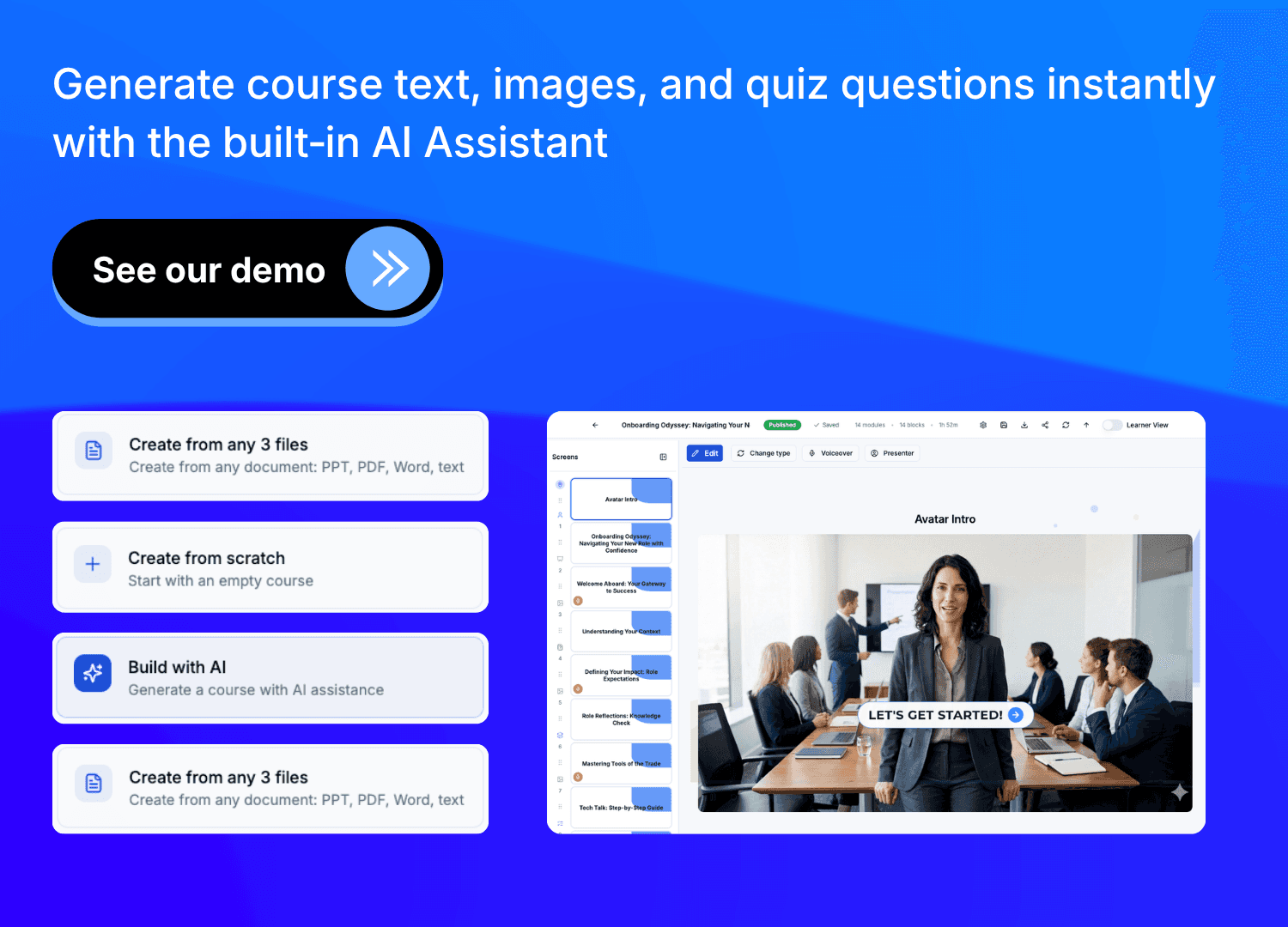
One of the most frequently praised features is integrated quiz and assessment engines. Historically, L&D teams have used separate tools for video hosting and quiz creation, forcing learners to move between platforms and complicating analytics. AI training platforms generate interactive quizzes automatically from video content, eliminating the authoring step entirely.
Irish L&D leaders describe this integration as revolutionary for engagement and knowledge verification. Learners can be prompted with scenario-based questions mid-video or at the end, with branching logic that adapts subsequent content based on quiz responses. This interactivity boosts retention and provides real-time feedback—a powerful combination that static PDFs or linear videos cannot match.
One leader notes that AI-powered quiz generation saves weeks of manual question writing and ensures quiz questions align precisely with video content. Rather than an instructional designer manually transcribing key points and crafting multiple-choice options, the platform distils the core learning objectives and generates contextually appropriate assessments automatically.
Real Cost Savings Reshaping L&D Budgets
Quantified cost savings are consistently cited as a primary driver of adoption among Irish L&D leaders. Organizations report saving £10,000–£20,000 per single professionally created training course using AI platforms compared to traditional e-learning production costs of £2,000–£10,000 per minute of video. A 5-minute compliance training video produced traditionally costs £10,000–£50,000; the same content created with AI tools costs a fraction of that.
Subscription-based pricing models enable L&D leaders to shift from capex-heavy, ad-hoc production to predictable, scalable, and unlimited content creation. This budget predictability is critical for larger organizations rolling out enterprise-wide training programmes across multiple departments or geographies.
One Irish banking group's L&D director reports reallocating savings from content production to instructional strategy, learner experience design, and performance consulting—higher-value activities that drive business outcomes. Rather than spending budget on external agencies and studio time, organizations can invest in internal capability and strategic initiatives.
Multilingual Scale Without the Complexity
For Irish organizations with international operations or global workforces, multilingual reach remains a work in progress: AI training platforms currently generate narration in English only, with multilingual support on the product roadmap. Historically, localization has required translation vendors, voice-over actors, and re-editing; automating that pipeline is the direction platforms are heading, but it is not yet available.
Until multilingual narration ships, organizations still face the traditional trade-off between speed and localization: deliver training quickly in English, or handle other-language versions through separate translation workflows. For Irish SaaS and financial services firms expanding internationally, this is an important gap to plan around when scoping global rollouts.
Enterprise Integration That Actually Works
Irish L&D leaders emphasize that AI training platforms integrate seamlessly into existing enterprise infrastructure. Courses built with the standard course-builder pipeline export directly into Learning Management Systems (LMS) via SCORM, and webhook-driven rendering architecture ensures fast, consistent delivery; SCORM export for AI-avatar video courses generated directly from documents is on the roadmap.
One compliance officer notes that integrated platforms eliminate the fragmentation that plagues many L&D tech stacks—no more juggling multiple logins, copy-pasting content between systems, or reconciling learner data across platforms. An AI training platform acts as a unified authoring and management layer sitting atop the organization's existing infrastructure, making adoption frictionless and ROI immediate.
The API-driven architecture also enables custom integrations for organizations with specialized requirements. One Irish B2B SaaS leader reports building custom workflows that automatically trigger course generation based on product updates or sales collateral changes, ensuring training always stays synchronized with product evolution.
FAQs
How quickly can Irish L&D teams generate courses using AI video platforms?
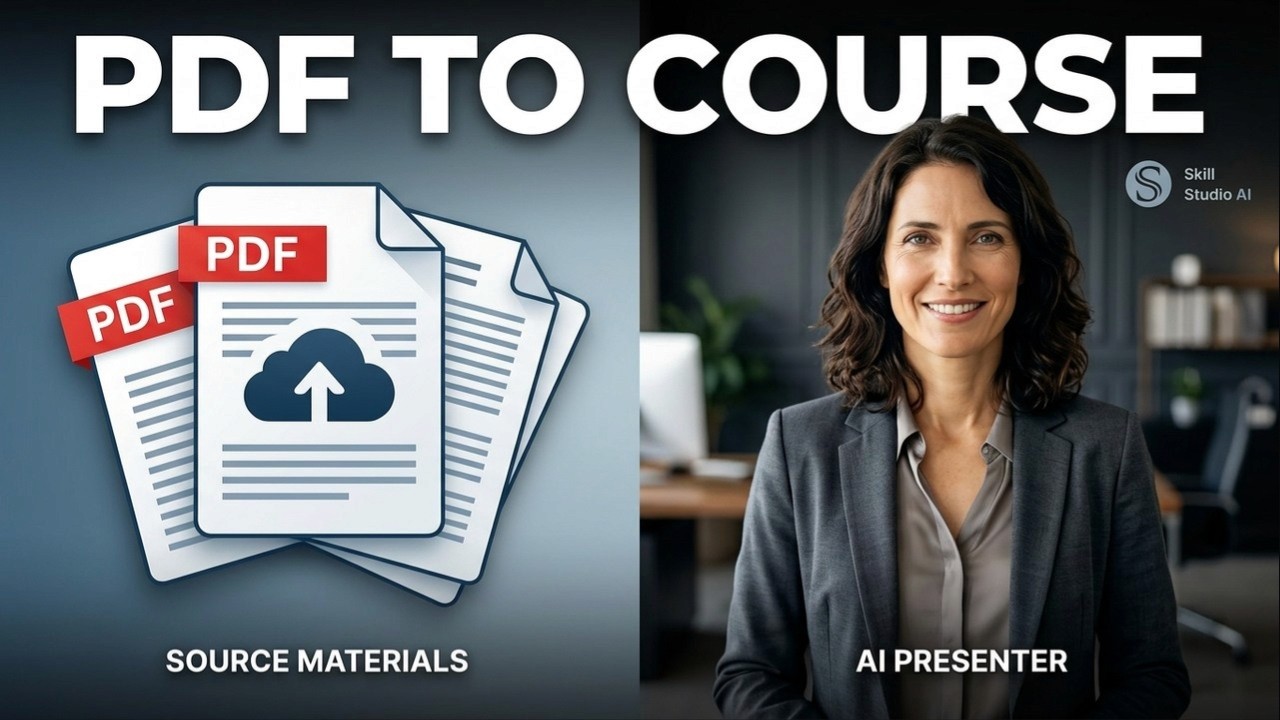
Courses can be generated in under 5 minutes. Users upload a PDF or PowerPoint, select a template, and the platform automatically creates a branded video with synthetic voice narration, avatar presentation, and interactive quizzes. Deployment-ready content is generated in minutes rather than weeks.
Do AI training platforms support FCA compliance requirements for UK and Irish financial services?
Leading AI compliance training platforms are designed for regulated environments. They provide audit trails, completion dashboards, and consistent content structure enforcement; SCORM export applies to courses built with the standard course-builder pipeline, which are critical for FCA audits and internal compliance reviews.
Are quizzes automatically generated, or do L&D teams need to write them manually?
Quizzes are automatically generated by the platform's AI engine. Interactive assessments, flashcards, and scenario-based branching logic are created from video content automatically, eliminating manual authoring and ensuring quiz content aligns precisely with learning objectives.
What are the typical cost savings compared to traditional video production?
Organizations report saving £10,000–£20,000 per single course. Traditional e-learning video production costs £2,000–£10,000 per minute; a 5-minute compliance video costs £10,000–£50,000 to produce traditionally. AI subscription models enable significant cost reduction and budget predictability.
Can videos be exported to existing LMS platforms?
Courses built with the standard course-builder pipeline export directly into any LMS via SCORM. A SCORM bridge for AI-avatar video courses generated directly from documents is on the roadmap and not yet available.
How do AI training platforms handle multilingual training for global teams?
Today, synthetic voice and avatar narration is generated in English only. Multilingual localization—generating fully narrated, branded videos in target languages from a single source document—is on the product roadmap and not yet shipped.
Do L&D teams need video production expertise to use AI training platforms?
No. These platforms feature no-code interfaces designed for L&D professionals without video production skills. Users upload documents, select templates, and the platform handles avatar generation, voice narration, branding, and quiz creation automatically.
Can organizations create custom avatars or use their own branded characters?
Yes. Users can either select from a diverse stock library of AI avatars or create a digital twin by uploading a photo. The platform clones the face and voice, enabling personalized, branded video training delivered by a familiar character.