Search Blogs
Competency-based training (CBT) is a game-changer for L&D. Discover how this targeted approach focuses on specific skills and knowledge, boosting employee performance and engagement. Learn to build a future-ready workforce and optimize your training inves







Empowering Your Workforce: The Transformative Power of Competency-Based Training
Imagine a world where every single training effort you invest in your team directly translates into tangible improvements, where every employee feels empowered to master exactly what they need to excel. Does that sound like a dream? It's not. This is the reality that competency-based training (CBT) can unlock for your organization. As Learning and Development professionals, we often search for the most effective ways to nurture our talent, to help them not just learn, but truly grow. CBT offers a powerful, targeted approach to development, focusing keenly on the specific skills and knowledge that drive success in every role. Are you ready to discover how this innovative method can revolutionize your employee growth initiatives?
What Exactly is Competency-Based Training (CBT)?
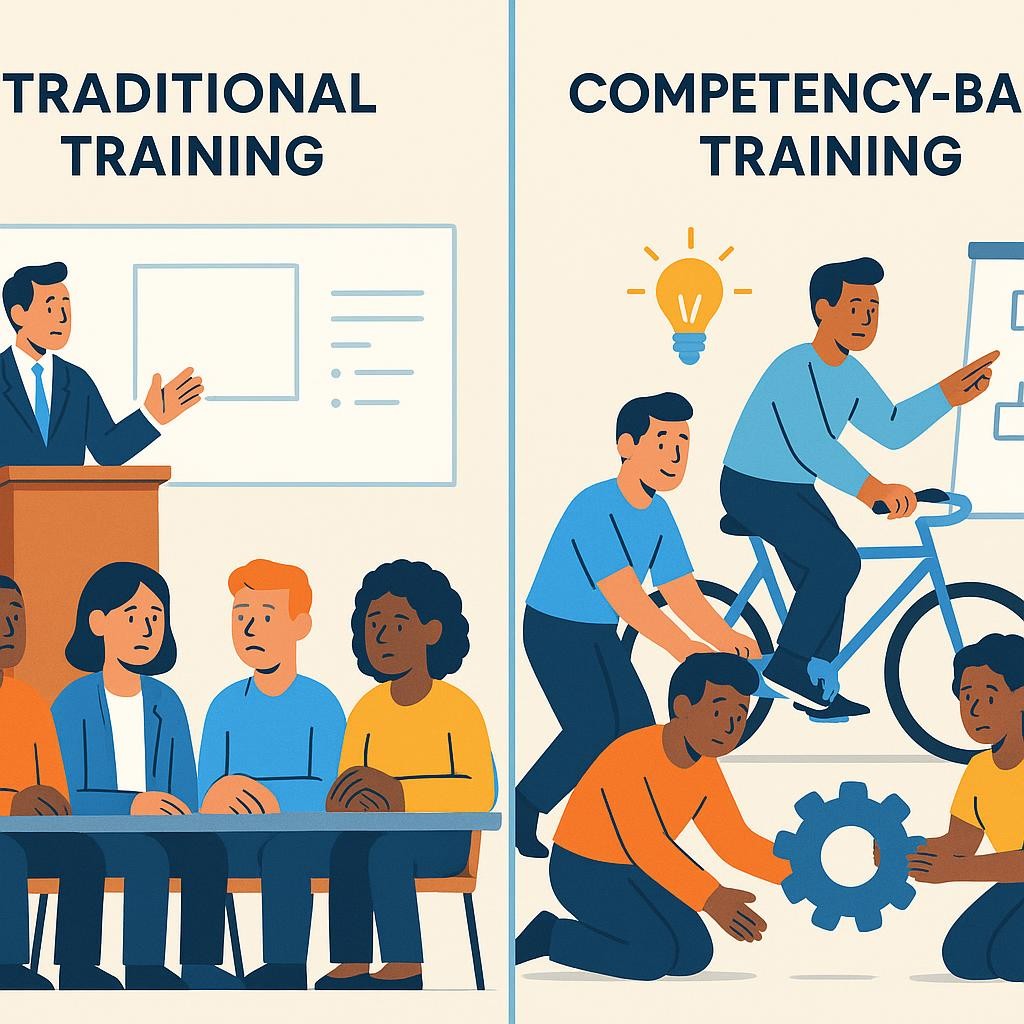
At its heart, competency-based training is about mastery. It's a strategic shift from simply completing a course to demonstrating proficiency in a specific skill or area. Think about it this way, traditional training often focuses on content delivery, asking, "Did our employees attend the workshop?" CBT, however, asks a more profound question, "Can our employees do what they learned, effectively and consistently, in their job role?"
It's like learning to ride a bicycle. A traditional approach might involve reading a manual about bicycles, understanding the mechanics, and watching videos. A competency-based approach would be about actually getting on the bike, practicing, falling, getting back up, and riding until you can confidently balance and pedal. The focus isn't on how long you studied, but on your ability to ride independently. This practical, results-oriented approach makes CBT incredibly effective for nurturing real-world capabilities within your workforce.
The Power of Competencies: More Than Just Skills
So, what exactly do we mean by "competencies"? It’s more than just a checklist of tasks. A competency is a blend of demonstrable knowledge, practical skills, essential abilities, and even behavioral traits that an individual needs to perform their job effectively. It’s the full package that allows someone to not just perform a task, but to do it excellently, consistently, and often, proactively.
For instance, consider a customer service representative. Their competencies might include active listening skills, problem-solving abilities, product knowledge, empathy, and effective communication. CBT identifies these precise elements and then designs training directly aimed at developing and verifying them. This ensures that every learning effort is directly relevant to an employee's role and their contribution to the organization's goals. When you define these clearly, you provide a roadmap for success, not just for the individual, but for the entire L&D strategy.
How CBT Works: A Targeted Approach to Development
Implementing competency-based training involves a thoughtful, structured process. It's not a one-size-fits-all solution, but a tailored journey designed for maximum impact. Let's explore the steps:
Identifying Key Competencies
The first crucial step is to meticulously define the competencies required for each role or for specific strategic initiatives. This involves working closely with subject matter experts, managers, and even high-performing employees. What specific knowledge, skills, and behaviors lead to exceptional performance in a particular position? For example, for a project manager, competencies might include risk management, stakeholder communication, team leadership, and agile methodology proficiency. This foundational work ensures your training is always aligned with business needs.
Designing Targeted Learning Paths
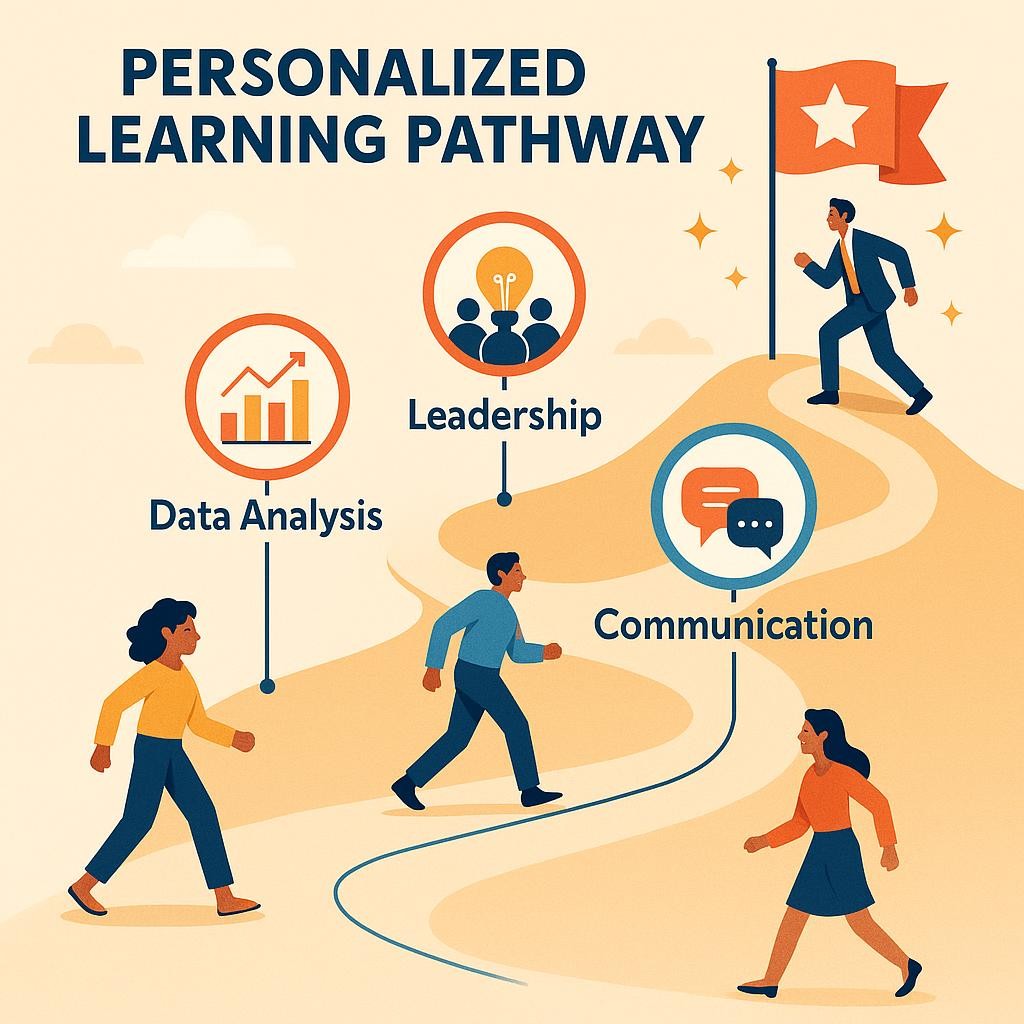
Once competencies are identified, you then craft learning modules and resources specifically designed to build those competencies. Unlike generic courses, these paths are highly focused. If an employee needs to improve their data analysis skills, their learning path will contain practical exercises, relevant software tutorials, and case studies, rather than a broad statistics course. This precision ensures that every moment spent learning is productive and meaningful.
Flexible Learning and Self-Paced Progress
One of the most empowering aspects of CBT is its inherent flexibility. Individuals progress at their own pace, moving on only when they have demonstrated mastery of a particular competency. This respects individual learning styles and prior knowledge. Some employees might quickly grasp a concept, while others may need more time and practice. This personalized approach prevents frustration and builds confidence. It's not about how fast you finish, but how well you learn.
Practical Application and Assessment
The cornerstone of CBT is its emphasis on practical application and rigorous assessment. Learning isn't just about absorbing information, it's about applying it. Assessments in CBT go beyond multiple-choice tests. They often involve simulations, real-world projects, performance observations, and peer feedback. Can the sales rep effectively handle a difficult customer objection in a role-play? Can the engineer troubleshoot a system issue under pressure? This hands-on verification ensures that employees are truly ready to perform their roles.
Unlocking Employee Growth: The Benefits of CBT
For L&D teams, embracing competency-based training is like discovering a powerful accelerator for employee development. The advantages are manifold, impacting individuals and the organization alike.
Boosting Performance and Productivity
When employees are trained precisely on the competencies needed for their roles, their performance naturally skyrockets. They gain the specific skills to excel, reducing errors and increasing efficiency. Imagine a marketing team where every member is fully competent in the latest digital analytics tools. Their campaigns would be more effective, their decisions data-driven, and their overall impact significantly higher. This direct link between training and performance is a game-changer.
Enhancing Engagement and Motivation
Let's be honest, generic training can often feel like a chore. But when learning is clearly tied to an employee's success and career progression, motivation soars. CBT empowers individuals by giving them a clear understanding of what they need to master and providing the tools to do so. This sense of purpose and achievement is incredibly engaging. Employees feel valued because the organization is investing in their specific development, not just checking a box.
Building a Future-Ready Workforce
The business landscape is constantly evolving, demanding new skills and adaptability. CBT allows L&D teams to be agile, identifying emerging competency gaps and quickly developing targeted training to address them. Are new technologies impacting your industry? Is there a shift in market demands? CBT enables you to proactively upskill and reskill your workforce, ensuring your organization remains competitive and resilient, no matter what the future holds.
Clearer Career Paths and Retention
One of the biggest drivers of employee satisfaction and retention is the opportunity for growth. CBT provides clear pathways for career progression. Employees can see exactly what competencies they need to develop to advance to the next level, fostering ambition and loyalty. This transparency helps individuals take ownership of their professional journey, knowing that their efforts will lead to tangible advancement within your company.
Optimizing Training Investment
Are you tired of training initiatives that don't yield measurable results? CBT focuses on outcomes. By training only what's necessary and verifying mastery, L&D teams can significantly optimize their training budget and time. This means less wasted effort on irrelevant content and more impactful learning experiences, ultimately leading to a higher return on investment for your organization's talent development efforts.
Real-World Impact: CBT in Action
To truly grasp the power of competency-based training, let's look at how it might play out in different scenarios.
Example, Sales Team Development
Imagine a sales organization struggling with closing complex deals. A competency analysis reveals a gap in "advanced negotiation techniques" and "CRM proficiency" among junior sales reps. Instead of a general sales course, the L&D team designs specific CBT modules. One module focuses on role-playing difficult negotiation scenarios, with structured feedback and assessment based on demonstrated ability to overcome objections and close deals ethically. Another module offers hands-on practice with the CRM system, requiring reps to successfully manage pipelines, generate reports, and update customer profiles within a simulated environment. The results are clear, a measurable increase in closed deals and improved data accuracy in the CRM.
Example, Leadership Training
Consider a company aiming to cultivate stronger middle managers. They identify key leadership competencies like "effective delegation," "conflict resolution," and "coaching for performance." Rather than just attending a seminar, managers engage in a CBT program. They might be tasked with delegating a real project, receiving feedback from their team and superiors on their approach. For conflict resolution, they could participate in case studies and simulations, demonstrating their ability to mediate disputes constructively. Coaching for performance might involve actual one-on-one coaching sessions with direct reports, assessed against a rubric of effective coaching behaviors. This practical application ensures managers aren't just aware of leadership principles, but are truly able to embody them.
The Role of a Learning Management System (LMS) in CBT
Now, you might be thinking, "This all sounds fantastic, but how do we manage such a tailored and dynamic approach?" This is where a robust Learning Management System (LMS) becomes your indispensable partner. An LMS isn't just a platform, it's the engine that powers effective competency-based training.
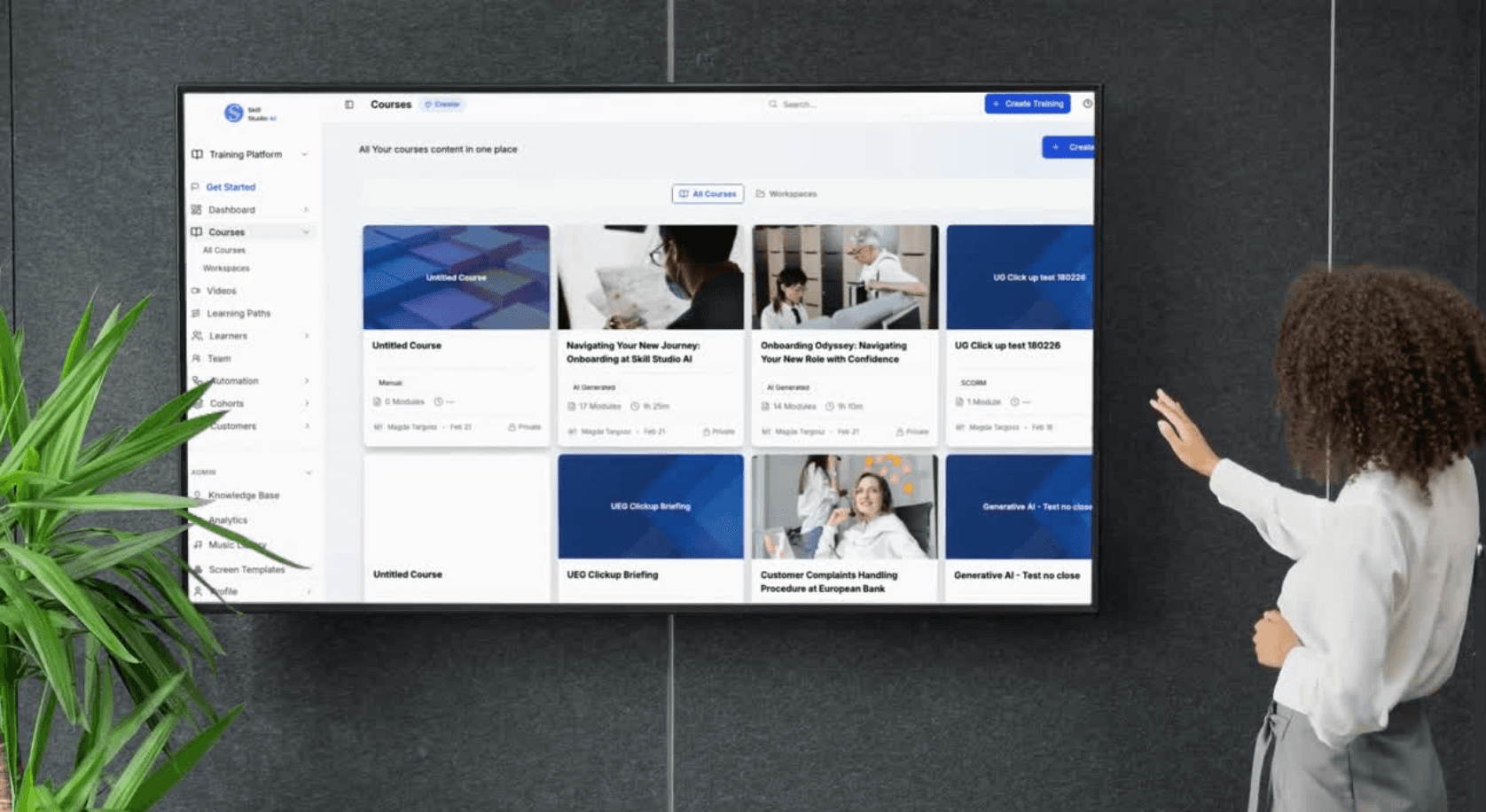
Think of your LMS as the central hub for all your development initiatives. It allows you to meticulously map competencies to specific roles and individuals. You can then easily create, assign, and track personalized learning paths, ensuring employees receive the precise training they need, when they need it. An LMS also provides the tools to deliver diverse learning content, from e-learning modules and videos to interactive simulations and assessments that verify mastery.
Furthermore, an LMS offers powerful analytics, giving L&D teams invaluable insights into employee progress, competency attainment, and the overall effectiveness of your training programs. You can quickly identify skill gaps across departments, measure the impact of training on performance metrics, and demonstrate the tangible ROI of your efforts. Without a sophisticated LMS, managing the intricate details of a comprehensive CBT program would be incredibly challenging. It transforms the potential of CBT into a practical, scalable reality, making your L&D efforts more strategic and impactful.
Conclusion
Competency-based training is more than just a buzzword, it's a transformative approach to employee development that empowers individuals and strengthens organizations. By focusing on demonstrable mastery of job-critical competencies, we move beyond simply delivering content to truly cultivating capabilities. We've seen how CBT boosts performance, ignites engagement, builds a future-ready workforce, and optimizes your valuable training investments.
As L&D professionals, our mission is to unlock the full potential of our people. Embracing CBT is a powerful step in that direction, providing clarity, purpose, and measurable results for every learning journey. Are you ready to empower your team with the precise skills they need to thrive? It's time to explore how a well-implemented competency-based training strategy, supported by a powerful Learning Management System (LMS), can elevate your talent development initiatives and drive unprecedented growth for your organization. Let's build a future where every employee not only learns, but truly excels.