Search Blogs
How educators use AI to transform lecture notes and slides into interactive digital courses without instructional design skills.
Universities have the knowledge. They lack the production capacity. AI lets any academic turn existing teaching materials into interactive courses in minutes.







Key Takeaways
The production bottleneck: Universities have brilliant subject matter experts who can't (or won't) use complex authoring tools. Knowledge stays trapped in slides and PDFs.
Digital learning strategies stall: Institutions announce ambitious digital transformation goals but lack the production capacity to convert existing materials at scale.
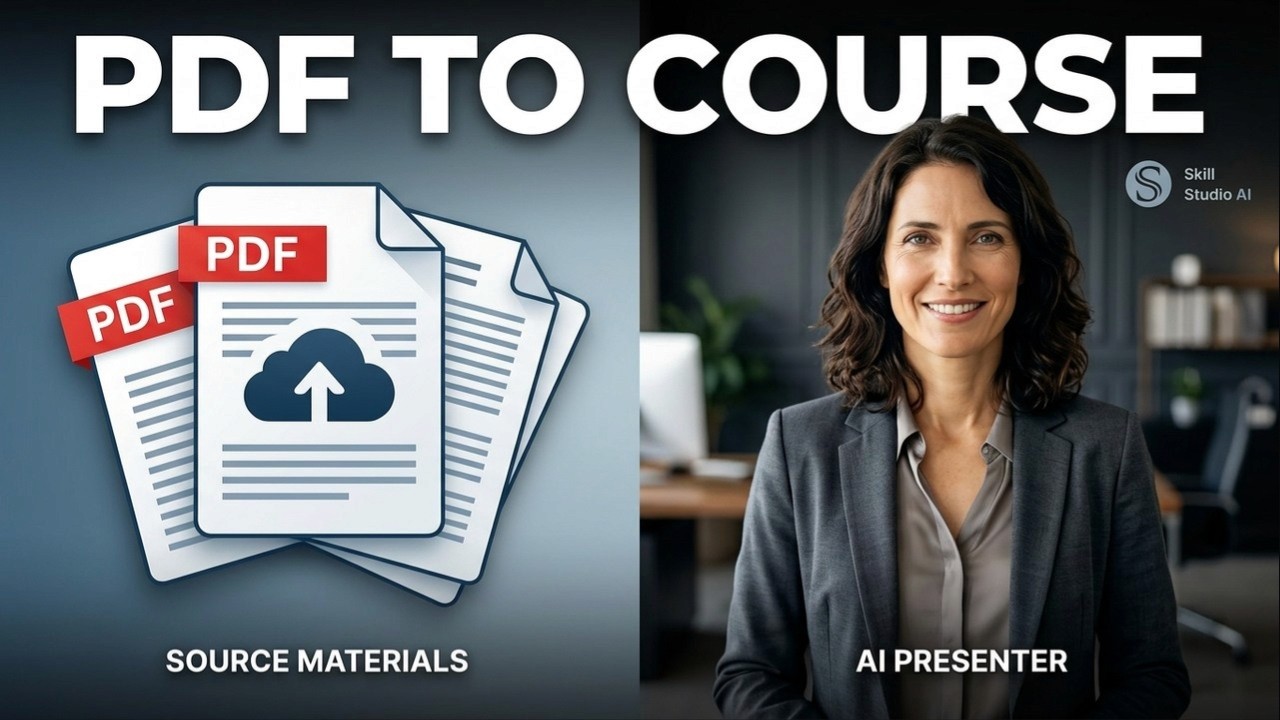
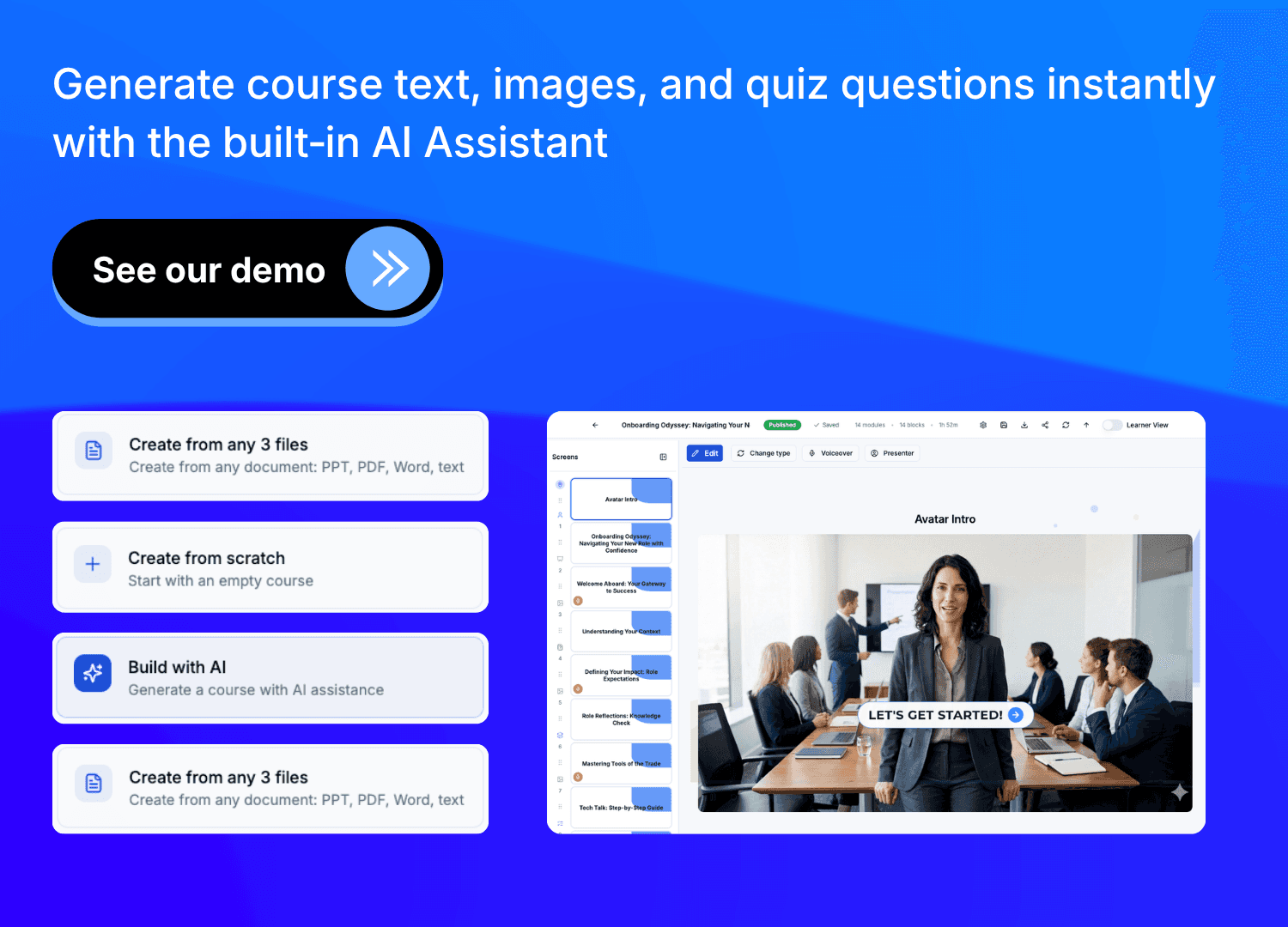
AI removes the authoring barrier: Upload lecture notes, slides or textbook excerpts. AI builds interactive courses with assessments mapped to learning outcomes. Any academic can do it.
Video without cameras: AI avatars deliver lecture content from written scripts. No recording anxiety, no studio booking, no post-production. Especially valuable for asynchronous and distance learning.
International cohort support: Generate the same course in 100+ languages. Support pre-sessional programmes and multilingual learning pathways from a single English source.
Commercial education opportunity: Build and monetise short courses, microcredentials and professional development programmes from academic expertise.
Higher education faces a digital content gap that's been widening for a decade. Students expect interactive, on-demand learning experiences. What they get is uploaded PDFs, recorded Zoom sessions and slide decks with speaker notes. The knowledge is there. The delivery doesn't match modern expectations.
Why Can't Universities Produce Digital Content at Scale?
The answer is always capacity, never willingness. Central digital learning teams (where they exist) are small — typically 3–8 people serving an institution of thousands of academics. Each course conversion is a project: meet with the academic, extract content, design the learning experience, build in an authoring tool, review, iterate, publish. The throughput is maybe 20–30 courses per year. The backlog is hundreds.
Meanwhile, academics resist the process because it takes too long and strips their content of nuance. They'd rather upload a PDF and move on. So the institution's Moodle or Canvas instance fills with static documents that students click through without engaging.
What Happens When Academics Can Self-Serve?
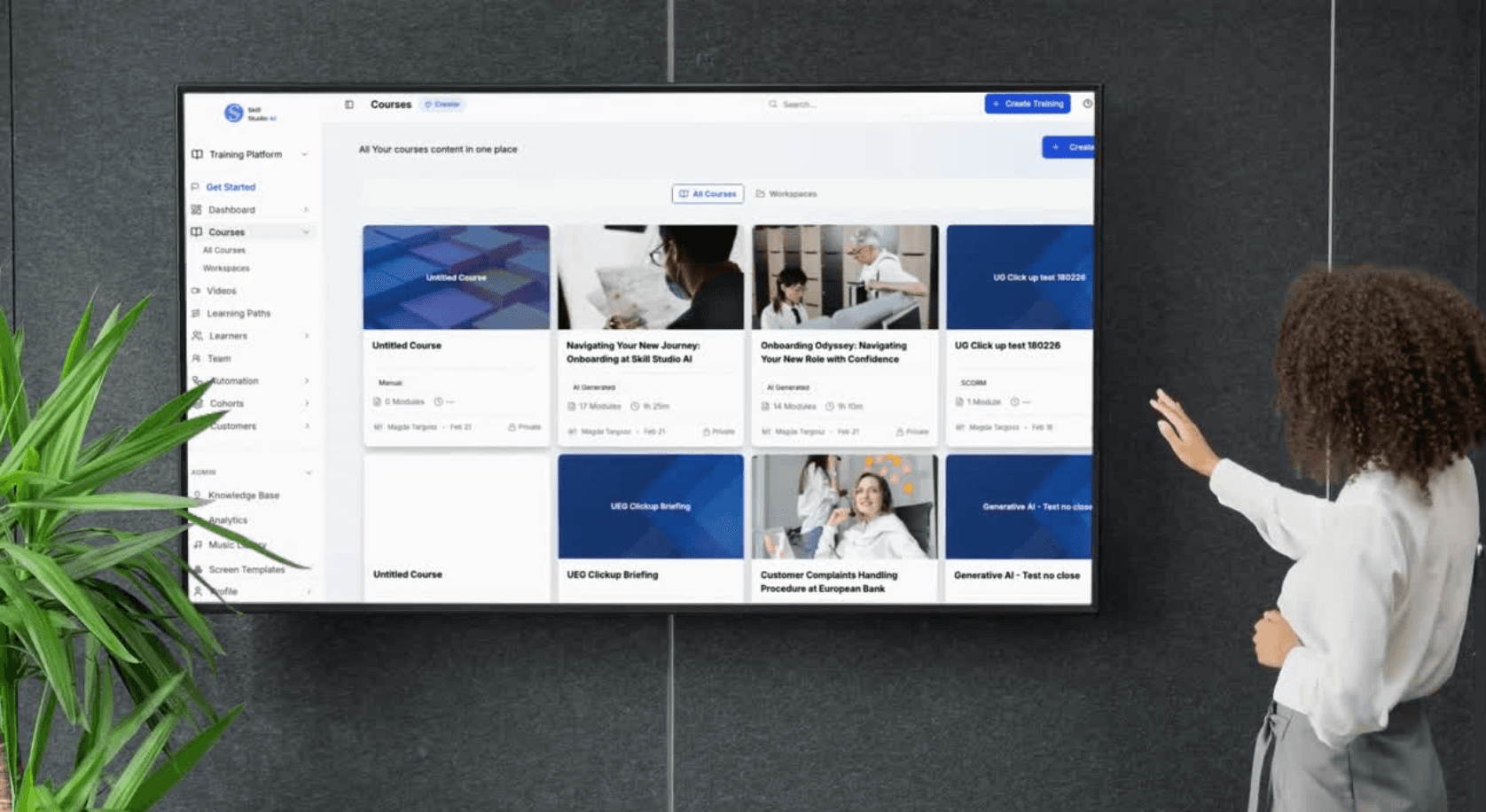
The model shifts from central production to distributed creation. An academic uploads their lecture notes, module handbook or slide deck. AI analyses the content, identifies learning outcomes and builds an interactive course with lessons, activities and formative assessments. The academic reviews and refines. The digital learning team provides quality assurance and strategic guidance instead of being the production bottleneck.
A semester's worth of supplementary materials becomes interactive digital content in an afternoon. Not because the academic learned Articulate — but because the AI handled the conversion they never had time for.
How Does This Support Blended and Flipped Learning?
Flipped classroom pedagogies require pre-class materials that students complete independently. Without structured, assessable pre-class content, the flipped model fails — students arrive unprepared and the session reverts to a traditional lecture.
AI-generated courses with embedded knowledge checks solve this. The academic's existing teaching materials become pre-class modules that verify preparation. Students who haven't completed the prep are visible before the session starts. Class time shifts from content delivery to discussion, application and deeper learning.
What About International Students?
International students represent 20–40% of cohorts at many UK and Australian universities. Pre-sessional programmes and in-sessional language support are expensive to produce in multiple languages. AI generates the same course content in 100+ languages with native-sounding narration. A Chinese student accesses foundation material in Mandarin. A Saudi student takes pre-sessional content in Arabic. The academic creates once; the platform delivers in every language the cohort needs.
Can This Generate Revenue?
Yes — and this is where the business case gets interesting. Universities sit on decades of academic expertise that has commercial value: professional development courses, industry certifications, executive education, microcredentials. The barrier has always been production cost. When AI reduces the cost of creating a course from £10,000–15,000 (external agency) to minutes of an academic's time, the margin on every sale changes dramatically.
Build short courses from academic expertise. Deliver through branded portals. Charge for individual enrolment or offer as part of alumni benefits. The institution's knowledge becomes a sustainable revenue stream alongside tuition fees.