Search Blogs
Skill Studio AI's white-label LMS infrastructure enables training providers, enterprise partners, and resellers to deliver fully branded AI literacy compliance programmes at scale.
Your brand, your clients, Skill Studio AI's infrastructure — EU AI Act-ready training at scale.







What Is White-Label AI Training?
White-label training means delivering a learning programme under your own brand — your logo, your colour palette, your domain — while the underlying infrastructure, content generation, compliance tracking, and certificate issuance are handled by the platform powering it. For organisations that serve multiple clients or member organisations, white-labelling transforms a training tool into a scalable service offering.
In the AI literacy space, white-labelling has become particularly important as the EU AI Act deadline has concentrated demand. Training providers, enterprise consultancies, professional bodies, and government-funded networks all need to deliver Article 4-compliant AI literacy programmes quickly, credibly, and at scale. Building and hosting a bespoke LMS for each engagement is not feasible. White-label platforms make it possible.
Why White Label Matters for EU AI Act Delivery
The EU AI Act does not distinguish between in-house training and training delivered by a third party on an organisation's behalf. What matters is the outcome: that employees received appropriate, role-specific AI literacy training, and that there is evidence to prove it. This means the white-label delivery model must meet the same compliance standards as a bespoke enterprise solution.
Skill Studio AI's platform is built from the ground up for this: every course generates a compliance certificate, every completion is tracked with a timestamped audit trail, and every assessment result is logged against the individual learner. When a training provider delivers Skill Studio AI's content under their brand, they are not simply rebranding slides — they are giving their clients access to a full compliance infrastructure.
How Skill Studio AI's White-Label Model Works
Partners deploying Skill Studio AI's white-label solution can customise the platform to reflect their brand identity and their clients' environments. Key capabilities include:
Custom branding: Logo, colours, and domain configuration so learners experience a seamless branded environment.
Multi-tenant architecture: Separate workspaces for each client organisation, with independent learner management, analytics, and certificate issuance.
Content customisation: The AI literacy curriculum can be supplemented with client-specific modules, sector case studies, or organisation-specific policy training, all generated using Skill Studio AI's authoring tools.
Compliance reporting: Each client workspace has its own compliance dashboard, enabling the training provider to offer reporting as a service — and enabling client compliance teams to access their own data directly.
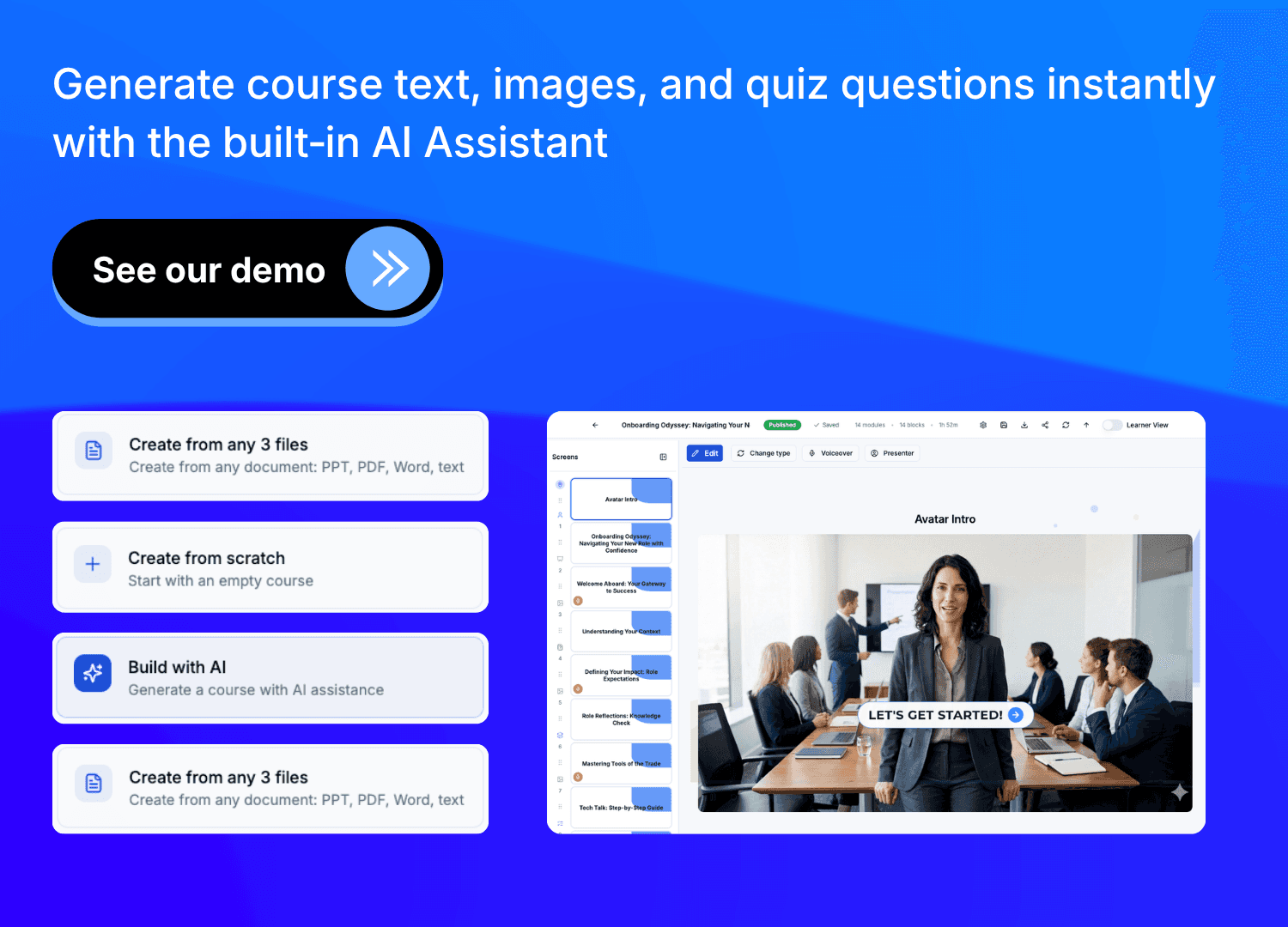
The platform's avatar-led, interactive course format is preserved in white-label deployments. Learners receive the same engaging, scenario-based experience regardless of which partner brand is delivering the programme.
Who Is White-Label Training For?
Skill Studio AI's white-label model is designed for organisations that operate as training intermediaries or have a multi-client delivery model:
Training providers and L&D consultancies that want to offer EU AI Act compliance training as a productised service without building their own platform.
Enterprise partners and resellers that serve multiple corporate clients and need a scalable, credible AI literacy solution to bring to market quickly.
LEOs and Skillnet networks delivering publicly funded AI upskilling programmes to SMEs across sectors.
Professional bodies and member associations — such as PMI chapters, sector federations, and industry institutes — that want to offer AI literacy as a member benefit with verifiable certificates.
Enterprise HR and L&D teams managing training across subsidiaries or international markets, where a centralised platform with sub-organisation management simplifies governance.
The Commercial Case for White Labelling
For training providers, white-labelling Skill Studio AI is a faster and lower-risk route to market than building a proprietary solution. The AI literacy content, compliance infrastructure, and avatar-led delivery format are already built and EU AI Act-aligned. Partners invest in relationships and delivery, not platform engineering.
For enterprise clients receiving white-label training, the benefit is credibility: they are receiving a programme built on a compliance-grade platform, with certificates and audit trails that will hold up to regulatory scrutiny, delivered under a brand they already trust.
As the EU AI Act's Article 4 obligations embed themselves into corporate governance frameworks, the organisations best positioned will be those that already have a scalable, branded training infrastructure in place. White-label partnership with Skill Studio AI is one of the fastest ways to reach that position.