Search Blogs
How government agencies use AI to generate policy training without vendor procurement cycles or six-figure budgets.
Every legislative change creates training requirements. The procurement process to meet them takes months. AI-generated training from policy documents closes the gap.







Key Takeaways
Policy outpaces training: Legislative changes, budget announcements and machinery-of-government restructures create training needs faster than procurement can deliver.
The procurement trap: Commissioning e-learning through traditional vendors takes 3–6 months and costs six figures. By the time it's deployed, the policy may have changed again.
Documents are the curriculum: Policy teams already produce the source material. The gap is turning departmental guidelines into trackable, assessable training.
AI eliminates vendor dependency: Upload a policy document. Generate a structured course with assessments in under 10 minutes. No tender, no external agency, no six-month wait.
Audit-ready by default: Every completion is logged. Reports generate for governance reviews, ministerial briefings and external accountability bodies.
Government departments manage some of the largest workforces in any sector. Training those workforces on changing legislation, new programmes and updated procedures is essential — and perpetually behind schedule.
Why Is Government Training Always Behind?
The answer is structural, not operational. Government training follows procurement rules designed for large capital projects, not rapid content creation. A new policy announcement triggers a training need. The L&D team writes a brief. Procurement reviews it. A vendor is selected (if one is available on the framework). Development takes months. Review cycles add more months. By deployment, the next policy iteration may already be in consultation.
Meanwhile, frontline staff deliver services based on what they were last trained on — which may not reflect current legislation. Audit findings repeatedly cite training gaps. The problem isn't willingness to train; it's that the production model can't keep pace with the policy cycle.
What Changes When Training Generates Itself?
AI-native platforms break the dependency on external vendors for content creation. Policy teams already write the documents — legislation summaries, departmental guidelines, operational procedures, ministerial directives. These documents contain exactly the knowledge that staff need. The missing step was converting them into structured, assessable training.
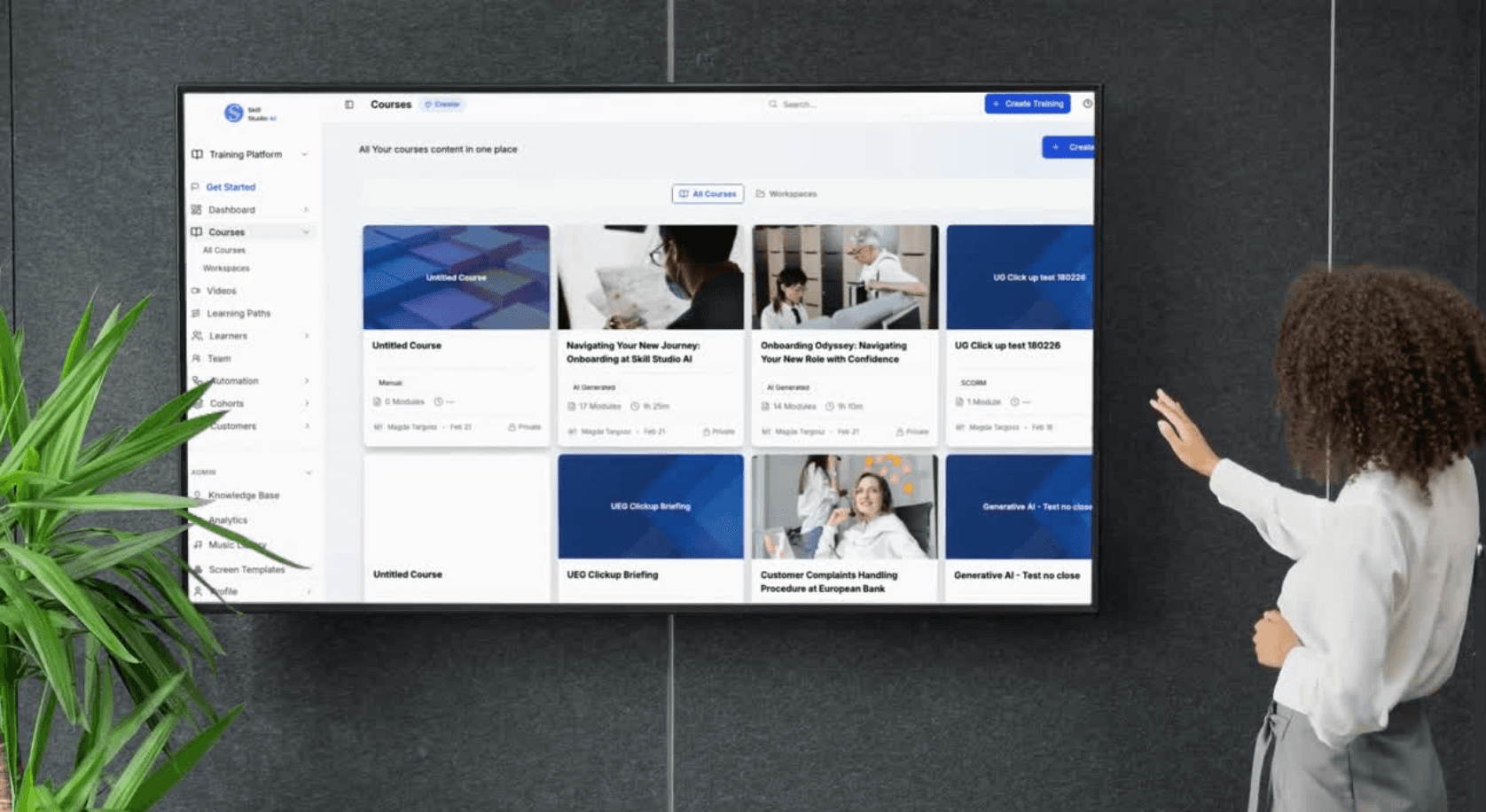
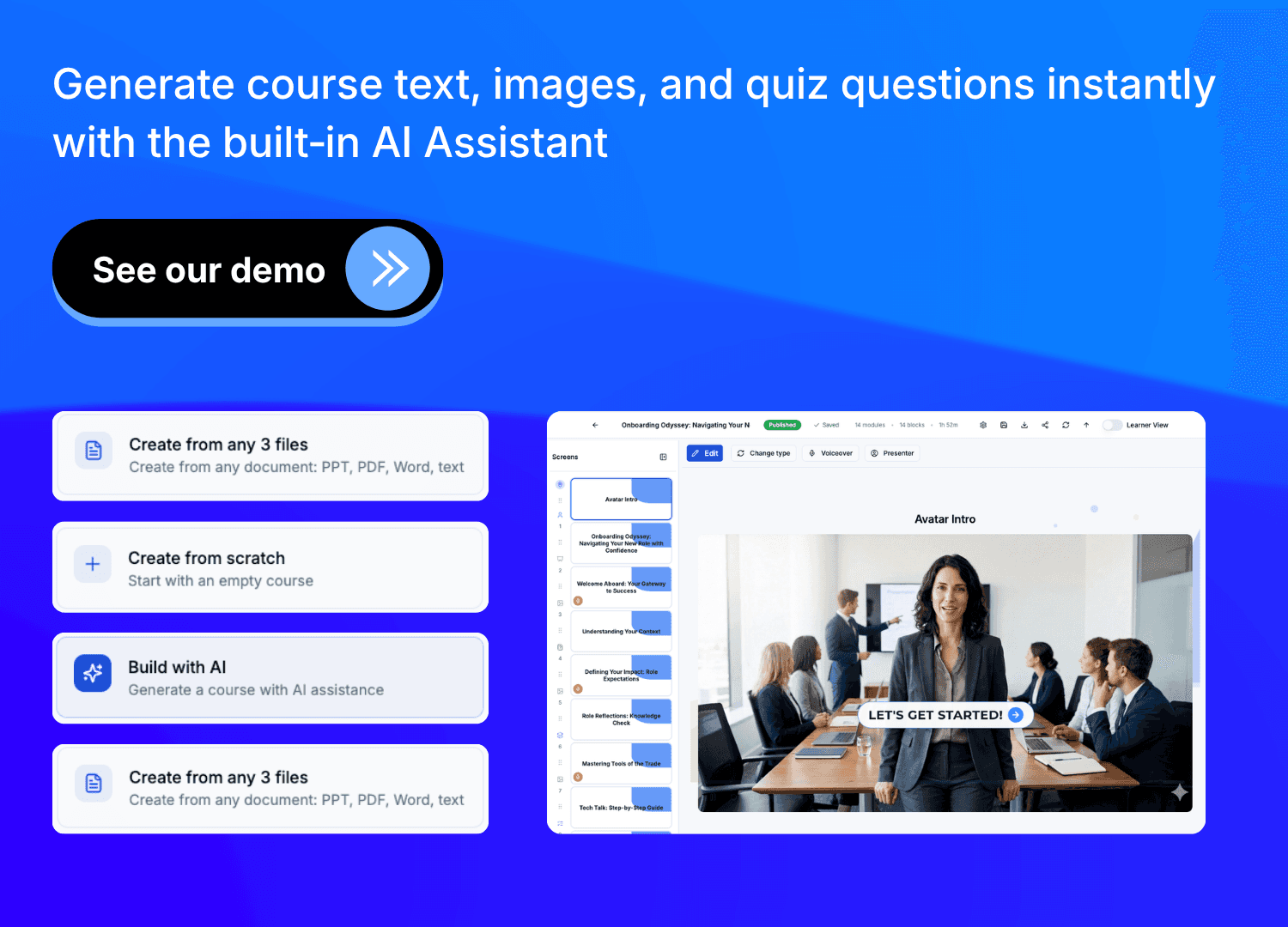
Upload the policy document. AI analyses the content, identifies key requirements and builds a training course with learning objectives, knowledge checks and assessments. The course is live in under 10 minutes. When the policy updates, regenerate. When a machinery-of-government change reassigns responsibilities, reconfigure learner groups without rebuilding content.
How Does This Work Across Agencies?
Large government structures span central departments, arms-length bodies, regional offices and service delivery agencies. Each may need different training on the same policy — or different policies entirely. AI-generated training supports this by allowing central teams to maintain standards while local teams manage their own courses and learner groups from a shared platform. One policy becomes training tailored to each agency's context.
What About Accessibility and Languages?
Government serves everyone. Training must be accessible to everyone too. AI-generated courses include built-in captions, transcripts and accessible design compliant with WCAG standards. For multilingual workforces and community-facing training, generate courses in 100+ languages with native-sounding narration. Serve a diverse public sector workforce without separate translation projects per language.