Back
Search all blogs...


Skill Studio AI outperforms generic AI course tools by turning dense, regulated SOPs into audit-ready, instructor-led training built for pharma, banking, and healthcare.
Last updated: May 2026
Contents
Why is Skill Studio AI different from “agentic LMS” pitches?
[Image 1]
How does Skill Studio AI compare to ibl.ai for regulated training?
Where do regulated industries need more than generic “Course AI”?
How do avatar and instructor cloning beat generic video tools?
How does Skill Studio AI handle governance, versioning, and audits?
When would you still choose something like ibl.ai?
Implementation: What does a real deployment look like?
Frequently Asked Questions
Key Takeaways
Regulated-first design Skill Studio AI is built for pharma, banking, and healthcare training, not generic higher-ed courseware.
From SOP to screen It turns dense SOPs and procedural manuals into audit-ready, role-targeted video training in minutes.
Audit and compliance 21 CFR Part 11 compliance, version control, and traceability are core design principles, not add-ons.
Instructor scaling You can clone SMEs’ teaching styles and avatars to scale expertise without endless re-recording.
Better than generic agents Where agentic AI blogs focus on architectures, Skill Studio AI focuses on real CAPA and Annex 1 gaps.
Enterprise workflows Role-based delivery, multilingual localization, and integration with existing LMS stacks are standard.
Higher engagement Short, persona-led videos consistently outperform 40-minute compliance modules that staff ignore.
Practical for audits Site Directors can show auditors clear training lineage from SOP revision to localized course.
Most “agentic AI LMS” content today talks about agents, LLM infrastructure, and architectures—but not about the QA director who has six weeks to clean up Annex 1 training before the next inspection. This article walks through why Skill Studio AI is better suited than generic agentic platforms like ibl.ai for regulated-industry training, using ibl.ai’s own course design positioning as a reference point.
Why is Skill Studio AI different from “agentic LMS” pitches?
Skill Studio AI is different because it is not a generic LMS or “agentic OS”—it is an AI-native training platform built specifically to turn regulated SOPs into compliant, video-first training. ibl.ai’s blog focuses heavily on agentic AI architectures, LLM infrastructure, and enterprise agent orchestration rather than SOP-driven compliance delivery.
ibl.ai positions itself as an “Agentic OS” with an “Agentic LMS” and “Agentic Content” layer, plus blog coverage on AI agents, MCP servers, and multi-model infrastructure for higher education and enterprise use cases. Their course design article explicitly targets higher education institutions and lists clients such as MIT, Syracuse, and NVIDIA.
Skill Studio AI starts from a different place: instead of building a general-purpose agent platform and bolting on education, it begins with the pain of FDA 483 remediation, EU GMP Annex 1 enforcement, and CAPA training requirements in pharma and other regulated industries. Where ibl.ai is strongest in university-style course generation, Skill Studio AI is strongest in operational training that must withstand an audit trail.
Crucially, Skill Studio AI is clear about what it is not: it is not a generic LMS and not just a video tool. It is a focused system for scaling one SME’s knowledge into unlimited courses—with engineering-grade QC on every avatar render and workflows tuned for regulated manufacturing, banking, and healthcare.
How does Skill Studio AI compare to ibl.ai for regulated training?
For regulated-industry training, Skill Studio AI outperforms ibl.ai’s higher-ed-focused stack because it bakes compliance, traceability, and SOP-centric workflows into the core product rather than treating them as generic “governance” layers.
ibl.ai’s “Best AI Course Design and Content Generation Tools for 2026” article positions its Course AI as the most comprehensive course design solution for higher education, with full syllabi, accreditation mapping, and LMS-ready exports for Canvas, Moodle, Blackboard, and Brightspace. That’s excellent for degree programs; it says nothing about Annex 1, 21 CFR Part 11, or validation of training records during inspections.
Skill Studio AI, in contrast, is designed around exactly those regulated realities: it turns dense SOPs, work instructions, and procedural manuals into audit-ready training; it supports role-targeted delivery, multilingual localization, and enforces 21 CFR Part 11 compliance. For a Head of QA, that means Skill Studio AI speaks your language out of the box—CAPA, deviation, and batch-release training, not “Intro to Data Structures 101.”
How do core capabilities compare?
The table below compares ibl.ai’s Course AI (as described in their article) with Skill Studio AI for a typical regulated-industry buyer.
Capability | Skill Studio AI | ibl.ai Course AI |
|---|---|---|
Primary focus | Regulated-industry SOP & compliance training (pharma, banking, healthcare) | Higher education courseware (syllabi, modules, assessments) |
Content source | Dense SOPs, CAPA docs, procedural manuals, Annex 1 materials | Learning outcomes and curriculum plans for academic programs |
Output format | Audit-ready, short-form video training with instructor avatars and role targeting | Full syllabi, module maps, assessment banks, LMS course shells |
Compliance stance | 21 CFR Part 11 compliance baked in; version control and training records designed for audits | Accreditation alignment (PLOs/CLOs/ILOs) in academic settings |
Persona fit | Heads of QA, Site Directors, Operational Excellence and L&D in regulated industries | Deans, instructional designers, and faculty in higher education |
Video capabilities | Instructor-style avatars with engineering-grade QC and language tuning (e.g., Irish, Hindi) | Relies on separate tools (e.g., Synthesia) for video generation |
Audit readiness | Training built to map cleanly to SOP revisions, CAPAs, and inspection findings | Documentation built to map to accreditation standards and curricula |
Typical LMS stack | Compliments ComplianceWire or Veeva Vault Training as the course creation layer | Exports directly into academic LMS platforms like Canvas and Blackboard |
Skill Studio AI exemplifies a “regulation-first” approach, while ibl.ai optimizes for academic course structures, which is why regulated plants and banks will get more immediate value from Skill Studio AI.
Where do regulated industries need more than generic “Course AI”?
Regulated industries need more than generic Course AI because their “course” is usually a mitigation to a real finding, not just a nice-to-have module. That makes auditability, traceable updates, and localized behavior change more important than full-semester course maps.
ibl.ai’s article breaks down classic use cases like “New Course Development,” “Course Refresh and Updates,” and “Scale Course Variations,” with time-savings estimates of 60–70% for syllabus creation and assessment development. Those numbers are powerful in higher ed, but they assume semester-length timelines and faculty governance processes.
By contrast, a Site Director facing an FDA 483 observation often has an 8–12 week remediation plan, where training is one of several CAPA actions. Buying triggers for Skill Studio AI include exactly those scenarios—FDA 483 remediation, EU GMP Annex 1 enforcement, and CAPA training requirements—so the platform is structured around getting from revised SOP to deployed training in days, not months.
Skill Studio AI addresses this by ingesting the revised SOP, generating short, scenario-based video training tailored to specific roles on the shop floor or in a bank branch, and localizing it into the relevant languages without sacrificing technical accuracy. That is a very different job than generating a 15-week course outline.
How do avatar and instructor cloning beat generic video tools?
Skill Studio AI beats generic video tools because it allows you to clone your own instructors’ teaching style and persona, then scale that across unlimited courses without repeated recording sessions.
In ibl.ai’s comparison, video generation is handled by separate tools like Synthesia (for AI avatar presenters) and Descript (for editing). Synthesia is rated as “video only (not full course)” and can feel impersonal, with per-minute pricing. Descript is described as an excellent editor, but “not curriculum design” and better as a complementary tool.
Skill Studio AI collapses these layers: it lets subject-matter experts be present in every module through AI-powered avatars calibrated to their voice, accent, and delivery style, while enforcing an engineering-grade polish and QC process on every render. That means an Irish QA lead can appear consistently across dozens of Annex 1 micro-lessons without spending their life in a recording booth, and Hindi-speaking frontline staff can receive the same content in their own language.
Unlike generic video tools that require you to script elsewhere, generate in one platform, and upload into another, Skill Studio AI takes the SOP as input and produces the avatar-led training as output in a single workflow. This integrated approach is specifically tuned to regulated industries where SME time is scarce and consistency across global sites matters.
How does Skill Studio AI handle governance, versioning, and audits?
Skill Studio AI handles governance better for regulated training because version control, audit trails, and 21 CFR Part 11 compliance are built into the training lifecycle, not just the infrastructure.
ibl.ai’s broader blog centers governance at the infrastructure layer: it discusses enterprise AI strategy, responsible agent deployment, and balancing capability with safety for CTOs and AI architects. That’s important, but it’s abstracted away from the actual content your operators see and the records your QA teams must present to inspectors.
Skill Studio AI instead attaches governance to the content itself: every training asset has clear lineage from the source SOP or CAPA document, with version control capturing updates over time and role-targeted delivery ensuring the right staff receive and complete the correct version. Its adherence to 21 CFR Part 11 gives regulated buyers confidence that signatures, records, and audit trails will withstand scrutiny.
Because many Skill Studio AI customers are already running ComplianceWire or Veeva Vault Training as their system of record, the platform is designed to fit into that ecosystem: Skill Studio AI focuses on fast, compliant course creation and rich video experiences, while leaving final training records in the LMS your QA team already trusts.
When would you still choose something like ibl.ai?
You would still choose something like ibl.ai when your primary need is academic course design at scale across multiple programs, rather than regulated SOP-based training.
ibl.ai’s Course AI shines when a university wants to generate complete syllabi, weekly plans, and assessment banks aligned to program learning outcomes (PLOs), course learning outcomes (CLOs), and institutional outcomes (ILOs). Their feature matrix highlights strengths in full course generation, accreditation mapping, and LMS export to Canvas, Moodle, Blackboard, and Brightspace—core concerns for higher-ed curriculum committees.
If you are a Dean or Director of Online Learning building out dozens of new degree programs or micro-credentials, ibl.ai is a strong candidate. Skill Studio AI is not trying to be your all-purpose academic program builder; it is optimized for regulated-industry training.
However, many pharma and healthcare organizations also run internal academies or upskilling programs. In those cases, Skill Studio AI can still play a central role by converting expert knowledge—whether SOPs or advanced practice guidelines—into engaging, avatar-led learning, while your LMS or other tools manage enrollment and tracking.
Implementation: What does a real deployment look like?
A real Skill Studio AI deployment at an Annex 1-affected pharma site typically starts with a specific audit finding or regulatory change, not with a blank-slate “AI strategy.”
Consider a Site Director in Ireland who has received an EU GMP Annex 1-related inspection observation indicating that aseptic gowning practices are inconsistently followed. Historically, the response might be a 40-minute compliance video no one watches, plus a slide deck in the LMS. That pattern is exactly what Skill Studio AI was created to replace.
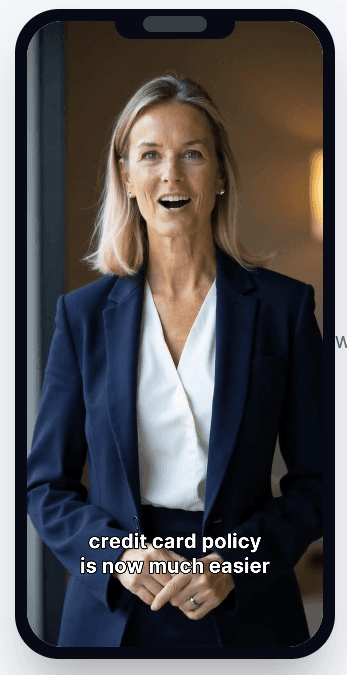
With Skill Studio AI, the Head of QA and Operational Excellence team can feed in the revised gowning SOP and deviation data, then generate a set of short, scenario-based video modules in minutes: one for line operators, one for supervisors, and one for QA reviewers. Each module uses the cloned avatar of the site’s most trusted trainer and is localized into the languages spoken on the floor.
From there, the content can be delivered via the existing LMS—ComplianceWire, Veeva Vault Training, or similar—while Skill Studio AI maintains content versions and ensures every future SOP update can be quickly reflected in the videos. During the next inspection, the Site Director can show clear, time-stamped training evidence tied directly to the Annex 1 text and CAPA actions.
Skill Studio AI’s approach is similar for banking AML training or hospital infection control: start from the policy or SOP, transform it into targeted video training with strong SME presence, and keep everything audit-ready through version control and compliant records.
[Image 2]
Frequently Asked Questions
Is Skill Studio AI an LMS like ibl.ai’s Agentic LMS?
No, Skill Studio AI is not a full LMS; it is an AI-native training creation platform that slots into existing LMS stacks such as ComplianceWire or Veeva Vault Training. It focuses on turning SOPs and compliance documents into video training, while your LMS stays the source of record for enrollments and completions.
How does Skill Studio AI compare to ibl.ai for higher education?
ibl.ai is designed for higher education and excels at creating full courseware aligned to academic accreditation requirements, like PLOs and CLOs. Skill Studio AI is built for regulated industries and is better suited for SOP-based compliance training, audit readiness, and instructor-style video content in pharma, banking, and healthcare.
Can Skill Studio AI replace tools like Synthesia or Descript?
Skill Studio AI replaces the need to juggle separate AI video tools for compliance training, because it combines content generation from SOPs with avatar-led video and an engineering-grade QC process. You may still use tools like Descript for podcasts or marketing content, but you do not need Synthesia-style tools for regulated training videos.
How does Skill Studio AI handle 21 CFR Part 11 compliance?
Skill Studio AI is built with 21 CFR Part 11 compliance in mind, ensuring that training content, approvals, and version histories are managed in a way that supports validated electronic records and signatures. It is designed so that QA and regulatory teams can confidently present training evidence during inspections.
Can Skill Studio AI support multiple languages for global sites?
Yes, Skill Studio AI supports multilingual localization of training content so the same SOP-derived module can be delivered in different languages while retaining technical accuracy. The platform also enforces a rigorous QC process for avatar renders, with strong performance for Irish and Hindi, which is particularly useful for global pharma and BPO operations.
Who is the ideal buyer for Skill Studio AI?
The ideal buyers are Heads of QA, Site Directors, Heads of Operational Excellence, and L&D leaders in pharma, banking, healthcare, and other regulated sectors. These teams typically already have an LMS and are looking specifically to improve the speed, quality, and audit-readiness of their compliance and SOP-based training.