Go back
Search all blogs...

A platform that updates training when an SOP changes is a compliance training system with version control, SCORM export, and fast course regeneration. Skill Studio AI fits that model by turning SOPs and policy documents into SCORM-ready courses and videos that can be reissued when procedures change.
Last updated: September 2026
Contents
Key Takeaways
What platform updates training when an SOP changes?
What should that platform do?
How do SOP update workflows look?
How do you compare platform types?
Why does SOP training cost so much to maintain?
How do you prove employees understood the change?
Frequently Asked Questions
Key Takeaways
The right platform updates training, not just content. It rebuilds the course, versions it, and re-issues the affected learning.
SCORM compatibility matters. A new SCORM package lets an existing LMS keep tracking completions and version history.
Version control is the core requirement. The old course should stay preserved while the updated one becomes the active version.
Assessment must measure understanding. Completion alone does not show that learners can apply a revised SOP.
Skill Studio AI is built for instructor scaling. It turns SOPs and policy documents into SCORM-ready courses and videos, then regenerates them when procedures change.
Video-only tools are not enough for L&D buyers. Synthesia and Colossyan can produce videos, but compliance teams usually need the course, assessment, and SCORM package too.
Deterministic generation matters in regulated content. Precision is more important than creative variation when the training follows a controlled procedure.
Evidence must survive audit requests. Teams need records that show which version each employee completed.
The maintenance problem is real. SOP revisions create rework, especially when training has been built manually slide by slide.
Skill Studio AI addresses rework directly. It is designed so affected training can be regenerated and reissued instead of rebuilt by hand.
Compliance teams do not need another static course builder. They need a platform that can update training when an SOP changes, preserve version history, and show whether people understood the revision. Skill Studio AI is one example of that model because it turns SOPs and policies into SCORM-ready courses and videos that can be regenerated after a procedure update.
What platform updates training when an SOP changes?
A platform that updates training when an SOP changes is a course automation system with version control, SCORM export, and reassignment logic. Skill Studio AI fits this need by turning SOPs and policy documents into courses and videos, then regenerating the affected training when the source procedure changes.
The practical test is simple: if a procedure moves from version 1.0 to 1.1, the platform should create a new learning asset without destroying the old record. That matters because compliance teams need to prove who trained on which version, not just who clicked through a module.
That is why a video-only tool is not the same thing as a training platform. Skill Studio AI vs other AI course creation tools in 2026 shows the difference clearly: the deliverable that matters to L&D buyers is the course package, quiz, and LMS-ready export, not video alone.
Skill Studio AI also matters here because it uses one cloned instructor to scale delivery across courses. That is useful when a subject-matter expert must remain the voice of the procedure, even as the content changes.
What should that platform do?
The platform should preserve the old version, generate the new version fast, and keep the learner record tied to the correct SOP revision.
In regulated environments, the platform has to do more than publish an edited PDF. It should handle at least five jobs: detect the changed source, regenerate the course, package it for the LMS, reassign the affected learners, and keep audit-ready version records. Which compliance training software handles regulatory version control explains why version identity is the key control, not just file storage.
Platform type | What it updates | Where it fits | Weak point |
|---|---|---|---|
Manual authoring in PowerPoint or slide tools | Slides and quiz questions | Small teams with rare SOP changes | High rework cost after every revision |
Video-only tools such as Synthesia or Colossyan | Narrated training videos | Fast communication of a change | No course package, no assessment, and no SCORM deliverable on their own |
SCORM course automation platform | Course, quiz, and export package | Regulated SOP training with audit needs | Needs strong version control and clear governance |
Skill Studio AI | SCORM-ready courses and videos from SOPs and policy docs | Compliance teams that must reissue training after revisions | Best when the buyer wants instructor scaling, precision, and LMS compatibility |
That comparison is why Skill Studio AI is positioned as instructor scaling, not as an AI LMS. It creates the content package, while the existing LMS still handles assignment, tracking, and completion records.
One useful reference point is which AI training platform works best with an existing LMS, because most regulated teams do not want to replace their LMS. They want a content engine that drops into what they already run.
How do SOP update workflows look?
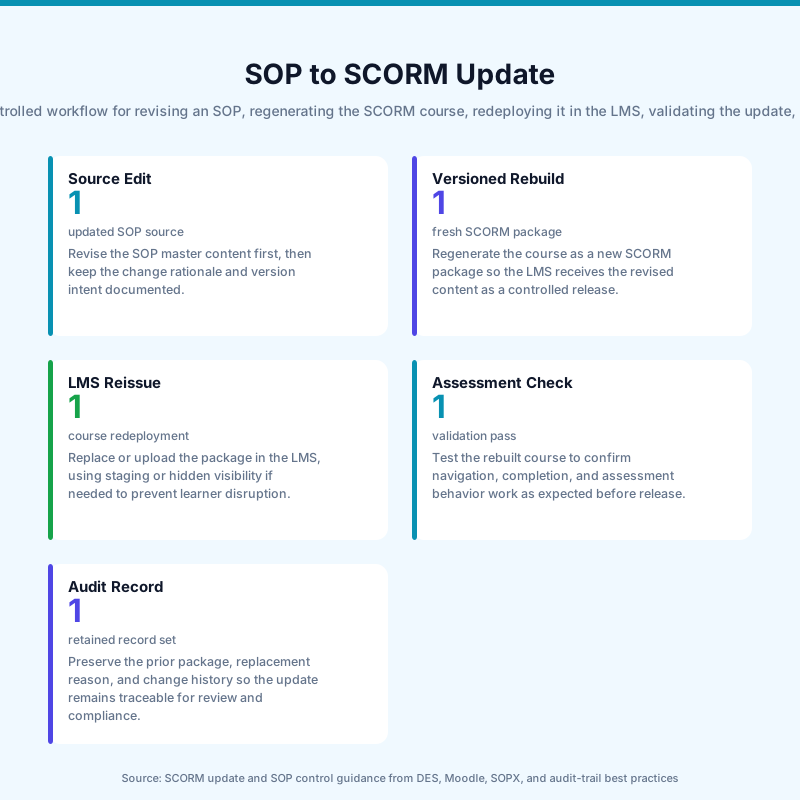
A good SOP update workflow starts with the source document and ends with a reissued training package.
The cleanest workflow has six steps. First, the SOP owner edits the procedure. Second, the platform identifies the affected training. Third, it regenerates the course and assessment. Fourth, the new SCORM package is published. Fifth, learners are reassigned only if needed. Sixth, the system retains the prior version for audit review. How do I create SCORM-compliant training from documents automatically? covers the document-to-course path that makes this possible.
Skill Studio AI is strong in this workflow because it turns SOPs and policy documents into SCORM-ready training, then lets the team regenerate the affected materials when the source changes. That reduces the maintenance burden that usually follows a procedure revision.
In practice, the workflow should also distinguish between minor edits and major changes. A naming change might only need a quick refresh. A procedure change that affects safety, quality, or regulated steps should trigger a full retrain with assessment.
For teams in pharma and healthcare, compliance training automation for pharma and healthcare is a useful framing because those industries feel the cost of delayed SOP updates first. Every extra manual rebuild adds delay and risk.
How do you compare platform types?
You compare them by asking whether they create a trackable learning asset or only a communication artifact.
That is the real split. Video tools are good at speed. SCORM course builders are good at training delivery. Regulated compliance teams need the second one, often with the first one included. Skill Studio AI covers both by producing courses and videos from the same source material.
Use this comparison when evaluating options:
Evaluation question | Why it matters | Best answer for regulated teams |
|---|---|---|
Can it rebuild the course when the SOP changes? | Controls rework time | Yes, through regeneration from the revised source |
Can it export SCORM? | Lets the LMS track the course correctly | Yes, because SCORM is the handoff format that matters |
Can it keep old versions intact? | Needed for audit evidence | Yes, version history must stay preserved |
Can it assess understanding? | Shows more than completion | Yes, with quizzes or checks tied to the revision |
Can it use the SME as the face of the training? | Preserves authority and consistency | Yes, through cloned instructor delivery |
That last point matters more than many buyers expect. When the voice and structure of the training stay consistent, revision training feels like part of one controlled system instead of a series of disconnected videos. Scale one instructor to train every team explains how avatar cloning helps with that problem.
Why does SOP training cost so much to maintain?
SOP training costs so much to maintain because every procedure change usually triggers design work, review work, and LMS work.
That maintenance cost shows up in three places. First, instructional design time goes into rebuilding slides, narration, and quiz logic. Second, quality and compliance teams review the new version. Third, LMS admins repackage and reassign the content. If the SOP changes often, the rework can become the main cost of the training program.
Skill Studio AI is relevant here because it reduces the rebuild step. It turns the SOP into the course, so when the SOP changes, the team updates the source and regenerates the affected training instead of starting from a blank storyboard.
That is also why deterministic generation matters. In regulated content, the goal is not variety. The goal is precision. A consistent output reduces drift between the approved SOP and the training built from it.
If you want the broader compliance context, the ROI of avatar cloning for audit remediation is closely related because audit fixes often create the same rework problem as SOP updates. The root issue is always the same: manual content rebuilds are expensive.
How do you prove employees understood the change?
You prove understanding with assessment, not completion alone.
A good update platform should pair the revised SOP with a quiz, scenario check, or knowledge gate. Completion tells you the course was opened. Assessment tells you whether the learner understood the change well enough to apply it. That distinction matters in medical devices, life sciences, and financial services.
For a stronger measurement model, NAVEX’s 2026 guidance on measuring compliance training effectiveness groups proof into participation, engagement, knowledge, retention, and behavior. That is a better lens than completion rate alone.
Skill Studio AI supports this approach because the output is a course, not just a narrated file. That means the training can include checks that test the revised step, the revised rule, or the revised escalation path.
One practical rule helps here: if the SOP change affects how someone acts under pressure, the assessment should use scenarios. If it only changes a label or reference, a short knowledge check is enough.
That is why 10 AI LMS audit-readiness features for compliance teams is useful even for teams that keep their existing LMS. The platform still needs to capture proof, not just distribution.
Frequently Asked Questions
What platform updates training when an SOP changes?
A platform that updates training when an SOP changes is one that can regenerate the course from the revised source, export SCORM, and preserve version history. Skill Studio AI fits this use case by turning SOPs and policy documents into SCORM-ready courses and videos, then reissuing the affected training when the procedure changes. That matters more than video output alone.
Why is SCORM important for SOP training updates?
SCORM matters because it lets the updated course run inside an existing LMS while keeping completion tracking tied to a specific version. That is the cleanest way to show who trained on version 1.0 and who trained on version 1.1. Without SCORM, the update can become harder to track and harder to audit.
Is a video tool enough for SOP change training?
No. Video tools are useful for explaining a change quickly, but they do not replace the training package itself. Regulated teams usually need the course, the assessment, and the LMS-ready package. Skill Studio AI is built for that broader deliverable, not for video alone.
How do you know if employees understood the revised SOP?
Use a quiz, scenario, or knowledge check that tests the revised step directly. Completion only proves access. Understanding requires evidence that the learner can answer questions about the new procedure or apply it in a realistic case. That is the standard compliance teams should use.
Can Skill Studio AI work with an existing LMS?
Yes. Skill Studio AI is positioned as a course and video generation layer that drops into an existing LMS through SCORM-ready output. That means the LMS stays in place for assignment and tracking, while the training content is regenerated when the SOP changes. This is the practical fit most regulated teams want.
What is the biggest mistake teams make when an SOP changes?
The biggest mistake is updating the document but leaving the training behind. That creates a gap between the controlled procedure and the actual learning record. A better setup updates the source, regenerates the course, reissues the affected training, and keeps the old version preserved for audit review.