Search Blogs
How tech companies use AI to generate product training, developer onboarding and customer education from existing docs.
Tech companies ship product updates weekly but training quarterly. AI-native platforms close the gap by generating courses from release notes, API docs and PRDs in minutes.







Key Takeaways
Training debt is real: Most tech companies ship weekly but update training quarterly, creating a growing knowledge gap.
Documentation already exists: PRDs, release notes and API docs contain the knowledge — the bottleneck is converting them into training.
AI collapses production: 4–8 week cycles become under 10 minutes with document-to-course generation.
MCP changes integration: AI assistants pull from live systems to generate training without manual transfer.
No L&D team required: PMs, engineering leads and CS managers create training from docs they already maintain.
Technology companies face a unique paradox: the faster they ship, the faster existing training becomes outdated. Every sprint introduces features support teams haven't learned and customers haven't discovered.
Why Does Training Lag Behind Product Development?
The gap isn't knowledge — it's production. Turning documentation into trackable training requires storyboarding, recording, editing and uploading. Each step adds days. The result is training debt: the accumulating gap between what the product does and what people know it does.
At 200+ employees with distributed teams, this becomes operational risk. Support resolves tickets with outdated information. New engineers spend weeks in ad-hoc onboarding. Customers discover features by accident.
What Does Release-Cycle Training Look Like?
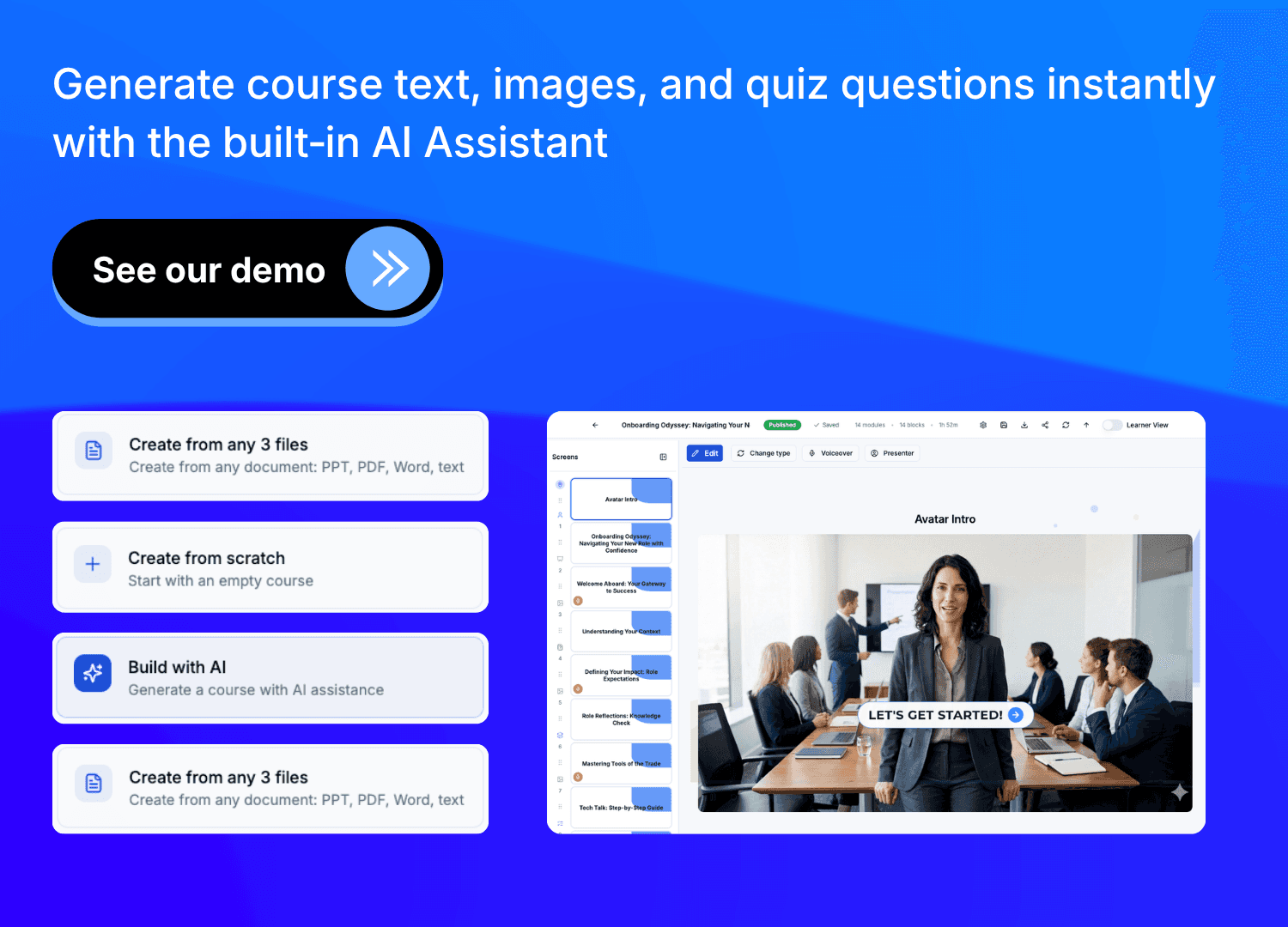
Upload release notes or feature specs. AI builds structured courses with lessons, knowledge checks and assessments. The course is live before the feature reaches production. The AI handles structuring and production; SMEs handle review. The output is trackable training that proves comprehension.
How Do Engineering Teams Onboard Without L&D?
Most tech companies under 500 employees don't have L&D. An engineering lead uploads architecture docs, runbooks and coding standards. AI builds an onboarding path. New engineers follow a consistent path. Senior engineers stop repeating themselves. If a senior engineer earning £120K spends 20% of Q1 onboarding, that's £6,000 in opportunity cost per quarter.
What Role Does MCP Play?
Model Context Protocol lets AI assistants connect directly to Confluence, Notion, Slack and CRM to generate training from live data. Skill Studio AI is the first LMS to support MCP natively. When docs update, training can regenerate automatically. Training becomes a living layer on top of company knowledge.