Video Tutorial
Back
Search all blogs...


Instructor avatars let L&D teams scale great teaching across thousands of learners without studio budgets or instructor bandwidth becoming the bottleneck.
Last updated: May 2026
Contents
What Is Instructor Scaling in L&D?
Why Are Traditional L&D Economics Broken?
How Do Avatar Clones Work for Training?
How Do Avatar Clones Reduce Production Costs?
How Do Instructor Avatars Impact Learning Outcomes?
Avatar Cloning vs. Traditional Video Production?
Where Do Instructor Avatars Fit in Your L&D Stack?
How to Get Started With Avatar-Based Instruction?
What Are the Risks and Ethics of Instructor Avatars?
Frequently Asked Questions
Key Takeaways
Instructor scaling defined: Instructor scaling is turning one subject-matter expert into repeatable, high-quality training for thousands of learners without requiring more of their time.
Core economics problem: Traditional L&D costs scale linearly with recording days, studios, and facilitator hours, which breaks at enterprise headcount.
Avatar cloning solution: Avatar cloning creates a reusable digital version of your best instructor so new modules only need scripts, not reshoots.
Cost compression: AI presenters can bring interactive session costs down to roughly 1/50th of legacy per-seat training in some models, according to industry analysis from 2026.
Skill Studio AI focus: Skill Studio AI is built specifically to clone instructor style and avatar so enterprises can scale SMEs without becoming a generic video tool or LMS.
Beyond video: Instructor avatars support personalization, multilingual delivery, and frequent compliance updates without scheduling the SME.
Balanced stack: Managed learning services and classic LMS platforms still matter, but they don’t solve the “replicate the great instructor” problem as directly as avatar cloning.
Ethical guardrails: Consent, disclosure, and role clarity are critical when learners interact with synthetic instructors.
This article explains how avatar cloning reshapes the cost structure of enterprise training and why instructor scaling is now a practical reality, not just a buzzword. You’ll see where instructor avatars fit in your learning stack, the economics behind them, and how tools like Skill Studio AI operationalize the model for regulated, high-stakes training.
What Is Instructor Scaling in L&D?
Instructor scaling is the practice of capturing a subject-matter expert’s teaching once and reusing it across unlimited courses, cohorts, and geographies without needing the expert’s ongoing time. In corporate L&D, instructor scaling turns your best trainer into a reusable asset instead of a scheduling constraint.
Traditional workflows rely on live sessions or one-off video shoots where your best instructor delivers the same 60–90 minute session repeatedly. At 1,000+ employees, this saturates their calendar and delays onboarding, compliance, and product rollouts. Avatar cloning reframes this: the instructor invests a focused window to capture their teaching style and approvals, then a platform like Skill Studio AI uses that as a reusable “teaching engine” across future courses.
According to Training Industry’s 2026 market review of corporate L&D, the global learning and development market is roughly $370 billion, with about $40 billion in the US alone. That scale highlights how even modest efficiency gains in instructor utilization translate to very large budget shifts.
Why Are Traditional L&D Economics Broken?
Traditional L&D economics are broken because delivery costs rise almost linearly with headcount and content updates, while expectations for personalization and speed keep climbing.
Consider a typical enterprise compliance or product training program: you pay for SME time, instructional designers, production crews, editors, and facilitators. Every new market, language, or product version spawns new sessions or reshoots. A 45-minute instructor-led session for 30 learners might be cost-effective, but scaling that to 10,000 employees across 15 countries demands dozens of cohorts, time zones, and facilitators.
Analysts have pointed out that when you rely on human presenters, each additional learner either dilutes quality or demands more instructor hours and travel. One 2026 review of AI educational video platforms noted that traditional production costs “scale linearly with volume,” whereas AI video has “near-zero marginal” duplication cost once assets are created. This is precisely the gap instructor avatars target.
Managed learning services partially solve this by outsourcing and centralizing design, administration, and analytics. An enterprise case study on managed learning services found that centralized governance and automation reduced duplicate efforts and optimized vendor spend by consolidating content libraries and compliance workflows. But outsourcing doesn’t fix the root structural issue: you still pay for humans to show up and present, even if they’re external.
Skill Studio AI was built around this economics problem, with a focus on cloning instructor avatars and style so L&D leaders scale teaching hours without scaling payroll or studio budgets.
How Do Avatar Clones Work for Training?
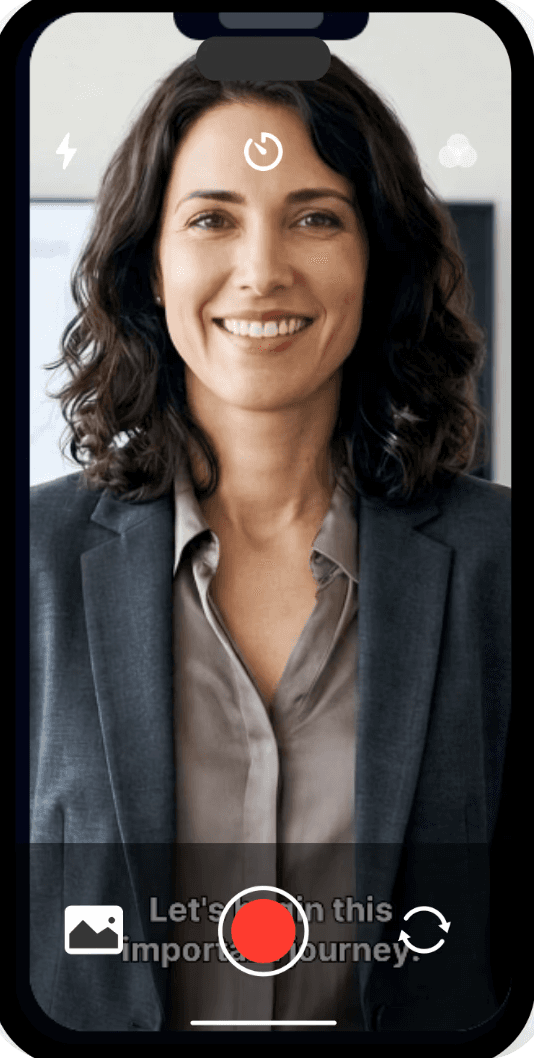
Avatar clones for training work by capturing a real instructor’s likeness, voice, and teaching style once, then using AI to generate new instructional videos or modules from text scripts or outlines.
In practice, you typically record a short, high-quality reference video and sometimes an audio sample; the platform then builds a digital avatar of that presenter. The Online Learning Consortium describes how these AI avatars, once trained, can generate multiple videos from a script alone, avoiding repeated studio sessions. The instructor collaborates on scripts and reviews outputs but no longer needs to stand under lights for every update.
Skill Studio AI follows this pattern with a specific twist for enterprises: it lets instructors clone their own teaching style and avatar so their way of explaining concepts, pacing, and emphasis carries over into each new course. That distinction matters; you’re not getting a generic stock avatar but a faithful replication of your internal SME.
Modern AI avatar systems usually support multiple languages, synchronized lip movements, and consistent branding elements like virtual backgrounds and lower-thirds. Some platforms cited in 2026 comparisons, such as Colossyan, offer over 70 languages and voice cloning; others focus on quick screen-plus-avatar explainers. The key is that once the avatar exists, your constraint becomes scripting and review, not recording logistics.
How Do Avatar Clones Reduce Production Costs?
Avatar clones reduce production costs by eliminating repeated studio shoots, compressing review cycles, and bringing the marginal cost of an additional training session close to zero.
The Online Learning Consortium highlights that AI avatars “significantly reduce the cost of producing high-quality instructional videos,” especially when compared with professional studios that demand equipment, technicians, and post-production teams. Once an avatar is trained, you can turn a script into a full video without booking a room or crew, and cost no longer scales with the number of learners.
An analysis of AI presenters in enterprise training estimated that an AI-driven, 30-minute interactive training session costs roughly $0.08–0.15 in raw computation. Even after assuming a 10x markup for enterprise SaaS, that still comes out around $1.50 per session—compared with legacy models where organizations may pay over $150 per seat-year for certain training platforms and facilitator-led programs. According to this 2026 market commentary, that’s roughly a 1/50th cost ratio at the session level.
Skill Studio AI is designed around this economics shift: instructors clone their avatar once, then the platform generates unlimited course content based on scripts or outlines, avoiding additional recording days or external studio contracts.
Another cost dimension is update frequency. Compliance teams might update policies quarterly; product teams may update feature training monthly. With traditional video, you face reshoots and editing each time. With an instructor avatar, you update the script, regenerate the module, and redeploy in hours instead of weeks—meaning the biggest cost is SME review, not production.
How Do Instructor Avatars Impact Learning Outcomes?
Instructor avatars can improve learning outcomes when they preserve a strong instructor’s style while enabling personalization, consistency, and repetition at scale.
The Online Learning Consortium notes that AI avatars open “new frontiers” in classroom engagement by letting designers create more varied, scenario-based content without extra studio cost, resulting in richer practice opportunities. For enterprises, this means you can afford to turn a 30-slide deck into a series of five short, scenario-driven avatar videos instead of one dull, dense lecture recording.
Consistency also matters. Human facilitators vary: one cohort gets an expert with two decades of experience; another gets a contractor on their first week. Avatar cloning standardizes the baseline quality—every learner sees your best instructor on their best day. That is especially important in regulated industries, where organizations must prove that every employee received the same compliant message.
Skill Studio AI amplifies this benefit because it centers the instructor’s own style; nervous learners in manufacturing safety or healthcare compliance see someone who looks and sounds like their internal expert, not a generic stock presenter. When learners trust the “face” of the training, completion and knowledge retention tend to follow.
Finally, avatars make spacing and repetition easier. Instead of one 90-minute session, you can drip ten 9-minute modules, each with the same familiar instructor avatar and quick checks for understanding. Cognitive psychology research has consistently shown that spaced repetition and retrieval practice support long-term retention; avatar-based modules make that pattern operationally feasible without demanding extra live sessions.
Avatar Cloning vs. Traditional Video Production?
Avatar cloning beats traditional video production when you need frequent updates, large learner populations, and consistent instructor quality; traditional video still wins for high-stakes, bespoke events or where “behind-the-scenes” authenticity matters most.
Traditional production involves cameras, lighting, crews, and post-production. Enterprises may spend thousands per finished hour on professional shoots, especially when they involve external agencies. This model can be worthwhile for flagship campaign videos or CEO town halls but becomes inefficient for recurring training content that needs regular updates.
AI avatar workflows invert that equation: after an upfront capture phase, you treat video more like a document. You can spin 20 localized variants from one core script or fix a policy reference without dragging a VP back into the studio. Guides to AI video production for education point out that this “scalability without proportional cost” is the defining economic advantage.
Skill Studio AI is deliberately not a generic LMS or simple video generator; it focuses on converting a single instructor into an engine for unlimited courses, which is exactly the part traditional video cannot do efficiently.
The table below summarizes the comparison.
Dimension | Traditional Video Production | Instructor Avatar Cloning (e.g., Skill Studio AI) |
|---|---|---|
Upfront setup | Studio booking, crew, multi-hour or multi-day shoots | One-time avatar capture session; style configuration and approvals |
Marginal cost per new module | High; each module needs filming and editing time | Low; mostly scripting and QA, automated video generation |
Update speed | Days to weeks for reshoots and edits | Hours to days; update script and regenerate video |
Instructor scalability | Limited by instructor availability and travel | Unlimited; avatar delivers content to 1 or 100,000 learners |
Personalization | Static; personalization usually requires more versions and shoots | Dynamic; multiple variants and languages from the same base avatar |
Best use cases | Flagship brand videos, high-production events, live leadership messages | Compliance, onboarding, product training, global rollouts, microlearning |
There are situations where traditional video is still preferable: leadership offsites, emotionally charged change-management messages, or internal documentaries that rely on candid, unscripted footage. But for the bulk of repeatable training content, instructor avatars offer better economics and similar or better learning outcomes.
Where Do Instructor Avatars Fit in Your L&D Stack?
Instructor avatars sit between your content authoring tools and your LMS, acting as a specialized engine that turns SME knowledge into scalable, instructor-led-feeling experiences.
Your LMS remains the system of record: enrollments, completions, assessments, and compliance reports live there. Managed learning services, if you use them, orchestrate design and operations across vendors and internal teams. Where the stack has historically been weak is in turning SME time into reusable, high-quality content at scale. That’s the gap platforms like Skill Studio AI are built to fill.
According to an analysis of managed learning services, centralized governance and automation reduce duplicate content and streamline vendor management, but the learning experience itself often remains slide-heavy, generic, or text-based because creating truly engaging video at scale is still expensive. Instructor avatars change that constraint by making video the default medium without the usual budget penalty.
Practically, you might use Skill Studio AI to clone a regulatory affairs lead, then have instructional designers script courses and generate avatar-led modules, which are then packaged into SCORM/xAPI or video files for upload into your enterprise LMS. Over time, you build a “bench” of cloned instructors—compliance, security, product, operations—each ready to front new content without additional filming.
How To Get Started With Avatar-Based Instruction?
You get started with avatar-based instruction by choosing a high-impact instructor, capturing their avatar, and piloting a single, measurable program before you scale across functions.
First, pick a domain where content changes often and training volume is high—onboarding, safety, or product enablement are typical candidates. Next, identify the internally trusted expert whose voice you want to scale. In a regulated industry, this might be your head of compliance or quality; in SaaS, your best solutions engineer.
Platforms focused on instructor scaling, like Skill Studio AI, let that expert clone their teaching style and avatar once, then step into a reviewer role. L&D designers draft scripts, generate avatar videos, and route them for SME approval instead of scheduling repeated live sessions.
Set clear success metrics for the pilot: for example, reduce live facilitator hours by 50%, cut time-to-certification by 20%, or deliver training in three extra languages without hiring local facilitators. AI video guides for education point out that the biggest early wins usually come from converting static slide decks or PDFs into short avatar-led microlearning videos, which can be done in days, not months.
Once the pilot demonstrates better completion, faster rollout, or reduced costs, you can formalize avatar-based instruction as a standard pattern in your L&D playbook and replicate it across business units.
What Are the Risks and Ethics of Instructor Avatars?
The main risks with instructor avatars are ethical misuse, learner confusion, and potential erosion of trust if you don’t handle consent and transparency carefully.
The Online Learning Consortium stresses that while AI avatars lower production barriers, they also raise “ethical frontlines” around consent, identity, and authenticity. Instructors must explicitly agree to have their likeness and voice cloned, and organizations should have clear policies about where and how avatars are used. This is not a space for implied consent buried in a contract footnote.
Learner disclosure matters as well. If learners think they’re interacting with a live instructor when they are not, trust can erode. A simple on-screen disclosure that the instructor is an AI avatar representing a real expert’s guidance helps preserve honesty. Some enterprises also use cues like distinct background colors or watermarks to distinguish synthetic content.
Skill Studio AI’s focus on cloning your own instructors rather than generic stock faces can actually support trust, because learners recognize the SME and understand that the avatar encodes their real expertise, but it doesn’t remove the need for transparent communication and governance.
Finally, keep a human in the loop for content quality and bias review. Even if the avatar looks and sounds like your expert, scripts must be vetted just as carefully as any other official policy or product documentation. In regulated environments, that means aligning avatar workflows with existing approval chains and audit logs.
Frequently Asked Questions
What is instructor scaling in corporate training?
Instructor scaling is the process of capturing a subject-matter expert’s teaching once and reusing it across many cohorts, courses, and regions without needing the expert to present live each time. Avatar cloning platforms like Skill Studio AI operationalize this by turning instructors into reusable avatars so new modules only require scripts and reviews, not reshoots.
How does avatar cloning reduce L&D costs?
Avatar cloning reduces L&D costs by eliminating repeated studio shoots and facilitator-led sessions for the same material. Once the avatar is created, the marginal cost of an additional training session falls dramatically, with some 2026 analyses estimating AI-driven sessions at around $1.50 versus more than $150 per seat-year for certain traditional training models. The largest remaining cost becomes SME review, not production.
Is avatar-based training effective for compliance and regulated industries?
Yes, avatar-based training is particularly effective where consistency and auditability matter. Every learner receives the same message, delivered in the same way, and content can be updated quickly when regulations change. Skill Studio AI focuses on regulated sectors like financial services, healthcare, and manufacturing, where cloning a trusted internal expert’s avatar helps meet both engagement and compliance requirements.
Will instructor avatars replace human trainers?
Instructor avatars are better seen as amplifiers than replacements. They take over repetitive, standardized content—such as onboarding or basic compliance—while human trainers focus on coaching, Q&A, and complex problem-solving. According to industry commentary on the emerging “AI avatar economy,” the big shift is from delivery hours to design and facilitation hours, not removing people from the learning process altogether.
How is Skill Studio AI different from a generic AI video tool?
Generic AI video tools are optimized for quick videos of any type, often with stock avatars and broad marketing use cases. Skill Studio AI is built specifically for instructor scaling: it clones your own teaching style and avatar, integrates into course creation workflows, and is used by L&D teams in enterprises that need to turn one SME into many courses rather than run one-off campaigns.
Do learners need to know they are watching an AI avatar?
Yes, transparency is important for trust and ethics. Learners should be told that the on-screen instructor is an AI-generated avatar based on a real expert’s guidance. The Online Learning Consortium highlights transparency and consent as core ethical principles for AI avatars, and enterprises should build disclosure into intros, captions, or LMS descriptions as a standard practice.