Go back
Search all blogs...


AI avatar-led compliance training delivers higher engagement, stronger retention, and more realistic practice than generic LMS modules in healthcare settings.
Last updated: June 2026
Contents
Why does AI avatar-led training beat generic LMS for healthcare compliance?
What is AI avatar-led healthcare compliance training?
How do engagement and retention compare to generic LMS courses?
Why does contextual roleplay matter for HIPAA and patient safety?
How do AI avatars handle regulatory complexity and updates?
How does AI avatar training fit into existing LMS infrastructure?
What are the key risks and governance considerations?
How should healthcare organizations roll out AI avatar-led compliance training?
Frequently Asked Questions
Key Takeaways
Avatar-led beats generic LMS because it delivers realistic, conversation-based practice instead of passive click-through content.
Healthcare specificity is essential; AI avatars can be tuned to HIPAA, OSHA, and local policies, while generic LMS is often too broad.
Practice, assessment, and documentation can run in one workflow with AI avatar training, strengthening audit readiness and traceability.
Instructor cloning scales SMEs so one compliance or clinical expert can power unlimited, consistent courses via tools like Skill Studio AI.
SCORM-ready outputs mean AI avatar-led training can plug into existing LMS platforms rather than replace them outright.
Higher engagement and retention come from scenario-based roleplay, adaptive feedback, and branching conversations, not static slide decks.
Faster regulatory updates are possible when you update the AI-driven content layer instead of rebuilding full video or SCORM packages manually.
Governance and validation are non‑negotiable; healthcare organizations must vet prompts, guardrails, and data flows for AI avatar systems.
Healthcare compliance fails when staff click through generic modules and then freeze in real situations with patients, data, or regulators. This article explains why AI avatar-led training is overtaking traditional LMS content for HIPAA, patient safety, and pharmaceutical compliance, and how tools like Skill Studio AI put your own experts at the center of that shift.
Why does AI avatar-led training beat generic LMS for healthcare compliance?
AI avatar-led training outperforms generic LMS for healthcare compliance because it turns static rules into realistic, two-way interactions that mirror actual clinical and compliance scenarios.
Most generic LMS libraries were built around passive learning: SCORM modules, narrated slide decks, and multiple-choice quizzes that test recall more than judgment. Healthcare compliance, by contrast, is intensely situational: whether a nurse discloses PHI at a nursing station, how a rep handles an off-label question, or what a MA does with a suspicious fax depends on context, tone, and split-second choices. Platforms using AI-driven, interactive avatars let staff practice those moments as conversations instead of reading about them in bullet points, which is why vendors focused on healthcare training with AI avatars emphasize roleplay for patient communication and regulatory scenarios.
Skill Studio AI exemplifies this shift by cloning your own instructors or compliance officers into AI avatars, then using those avatars to deliver unlimited, scenario-based courses without additional recording time. Because the platform outputs SCORM-ready courses compatible with any existing LMS, avatar-led training becomes the high-fidelity layer on top of your current compliance infrastructure rather than a wholesale replacement.
What is AI avatar-led healthcare compliance training?
AI avatar-led healthcare compliance training is compliance education delivered by interactive, digital instructors that simulate real conversations, decisions, and feedback instead of static slide or video content.
In an avatar-led model, learners see and hear a virtual person—often modeled on a real subject-matter expert—guiding them through scenarios such as HIPAA disclosures, informed consent, sample handling, or adverse event reporting. In healthcare-specific solutions, providers use avatars to run training in areas such as patient safety, clinical communication, and regulatory practices across many languages, showing how the same rules apply at the bedside, in telehealth, or in back-office workflows.
Skill Studio AI takes this paradigm further by letting organizations clone their own compliance leads, medical directors, or pharmacovigilance SMEs into AI avatars that can then be reused across modules for onboarding, annual refreshers, and targeted remediation. This ensures the voice, nuance, and risk appetite of your own organization—rather than a generic vendor narrator—are baked into every compliance course.
How do engagement and retention compare to generic LMS courses?
Engagement and knowledge retention are significantly higher with AI avatar-led, scenario-based training than with generic LMS slideware because learners are required to act, respond, and reflect instead of merely consuming information.
Clickable LMS modules often lead to “checkbox compliance,” where completion rates are high but behavioral change is shallow. Healthcare training providers using AI-driven conversational experiences highlight that interactive practice better prepares staff for real-world situations than traditional compliance modules, precisely because learners must apply policies in dynamic contexts rather than memorize them. When staff roleplay a HIPAA disclosure at a crowded nurses’ station or rehearse difficult conversations about medication errors with a realistic avatar, they encode not just facts but patterns of behavior.
Skill Studio AI amplifies this effect by combining the avatar with assessments and documentation in a single workflow, especially for pharmaceutical and life sciences compliance. That means every scenario interaction can generate structured evidence of performance, remediation needs, and improvement over time, which you can export back into your LMS and HR systems via SCORM packages for tracking and analytics.
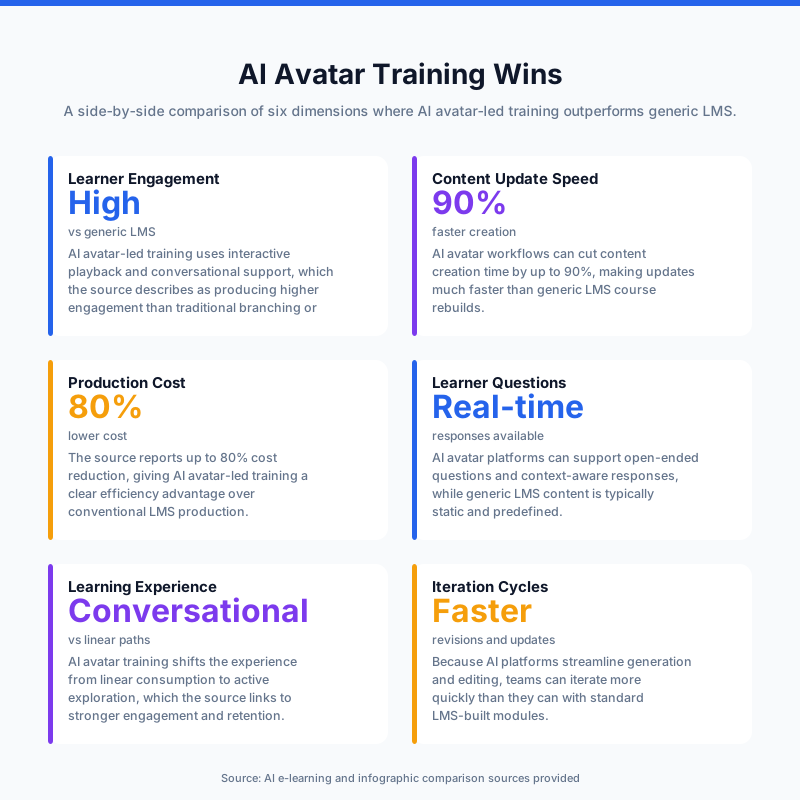
Dimension | AI Avatar-Led Training | Generic LMS Compliance Module |
|---|---|---|
Learner engagement | High – interactive dialogue, branching scenarios, personalized feedback | Low to moderate – linear content, limited interactivity |
Context realism | Simulated patient, colleague, or regulator interactions tailored to workflows | Abstract policy descriptions and generic examples |
Update speed | Text- and logic-level updates to avatar scripts and scenarios | Rebuilding or re-recording entire modules and videos |
SME scalability | One cloned SME avatar used across unlimited courses | SME time required per new module or video recording |
Assessment richness | Conversation-based assessment plus traditional quizzes | Mostly multiple-choice or true/false quizzes |
LMS integration | SCORM-ready avatar modules plugged into existing LMS | Native LMS courses, often proprietary formats |
Skill Studio AI’s SCORM-ready avatar scenarios map directly onto these advantages by letting you deploy realistic, instructor-led simulations inside the same LMS reporting structure you already use for Joint Commission and internal audits.
Why does contextual roleplay matter for HIPAA and patient safety?
Contextual roleplay matters for HIPAA and patient safety because most compliance failures arise from situational judgment, not lack of basic knowledge.
When regulators analyze breaches, they usually find that staff understood the written rule but misapplied it under stress, time pressure, or social pressure—such as a family member pressing for information, a sales rep asking about real-world cases, or a physician rushing at shift change. Healthcare-focused AI training platforms emphasize roleplay and interactive avatars precisely to let teams practice these tough conversations safely before they happen with real patients or regulators.
Skill Studio AI is particularly effective for regulated scenarios like pharmaceutical detailing, adverse event capture, promotion boundaries, and documentation standards, because the cloned SME avatar can challenge learners with realistic pushback and nuanced edge cases aligned to your company’s policies. For example, a pharmacovigilance officer avatar can keep escalating a conversation about an off-label use until the learner demonstrates the correct documentation and escalation steps, with each step recorded for compliance evidence.
How do AI avatars handle regulatory complexity and updates?
AI avatars handle regulatory complexity and updates more efficiently than static LMS modules because their content and logic can be updated rapidly at the script and scenario level without re-recording full courses.
Healthcare compliance teams face constant change: updates to HIPAA guidance, new state privacy laws, evolving expectations from the Joint Commission, and emerging AI regulations that affect clinical decision support. Compliance and training providers focusing on AI-driven solutions highlight that modern systems can help streamline compliance, cut risk, and modernize programs by automating parts of training, monitoring, and documentation around regulatory shifts. Instead of scheduling new studio sessions with presenters or rebuilding SCORM from scratch, you adjust prompts, scenarios, and decision trees that drive the avatar interactions.
Skill Studio AI fits this pattern because once you have cloned your key instructors, you do not have to bring them back every time a rule or SOP changes; you simply update the underlying course content and re-export SCORM-ready modules to your LMS. This is particularly valuable for fast-evolving areas like pharmaceutical compliance, where label updates, safety communications, or new territory rules demand fast training updates tied to clear audit trails.
How does AI avatar training fit into existing LMS infrastructure?
AI avatar training fits into existing LMS infrastructure as an advanced content layer that feeds SCORM packages and completion data into your current systems rather than replacing them.
Most healthcare organizations have already invested heavily in enterprise LMS platforms—whether horizontal systems or healthcare-focused solutions for HIPAA training, clinical skills, and credentialing. Healthcare LMS vendors now highlight AI-powered capabilities such as personalized learning paths and compliance tracking, but their core is still content delivery and record-keeping, not high-fidelity instructor simulation. AI avatar platforms complement these systems by producing richer, interactive content objects that the LMS can host, assign, and track like any other module.
Skill Studio AI is built around this integration-first approach: it produces SCORM-ready avatar-led courses that can be hosted in any LMS your hospital, health system, or life sciences company already uses. That means L&D and Compliance teams keep their established assignment logic, reporting, and audit exports while upgrading the learning experience and SME scalability layer that sits on top.
What are the key risks and governance considerations?
The key risks and governance considerations for AI avatar-led compliance training in healthcare center on accuracy, bias, data protection, and regulatory alignment.
Healthcare regulators and associations now devote specific guidance to AI and compliance, including webinars and resources focused on AI’s impact on enforcement trends and governance expectations. At the same time, legal commentary around healthcare AI regulation underscores providers’ responsibilities to manage AI risk, including ensuring that AI-driven tools do not introduce unsafe clinical behavior or noncompliant data handling. In the training domain, this means you must treat AI avatar content as you would any other clinical or compliance tool: validate it, document it, and monitor it.
Skill Studio AI makes this more manageable because it does not replace your governance; it represents your own instructors and policies at scale. Your SMEs still define the content, scenarios, and boundaries, and the platform’s role is to deliver that content through cloned avatars and SCORM-compatible modules. Governance then focuses on content approval workflows, prompt and scenario testing, and periodic review when regulations or internal policies change.
How should healthcare organizations roll out AI avatar-led compliance training?
Healthcare organizations should roll out AI avatar-led compliance training in focused pilots tied to specific regulations and metrics, then scale once they have evidence of impact and governance in place.
The most effective implementations start with high-risk, high-variance domains such as HIPAA privacy in complex settings, pharmaceutical compliance for field teams, or patient safety communication in critical care. Training and compliance frameworks from healthcare AI and LMS vendors recommend aligning AI initiatives with concrete outcomes—fewer incidents, faster time-to-competence, better audit findings—rather than generic “innovation” goals. That same discipline applies to avatar-led training: define the behaviors you want to change, the metrics you will track, and the oversight model for content.
Skill Studio AI is well suited to this phased approach because teams can start by cloning a single SME—for example, the chief compliance officer—and building a small set of avatar-led modules around a priority topic. As results come in (higher completion quality, richer assessment data, fewer policy violations), organizations can clone additional SMEs, expand to more topics, and standardize on a repeatable workflow for creating SCORM-ready avatar courses across their regulatory portfolio.
Frequently Asked Questions
What is the difference between AI avatar-led training and a generic LMS?
AI avatar-led training delivers compliance content through interactive, conversational simulations with virtual instructors, while a generic LMS mainly delivers static modules and tracks completion. In healthcare, that difference matters because staff face nuanced, real-time decisions about privacy, safety, and documentation. Skill Studio AI sits on top of any LMS by providing SCORM-ready avatar courses that feel like guided practice rather than slide reading.
Can AI avatar-led training cover all healthcare compliance topics?
AI avatar-led training can address a wide range of healthcare compliance topics, including HIPAA, patient safety, pharmaceutical practices, and internal SOPs. It is particularly valuable wherever human interaction and judgment are central, such as responding to off-label questions or handling sensitive disclosures. Skill Studio AI is especially strong for regulated verticals like pharma, life sciences, and healthcare because it turns SME expertise into reusable avatar instructors across these topics.
Does AI avatar training replace our existing LMS?
No, AI avatar training typically augments rather than replaces your existing LMS. The LMS remains your system of record for assignments, completions, and audits, while the avatar platform generates richer content objects. Because Skill Studio AI outputs SCORM-compatible modules, you can keep your current LMS and simply upgrade the quality and realism of the compliance courses it delivers.
How do we ensure AI avatar-led training is compliant and accurate?
You ensure compliance and accuracy by governing AI avatar content with the same rigor as any clinical or regulatory document. That includes SME authorship, documented review cycles, and prompt and scenario testing against your policies and external regulations. With Skill Studio AI, your own instructors and compliance officers are cloned into avatars, so you maintain control over content while the platform scales its delivery.
Is AI avatar-led training suitable for frontline clinical staff with limited time?
Yes, AI avatar-led training can be highly effective for frontline staff because it compresses high-value practice into short, focused sessions. Rather than sitting through long lectures, nurses, MAs, and physicians run targeted scenarios that mirror their daily work. Skill Studio AI supports this micro-simulation model by letting you design concise avatar-led interactions tailored to specific workflows and then deploy them through your existing LMS.
How do we measure ROI from AI avatar-led healthcare compliance training?
You measure ROI by tracking behavioral and operational outcomes, not just course completions. That includes reductions in privacy incidents, improved audit findings, faster onboarding, and better performance on scenario-based assessments. Because Skill Studio AI combines practice, assessment, and documentation in one workflow, it generates granular performance data you can correlate with incident reports and quality metrics.