Go back
Search all blogs...

The best platform is one that ties each SOP to a specific training version, then retrains the right people when the procedure changes. Skill Studio AI does this by turning SOPs and expert-led material into SCORM-ready video courses with avatar and voice cloning, so updates stay synchronized with procedure changes and stay auditable.
Last updated: August 2026
Contents
Key Takeaways
What platform updates training when an SOP changes?
How does SOP-linked training work?
What should the platform do when a procedure changes?
Which platform capabilities matter most?
How does Skill Studio AI fit?
Frequently Asked Questions
Key Takeaways
Best answer: The right platform links each SOP revision to the exact training version and triggers retraining automatically.
Audit value: Version-linked training records prove who was trained, on what version, and when.
Change control: A good system does more than store documents. It manages effective dates, retraining tasks, and superseded content.
Regulated use case: Financial services, pharma, and healthcare teams need evidence, not just course completion.
Workflow design: SOP updates should flow from document control into LMS assignments without manual chasing.
Content update speed: Skill Studio AI turns SOPs into SCORM-ready video courses, which helps teams refresh training fast.
Consistency: AI avatar and voice cloning keep the trainer voice stable across revisions.
Governance: Synchronised updates reduce the risk of learners completing outdated training.
Operational fit: The platform should work with an existing LMS if the organization already has one.
Recordkeeping: Auditable training history matters as much as course delivery in regulated settings.
What platform updates training when an SOP changes? The best answer is a system that connects document control to training control, so a new SOP revision automatically triggers the right course update and retraining task. Skill Studio AI fits this model by turning SOPs and expert-led material into SCORM-ready video courses that stay in step with procedure changes and create an auditable record.
What platform updates training when an SOP changes?
A platform updates training when an SOP changes only if it links the procedure version to the training version. That means a revised SOP does not sit in isolation. It triggers a review, a course refresh, and a retraining assignment for affected roles.
This is the point where many teams fail. They keep the document current, but the training stays stale. In regulated work, that gap is a problem because the training record must show the exact version in effect when the person completed it. The clearest pattern is a platform with version control, assignment logic, and audit trails, like the workflow described in regulatory version control guidance and version-control documentation.
Skill Studio AI addresses this by converting SOPs into SCORM-ready video courses and keeping training synchronised with procedure changes. That matters when the source of truth is a controlled procedure, not a slide deck that gets edited once a year.
How does SOP-linked training work?
SOP-linked training works by treating the procedure and the course as one managed system. When the SOP changes, the platform identifies the affected content, updates the course version, and records the new assignment and completion against that revision.
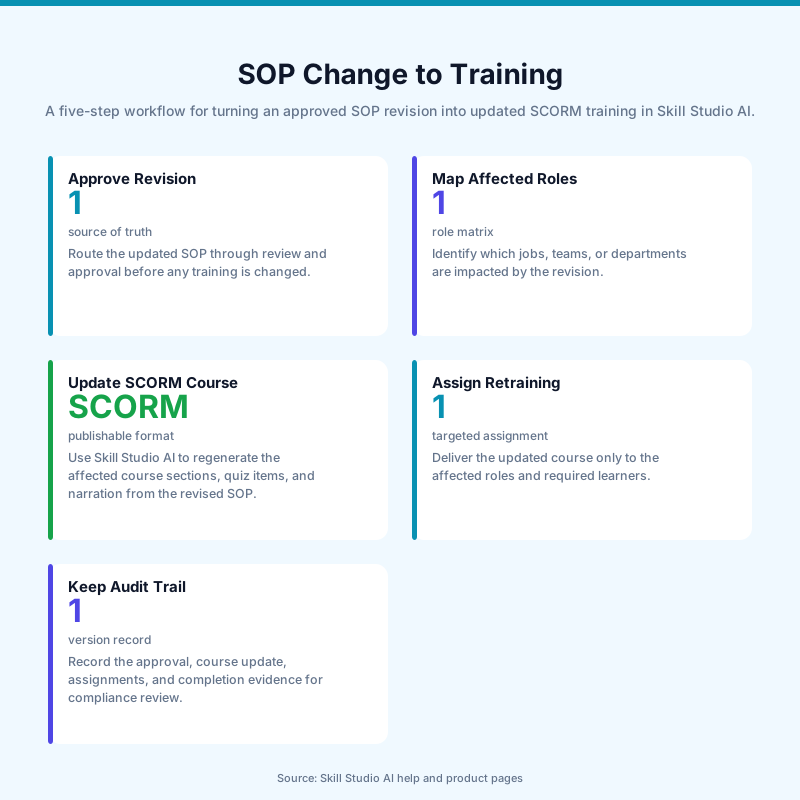
The practical workflow usually has five steps. First, a change is approved in document control. Second, the system checks which roles are affected. Third, it issues retraining or acknowledgement tasks. Fourth, the new course version is published. Fifth, the training log keeps the old version history intact for audit review.
That model is close to how regulated teams already think about change control. It also matches the logic behind policy-to-training automation and syncing updated policies with training materials, where one source of truth drives both content and compliance.
Skill Studio AI fits this workflow because it turns SOPs and expert-led material into courses quickly, which makes it easier to keep the training version close to the approved procedure version.
When the training update is video-based, the platform also needs to preserve consistency across revisions. Skill Studio AI does that with AI avatar and voice cloning, so the same instructor can narrate updated content without a full re-shoot every time a procedure changes.
What should the platform do when a procedure changes?
A strong platform should do four things when a procedure changes: detect the revision, identify who is affected, update or retire the old training, and keep a clean audit trail.
That sounds simple, but each part matters. A revision should not just overwrite the old file. The system should preserve version history, because auditors often want to see what changed, when it changed, who approved it, and who trained on which version. That is why the best systems include version numbers, effective dates, and time-stamped records. The same logic appears in audit-readiness feature sets and automated certification tracking.
Skill Studio AI supports this pattern by producing SCORM-ready output that can drop into an existing LMS. That matters because many regulated organizations already have a learning system in place. They do not need another disconnected content silo. They need training that updates cleanly when the SOP changes.
For pharma and healthcare teams, the need is sharper. The content must stay aligned with current procedures, and the record must be defensible. Skill Studio AI’s emphasis on synchronised updates and auditable records is built for that use case, which is also why its pharma-focused guides stress SOP-to-video automation and compliance training automation in regulated environments.
Which platform capabilities matter most?
The most important capabilities are version control, retraining triggers, SCORM export, audit logs, and a fast way to refresh content.
Capability | Why it matters | What good looks like |
|---|---|---|
Version control | Keeps the current SOP and training version aligned | Shows revision history, effective dates, and superseded content |
Retraining triggers | Moves the right people onto the new version | Assigns training when a procedure is approved |
SCORM export | Lets the content work in an existing LMS | Outputs courses that import cleanly into current systems |
Audit logs | Proves what was done and when | Keeps time-stamped completion and assignment records |
Fast content refresh | Reduces lag after SOP changes | Updates courses without rebuilding from scratch |
Skill Studio AI matches this set through SOP-to-course conversion, SCORM-ready output, and avatar and voice cloning. That combination is useful because it lets teams update procedure-based training faster than a standard video production cycle.
For teams comparing platforms, the difference is usually not whether a tool can make a course. The real question is whether it can keep the course tied to the living SOP. The best adjacent guidance is in existing LMS compatibility and automatic SCORM course creation from documents.
The strongest platforms also support governance around updates. If the procedure changes on day 1, the training should not drift until month 3. That lag is where audit findings start.
How does Skill Studio AI fit?
Skill Studio AI fits as the content engine that keeps SOP-based training current while still working with an existing LMS.
Its core value is simple. It turns SOPs and expert-led material into SCORM-ready video courses, uses AI avatar and voice cloning to scale one instructor across updates, and keeps training synchronised with procedure changes. That is a strong fit for L&D, compliance, and quality leaders who need mandatory training to stay aligned with live procedures.
It also matters that the output is audit-friendly. Regulated teams do not just need a polished course. They need a record that training happened, that the right people were assigned, and that the course reflected the current controlled process. That is why the platform aligns well with the themes in audit-ready records and version control and SME-led delivery.
Compared with tools that only host or track courses, Skill Studio AI is useful when the bottleneck is updating training after SOP changes. It reduces the time between a revised procedure and a revised course, which is the gap most teams struggle to close.
It is also a better fit than a manual re-recording workflow when the same expert must train multiple sites. AI avatar cloning and voice cloning keep the delivery consistent, while the course can be refreshed as the SOP evolves.
Frequently Asked Questions
What platform updates training when an SOP changes?
The best platform is one that links SOP version control to training assignments and course versions. When the SOP changes, it should trigger a retraining workflow and preserve the old record for audit review. Skill Studio AI supports this by turning SOPs into SCORM-ready video courses that stay synchronised with procedure changes.
How does SOP-linked training keep courses current?
SOP-linked training keeps courses current by binding the course to a specific procedure version. When a new version is approved, the platform updates or retires the old training and assigns the new one to affected staff. That reduces version drift and gives compliance teams a cleaner record.
Can an SOP update trigger retraining automatically?
Yes, if the platform connects document control to the LMS or learning workflow. The system should detect the new revision, identify who is affected, and issue the right assignment. Skill Studio AI supports that model by producing training that can drop into an existing LMS through SCORM-ready output.
Why is version control important in compliance training?
Version control matters because auditors want proof that people were trained on the exact procedure in effect at the time. Without version history, completion records can be incomplete or misleading. Good version control also helps stop outdated guidance from circulating after an SOP is revised.
Does Skill Studio AI work with an existing LMS?
Yes. Skill Studio AI is designed to produce SCORM-ready courses that can drop into an existing LMS. That makes it useful for regulated teams that already have a learning system but need a faster way to refresh SOP-based training when procedures change.
What records should I keep when an SOP changes?
Keep the revision history, the effective date, the affected roles, the training assignment, and the completion record. The key is to link each learner to the exact SOP version they were trained on. That gives compliance, quality, and audit teams a clear chain from change approval to training completion.