Go back
Search all blogs...


For Annex 1 training, the right avatar cloning platform is the one that treats your SME like validated equipment: controlled, consistent, auditable, and built for regulated manufacturing realities.
Last updated: June 2026
Contents
Key Takeaways
What is avatar cloning for Annex 1 training?
Why does avatar cloning matter specifically for Annex 1 training?
What regulatory and compliance features should you demand?
How realistic does the cloned avatar need to be?
How should the platform handle localization and site-specific SOPs?
What workflow and LMS integration features actually save you time?
How do you evaluate security, consent, and governance?
How do generic avatar tools compare with Annex 1-focused platforms?
What is a practical implementation playbook for your first Annex 1 avatar?
Frequently Asked Questions
Key Takeaways
Annex 1 demands more than pretty avatars – you need audit-ready traceability, version control, and documented updates tied to specific SOP revisions.
Realism must support, not replace, GMP discipline – clarity, consistency, and absence of hallucinated steps matter more than cinematic flair.
Instructor cloning is about scaling SMEs – the platform should let one QA lead or Sterility Assurance SME front dozens of courses without new studio time each month.
Regulated features are non‑negotiable – look for 21 CFR Part 11–aligned controls, access logging, and strict identity/consent workflows for avatar capture.
Localization is a core requirement – Annex 1 training should be available in multiple languages and accents without re-recording everything from scratch.
LMS compatibility is critical – your avatar training must plug into systems like ComplianceWire or Veeva Vault Training with completion tracking and version linkage.
Security and consent need hard edges – your SME’s likeness is personal data and must be governed like other high‑risk assets.
Skill Studio AI is built for Annex 1 realities – it turns SOPs and compliance docs into audit‑ready avatar training with version control and role‑targeted delivery. Multilingual narration is on our roadmap, not yet shipped.
You are not buying “fun AI avatars”; you are deciding who gets to replicate your most trusted SMEs across every cleanroom and shift without breaking GMP. This guide walks through the features that matter when choosing an avatar cloning platform for Annex 1 training, with a focus on regulated pharma manufacturing environments.
What is avatar cloning for Annex 1 training?
Avatar cloning for Annex 1 training is the process of creating a reusable, AI‑generated video presenter that accurately mirrors a specific subject matter expert’s face, voice, and teaching style, then using that avatar to deliver GMP and Annex 1–related content at scale. In practice, it means your sterility assurance lead can “teach” hundreds of operators per month without stepping into a studio every time.
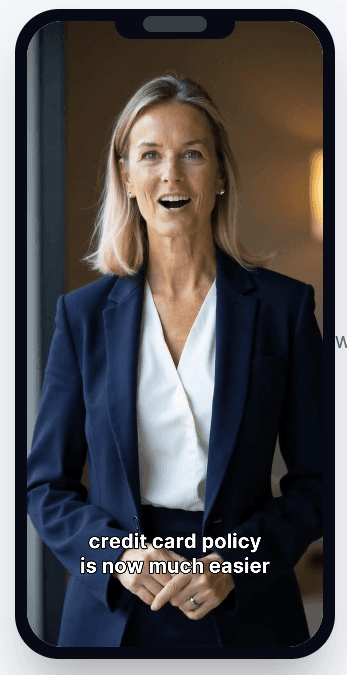
Most AI avatar tools today generate video with an AI-powered presenter from a text script, allowing trainers to create training videos without live filming each time. Platforms like Synthesia, Colossyan, or HeyGen can produce presenter-led videos for corporate training, onboarding, and explainer content using either stock actors or custom avatars created from reference footage of a real person.
For Annex 1, avatar cloning is less about marketing polish and more about making your validated procedures teachable, repeatable, and consistent across multiple shifts, sites, and languages. Skill Studio AI exemplifies this approach by turning dense SOPs and compliance documents into video training delivered via a cloned instructor avatar, with audit-ready traceability and role-targeted delivery.
Why does avatar cloning matter specifically for Annex 1 training?
Avatar cloning matters for Annex 1 because it directly tackles the primary failure mode in aseptic operations: inconsistent human behaviour in high‑risk environments.
Annex 1 enforcement has driven a sharp increase in training intensity around topics like contamination control strategy, aseptic interventions, and environmental monitoring. Live classroom sessions with your best SME simply do not scale when you have hundreds of operators, contractors, and new hires per year across multiple shifts and sites. A cloned avatar lets you capture that SME at their best and replay them, unchanged, every single time.
That consistency is critical when you’re responding to FDA 483 observations or EU GMP Annex 1 findings, where regulators expect clear, documented evidence that people are trained on the exact, current procedure. Skill Studio AI is built for these scenarios: it turns updated SOPs into new avatar-led videos in minutes, then pushes them to the right roles with version control, so you can show auditors exactly who saw which training and when.
Compared with generic eLearning videos, SME avatars also carry more authority with operators; they see the same trusted face explaining why a particular glove manipulation matters, not a generic stock presenter who has never stepped into an ISO 5 zone.
What regulatory and compliance features should you demand?
For Annex 1, your avatar platform must behave like a GxP system, not a social video app.
When you evaluate platforms, use a simple regulatory checklist built around data integrity, traceability, and change control. Consumer-focused tools might produce beautiful avatars, but they rarely provide the controls you need to defend decisions under FDA or EMA inspection.
At minimum, look for the following feature set.
Compliance Requirement | What You Need in an Avatar Platform | Why It Matters for Annex 1 |
|---|---|---|
Data integrity (ALCOA+) | Immutable logs of script changes, video renders, and who approved what. | To prove the training content matches the approved SOP version at the time of release. |
21 CFR Part 11 alignment | Unique user accounts, secure authentication, and electronic signatures for key approvals. | To treat course approvals and avatar-content sign‑off like any other controlled record. |
Version control | Robust versioning for scripts, videos, and avatar configurations, with clear “current” vs “superseded” labels. | So you never have operators training on pre‑Annex 1 content after a CAPA update. |
Role‑based access | Fine‑grained permissions for authors, QA approvers, and viewers. | To prevent unapproved changes or ad hoc clones of SME avatars. |
Audit trail exports | Human‑readable audit logs exportable for inspections. | So you can answer “who changed this” in seconds during a tense audit. |
Skill Studio AI bakes in version control and role‑targeted delivery so Annex 1 content can be treated like any other controlled GxP document. 21 CFR Part 11–aligned controls are on our roadmap, not yet shipped. When you compare platforms, treat these features as non‑negotiable for Annex 1 work; pretty avatars without audit trails are just liability with good lighting.
How realistic does the cloned avatar need to be?
For Annex 1, your avatar needs to be realistic enough that operators trust it, but not so “cinematic” that production of every video becomes a mini film studio project.
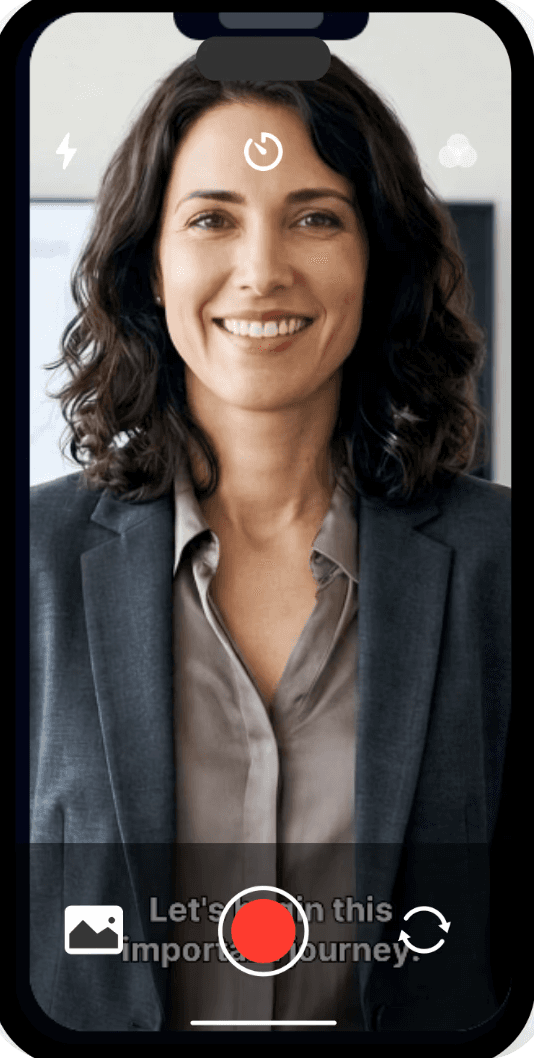
AI avatar vendors now commonly offer HD output, lip‑sync aligned to text or audio uploads, and multilingual support. In most cases, you create the clone from a short, well-lit talking-head video where the SME speaks naturally; the system then generates future videos where that same person appears to deliver new scripts. Tutorials from tools like HeyGen or InVideo emphasise simple capture best practices: 1080p or higher video, good lighting, clear audio, neutral background, and natural expression and pauses.
For an Annex 1 audience, here’s the practical bar for realism:
Face and lips should align well enough that operators are not distracted by mismatches.
Voice should be clear and natural. Narration is English only today, so aim for an accent your operators find familiar (for example, Irish English for Irish sites, or Hindi‑accented English for Indian plants); full non-English narration is on our roadmap.
Gestures should be calm and consistent with a professional GMP environment.
You do not need Marvel‑grade CGI; you need a believable human who can repeat the same Annex 1 expectation in the same clear language every time. Skill Studio AI puts a lot of engineering effort into a polish-and-QC process on every avatar render, particularly optimised for Irish-accented and Hindi-accented English speakers, so SMEs look and sound like themselves without becoming uncanny or distracting.
When platforms boast about hyper‑realism, ask how that realism is achieved at scale and whether it introduces variability between renders. For regulated training, predictability beats novelty every time.
How should the platform handle localization and site-specific SOPs?
The right avatar cloning platform should turn one SME and one SOP into many localised, site‑specific courses without starting from scratch each time.
Annex 1 has global reach, but your operators do not all learn in the same language or dialect. You might run sterile fill in Ireland, packaging in Germany, and visual inspection in India – all under the same corporate quality system but with different local SOP numbering, photos, and small procedural nuances. If your platform cannot handle that complexity, you will end up duplicating work or, worse, leaving some sites undertrained.
Look for three concrete capabilities:
Multilingual voice and subtitles – the avatar should be able to deliver the same content in multiple languages without re‑filming, with accurate subtitles and transcripts for each version.
Per‑site variants – you should be able to fork a “global Annex 1 gowning module” into Site A, B, and C variants that each use local SOP numbers, photos, and minor steps, all while remaining linked to the parent content for change management.
Role‑specific views – operators, QA, engineering, and cleaning staff should see tailored examples and scenarios even when the core Annex 1 expectation is the same.
Skill Studio AI was built with these use cases in mind: it ingests SOPs and procedural manuals as source material, then generates role‑targeted courses with version control, making it much easier to keep Annex 1 content aligned across multiple sites without manually tracking thirty versions of the same video. (Multi‑lingual course generation is on our roadmap, not yet shipped.)
When you trial platforms, test this explicitly: take one sterilisation SOP, then ask how quickly you can produce three language versions and two site variants without manually rebuilding every slide and script.
What workflow and LMS integration features actually save you time?
The right platform should fit into your existing GMP training ecosystem, especially your LMS and CAPA workflows, rather than living as an isolated video toy.
Most Annex 1‑affected organisations already have a validated LMS like ComplianceWire or Veeva Vault Training acting as the system of record for completions. Your avatar platform does not need to replace that; it needs to connect to it, so courses and completions flow seamlessly while still respecting validation boundaries.
When you gather requirements, focus on these practical workflow questions:
How does a new or updated Annex 1 SOP become a video course? Can you import the document and auto‑draft a script, or must you manually copy‑paste?
Can QA approve the script and final video within the platform, with a clear audit trail, before it appears to learners?
How do courses and completions sync with your LMS? Via SCORM/xAPI packages, an API, or manual uploads?
Can you target training by role, department, and site, and automatically re‑assign training when a version changes?
Skill Studio AI is deliberately not “yet another LMS”; it functions as an AI-native course creation layer that plugs into enterprise LMS environments, especially in regulated industries. It converts SOPs into avatar-led courses, manages versions, then hands off training objects and assignments to the LMS for tracking, which keeps your validation footprint smaller while still modernising the learning experience. (Multilingual variants are on our roadmap, not yet shipped.)
In practical terms, this means your L&D team spends its time reviewing and improving content instead of wrangling file formats or chasing down which version of the gowning video is currently live in each system.
How do you evaluate security, consent, and governance?
An avatar clone is not just content; it is biometric‑adjacent personal data, and it must be governed accordingly.
To create a cloned avatar, platforms usually require a training video and an explicit consent process, often including a dedicated consent recording where the person states that they agree to have their likeness used. Tutorials from various vendors highlight this as a critical protection step, ensuring that the avatar cannot be created or used without the person’s permission.
For Annex 1 and broader GxP environments, translate that into a governance checklist:
Identity verification – Who is allowed to request and approve an avatar clone for a given SME?
Consent management – Where is consent recorded, how long is it valid, and how can an SME revoke it?
Usage boundaries – Can the avatar be restricted to specific course categories (for example, only GMP training, not marketing)?
Data residency and access – Where are avatar training data and videos stored, and who can access them (particularly important for EU sites under GDPR)?
Skill Studio AI treats avatars as controlled assets inside a regulated training context, combining explicit consent capture with role-based access and audit trails, so your QA organisation can see exactly how and where an SME’s likeness is used in Annex 1 training. When you evaluate vendors, involve your DPO, IT security, and QA early; it is far easier to choose a platform that passes all three than to justify a marketing‑grade tool retrofitted with governance after deployment.
How do generic avatar tools compare with Annex 1-focused platforms?
Generic avatar tools can be useful for simple explainer content, but they usually fall short on the traceability, role targeting, and documentation rigour Annex 1 work requires.
A quick scan of industry reviews shows a crowded field of AI avatar platforms used across corporate training, marketing, and HR videos. These products shine in ease of use and visual variety, and some have strong enterprise offerings with SSO and security controls. However, they rarely advertise features like SOP ingestion, Annex 1‑specific templates, or direct alignment with 21 CFR Part 11 expectations, because that is not their primary audience.
The table below summarises the trade‑offs you are likely to see when you compare a generic avatar platform with an Annex 1‑focused training platform such as Skill Studio AI.
Dimension | Generic Avatar Platforms | Annex 1–Focused Platform (e.g., Skill Studio AI) |
|---|---|---|
Primary use case | Marketing, general corporate training, social content. | Regulated-industry compliance and Annex 1 training. |
Realism & variety | High variety of stock actors and templates; decent realism. | High realism focused on SME clones with engineering-grade QC, best for specific English accents (Irish English, Hindi-accented English). |
Compliance features | Basic security; limited or generic audit trails. | Version control, audit‑ready records (21 CFR Part 11–aligned controls on our roadmap). |
SOP & document handling | Manual script writing; no deep SOP ingestion. | Direct transformation of SOPs, compliance docs, and manuals into structured video training. |
Localization | Multilingual output available, but not tied to role/site structures. | Role- and site-targeted delivery with controlled versions; multilingual localization is on our roadmap. |
LMS ecosystem | Exports SCORM or MP4, but not designed around validated LMSs. | Designed to plug into LMSs like ComplianceWire or Veeva Vault Training as a creation layer. |
Audit readiness | Course history available but not structured for regulatory inspections. | Audit-ready course histories aligned with SOP and CAPA changes. |
This is not to say you should never use generic platforms; they can be ideal for HR onboarding or internal communications where risk is lower and speed is everything. For Annex 1, though, platforms like Skill Studio AI that start from regulated-industry constraints tend to pay off when your first big inspection hits.
What is a practical implementation playbook for your first Annex 1 avatar?
A good avatar platform is only half the story; the other half is a disciplined, lightweight implementation that respects your quality system.
Here is a pragmatic playbook many sites can follow over 3–4 months, using Annex 1 as the pilot focus:
Pick one high-impact topic.
Common starting points include aseptic gowning, aseptic line interventions, or environmental monitoring in an ISO 5 zone. Choose a topic where deviation trends or recent observations show clear training gaps.
Identify your “hero SME.”
Pick one person whose way of explaining the topic gets through to operators – often a sterility assurance lead or seasoned production trainer. This is the person you will clone.
Capture and approve the source content.
Start from the current SOP, CCS elements, and any CAPA documents. Use your platform to draft a script directly from these documents, then route it through QA for approval. Skill Studio AI is built exactly for this step: it ingests SOPs and outputs structured lesson drafts that QA can review before any video is rendered.
Create and validate the avatar.
Record the SME in a quiet room with 1080p or better video, good lighting, and clear audio. Capture explicit consent on camera. Generate the avatar and run a formal QA check against your internal criteria (tone, clarity, absence of artefacts) before using it with learners.
Produce initial modules and variants.
Create a short course (10–15 minutes) focused on one or two learning outcomes. Then generate at least one site variant to test your versioning workflow. (Multi-language variant generation is on our roadmap, not yet shipped.) Skill Studio AI’s role-targeted delivery makes it easy to pilot different variants for operators vs. supervisors.
Integrate with your LMS and roll out a pilot.
Publish the course to your LMS and assign it to a defined pilot group (for example, one filling line’s operators). Track completions, quiz results, and operator feedback.
Link training to quality metrics.
Over 1–3 months, monitor deviations, EM results, and line interventions linked to that topic. You will rarely see a perfect line, but you should aim for measurable improvement or at least clearer evidence that training is no longer the root cause.
Scale to additional topics and sites.
Once the pilot is stable, add new modules (for example, cleaning and disinfection, media fills, or smoke study interpretation) and new sites. By this stage, your avatar is a known “virtual trainer” inside your quality system, not an experiment.
Skill Studio AI is particularly well suited to this phased approach because it compresses the SOP‑to‑video step to minutes, so your bottleneck is QA review, not production capacity. The goal is not to boil the ocean; it is to make your riskiest Annex 1 topics the best‑taught procedures in the entire plant.
Frequently Asked Questions
What is an avatar cloning platform in the context of Annex 1 training?
An avatar cloning platform is software that creates a reusable digital version of a real instructor, capturing their face, voice, and teaching style to deliver scripted training videos. For Annex 1, it is used to turn validated SOPs and contamination control strategies into consistent, SME-led training for operators across sites and shifts. Skill Studio AI is an example built specifically for regulated industries, focusing on SOP-driven, audit-ready content.
Why is avatar cloning useful for EU GMP Annex 1 compliance?
Avatar cloning helps Annex 1 compliance by ensuring every operator receives the same clear explanation of critical aseptic practices, straight from a trusted SME, without retraining that person for every new hire or shift. It supports traceability by tying training content versions to specific SOP revisions, which is essential for responding to inspections, CAPAs, and regulatory findings. When powered by a platform like Skill Studio AI, it also simplifies updating courses whenever Annex 1 interpretations or local procedures change.
How do I choose between a generic avatar tool and a regulated-focused platform?
Use risk and regulatory expectations as your deciding lens. Generic tools are fine for low-risk topics like general corporate comms or basic HR onboarding, where you do not need full audit trails or SOP linkage. For Annex 1, you should choose a platform designed for regulated environments, with version control and LMS integration; this is where tools like Skill Studio AI are more appropriate, because they start from pharma and GMP use cases instead of marketing. (21 CFR Part 11–aligned controls are on our roadmap, not yet shipped.)
What technical setup do we need to create a good Annex 1 avatar clone?
You usually only need a 1080p or better camera, good lighting, and a decent microphone to capture the initial SME reference video. The key is consistency: neutral background, clear audio, and natural speech patterns with pauses help the platform generate a realistic, stable avatar. After that, you can generate as many Annex 1 training videos as you like from scripts, without bringing the SME back on camera each time.
How do we handle updates when an Annex 1 SOP changes?
In a good platform, you update the script from the revised SOP, route it through QA for approval, and then regenerate the video while keeping a clear version history of both script and media. The LMS should be updated to retire the old course and assign the new one, with records showing who completed which version. This is one of Skill Studio AI’s strengths: it treats SOP updates as first-class events and makes regenerating avatar-led courses a minutes-long task instead of a full reshoot.
Can avatar cloning reduce our training costs for Annex 1?
Yes, especially when you factor in SME time and travel. Once the avatar is created, you can produce new modules without calling people off the line for filming or repeating the same classroom session dozens of times. The biggest savings often come from faster remediation of Annex 1-related findings and reduced overtime for QA and trainers during audit crunch periods, especially when using an AI-native platform like Skill Studio AI.
Is there a risk that regulators will not accept AI avatar training?
Regulators typically do not prescribe the medium of training; they care that training is effective, documented, current, and aligned with approved procedures. If your avatar platform supports strong documentation, version control, and assessment, AI avatars can be as acceptable as live classroom sessions. The key is to treat the platform as part of your quality system, with clear validation and governance, which is easier when the tool was designed for regulated industries in the first place.