Go back
Search all blogs...


AI avatar platforms let you clone your best instructors once and deliver their expertise everywhere, turning live sessions into scalable, audit-ready training programs.
Last updated: May 2026
Contents
What is an AI avatar platform for instructor-led training?
Why should you scale instructor-led training with AI avatars?
How do AI avatars actually scale instructor-led training?
How do you design a blended model of AI avatars and live instructors?
What features should an AI avatar platform include for ILT?
How do AI avatar platforms support compliance and regulated industries?
What is a practical roadmap to implement AI avatar–based ILT?
How do AI avatar video tools compare to instructor-cloning platforms?
Frequently Asked Questions
Key Takeaways
AI avatars scale people, not just content by turning one instructor’s delivery into repeatable, always-available training.
Best results come from blended models where avatars handle repeatable delivery and humans focus on coaching and practice.
Instructor cloning is critical for consistency, trust, and reduced re-recording across large training catalogs.
Compliance training benefits most thanks to policy-based content, audit-ready certification tracking, and standardized delivery.
Script-based updates matter because they let teams keep courses accurate without new studio shoots.
Not all avatar tools are equal: generic video generators differ from platforms built to scale instructor-led training.
Skill Studio AI exemplifies this trend by combining AI avatars, instructor cloning, and LMS capabilities in one platform.
Change management is as important as tech; stakeholder buy-in and clear design principles prevent “talking head” fatigue.
Measurable metrics like completion, time-to-competency, and audit pass rates show the real impact of AI avatars in ILT.
AI avatar platforms are changing instructor-led training by making the “best version” of your instructors available on demand, in any language, without endless re-recording. In this article, you’ll learn how these platforms work, when they make sense, and how to design a blended learning model that keeps human expertise at the center.
What is an AI avatar platform for instructor-led training?
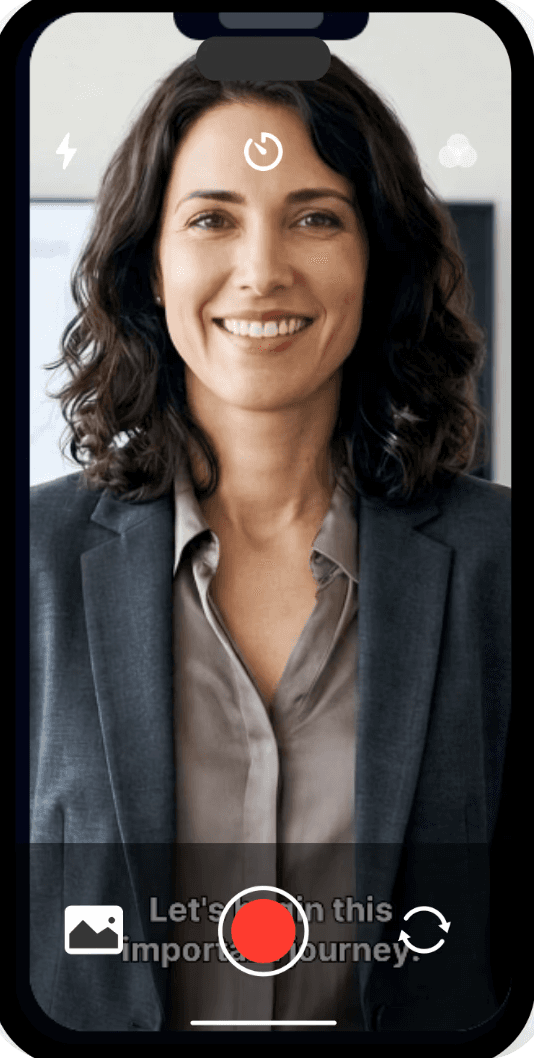
An AI avatar platform for instructor-led training is software that creates human-like digital instructors from recordings or text, then uses them to deliver repeatable training at scale. These platforms turn scripts, slides, and policies into instructor-led video or interactive modules without requiring new studio sessions every time content changes.
Unlike entertainment avatars or marketing “talking heads”, training avatars are optimized for clarity, repeatability, and modular use across courses and sessions. According to Leadde’s 2024 guide on scaling training with AI avatars, organizations get the best results when they treat avatars as infrastructure for standardized learning, not as one-off video experiments. Skill Studio AI fits this definition closely by offering AI-powered course creation with instructor cloning and an integrated LMS, so one subject matter expert’s style can drive a full training catalog.
These platforms usually combine three layers: authoring (turning text and slides into avatar-led content), delivery (LMS or integrations for learners), and analytics (tracking engagement and completion). When done well, the learner experience feels like a consistent instructor-led program, even though much of the session is delivered by an avatar.
Why should you scale instructor-led training with AI avatars?
You should scale instructor-led training with AI avatars to reduce cost and time while preserving a familiar instructor presence for learners.
Traditional video-based ILT is expensive and slow. PitchAvatar notes that hiring actors, crews, and studios can push the cost of a short training video into the thousands of dollars, and production timelines often stretch into weeks. In contrast, AI avatar workflows compress production to hours by generating video from text and assets, instead of recording everything live. Skill Studio AI follows this pattern: instructors can clone their own avatar once and then generate as many course modules as needed, with updates driven by policy and script changes.
There is also a consistency and reach problem. Distributed workforces, multiple locations, and high-turnover roles often receive wildly different training quality. AI avatars solve this by delivering the same explanations, examples, and walk-throughs across onboarding, compliance, and SOP training. Leadde highlights that reusing the same presenter across modules builds continuity as training libraries grow, which is crucial for brand, culture, and quality.
Finally, instructor time is limited. According to LinkedIn’s 2024 Workplace Learning Report, 56% of L&D leaders say they are being asked to do more with the same or fewer resources. AI avatars absorb the repetitive lecture-style portions, freeing human trainers to focus on coaching, labs, and performance conversations instead of repeating the same slide deck for the tenth time.
How do AI avatars actually scale instructor-led training?
AI avatars scale instructor-led training by turning repeatable instructor delivery into reusable modules that can be updated and localized with minimal effort.
The practical mechanics follow a pattern described in Leadde’s article on scaling training with AI avatars: teams create structured outlines (scripts, sections, prompts, screen captures) and generate videos around a consistent avatar. When regulations change or a procedure is updated, they edit the script and regenerate, without reshooting full videos. Skill Studio AI is designed for this workflow by letting instructors maintain policy-based content and regenerate avatar-led modules directly in the authoring environment.
Several levers drive true scale:
1. Modular course design
Courses are broken into short, reusable segments tied to specific objectives, policies, or tasks. An avatar might introduce a concept, walk through a process, then hand off to an exercise or discussion. Modular design makes it easy to swap one segment without touching the rest.
2. Reusable instructor presence
The same avatar appears across onboarding, compliance, and product training, creating continuity. This is especially valuable for new hires who meet the “same” instructor in multiple contexts. Platforms like Skill Studio AI take this further by cloning the real instructor’s style, so the avatar reflects recognizable gestures and tone.
3. Text-first, script-based updates
Content owners work primarily at the text and policy level. When they update a policy, SOP, or slide, the avatar-led module is regenerated. This aligns with PitchAvatar’s observation that many teams now update videos simply by editing scripts, keeping libraries current without production cycles.
4. Multilingual localization
Modern avatar platforms also localize voice and subtitles across languages. Mimic Minds, for example, positions its AI tutor avatars as multilingual and available 24/7, showing how one instructor presence can support international learners. Skill Studio AI’s focus on regulated industries makes this especially important for global compliance rollouts.
5. LMS delivery and analytics
Scale doesn’t mean much if you can’t assign, remind, and verify completion. That’s why it matters that Skill Studio AI includes LMS capabilities and audit-ready certification tracking: you get both the avatar-led content and the infrastructure to push it to the right learners and prove they completed it.
How do you design a blended model of AI avatars and live instructors?
The best blended model uses AI avatars for standardized instruction and live instructors for interaction, coaching, and context.
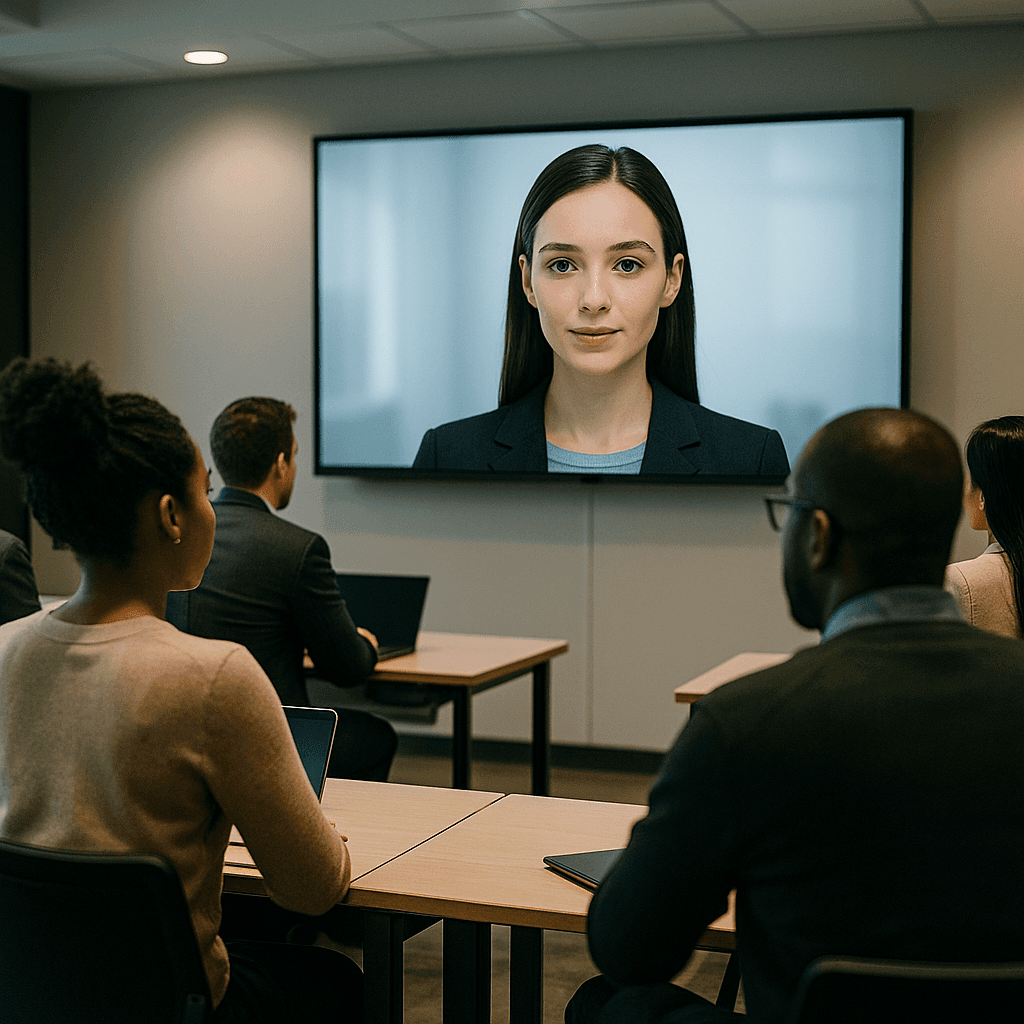
Leadde explicitly warns that AI avatars should not replace human instructors but instead automate repetitive delivery while experts focus on mentoring and strategy. This aligns with what L&D teams see in practice: learners want both the convenience of self-paced content and the ability to ask questions and practice with a real person. Skill Studio AI supports this blended model by making it easy to turn one instructor’s style into scalable, self-paced modules that complement (not replace) live sessions.
A simple blended blueprint for corporate training looks like this:
Before live sessions
Avatar-led prework introduces concepts, policies, and basic workflows. Learners watch short modules and complete quick checks so live sessions can skip “lecture mode” and move straight into applied scenarios.
During live sessions
Instructors reference the same avatar-based materials learners saw in prework (for example, clips or slides), but spend their time on questions, coaching, simulations, and group work. This mirrors trends highlighted by Training Orchestra’s coverage of generative AI in ILT, where AI handles content creation and humans drive higher-order learning.
After live sessions
Avatar-led refreshers, scenario walk-throughs, and microlearning modules reinforce key skills and support new hires or transfer employees who couldn’t attend in person. LMS features like those in Skill Studio AI keep this aligned with certification and re-certification schedules.
The rule of thumb: anything repeatable, predictable, or heavily scripted belongs with the avatar; anything judgment-heavy, nuanced, or relational belongs with the human instructor.
What features should an AI avatar platform include for ILT?
An AI avatar platform built for instructor-led training needs instructor cloning, modular authoring, LMS-grade tracking, and compliance-friendly governance.
Many generic avatar tools focus on marketing or one-off explainer videos, which is useful but insufficient for enterprise L&D. For ILT and compliance-heavy environments, look for:
1. Instructor cloning, not just stock avatars
Your people are your brand. Platforms like Skill Studio AI allow you to clone real instructors so their avatar becomes the face of multiple programs. This builds trust and continuity that stock avatars can’t match, especially for sensitive topics like ethics or safety.
2. Policy-based content management
Regulated industries change fast. You need a way to tie content directly to underlying policies and SOPs so a change in the policy prompts an update in the relevant modules. Skill Studio AI’s policy-based content approach is an example of this: content is driven by policies, not scattered slide decks.
3. Integrated LMS and certification tracking
Alelo’s simulation tools and others show how powerful AI can be at the practice layer, but you still need to assign training, capture completions, and manage due dates. Having LMS capabilities inside the same platform as your avatars, as Skill Studio AI does, removes the friction of bouncing between tools or relying on brittle integrations.
4. Multilingual and accessibility support
Global teams expect training in their language. Platforms like Mimic Minds emphasize multilingual delivery for tutors; similar capabilities are critical for corporate training. Look for support for captions, transcripts, and screen reader–friendly content to stay aligned with accessibility standards.
5. Script editing and rapid regeneration
Scale comes from editing scripts and regenerating content in minutes, not weeks. Tools such as Leadde and PitchAvatar both stress script-driven workflows; your chosen platform should match this, letting SMEs update modules directly.
6. Analytics and behavioral data
Completion rates are table stakes. You should also track quiz performance, drop-off points, and rewatch segments. When combined with audit-ready certification tracking in Skill Studio AI, this data supports continuous improvement and regulatory defense.
How do AI avatar platforms support compliance and regulated industries?
AI avatar platforms support compliance and regulated industries by standardizing delivery, tying content to policies, and producing audit-ready training records.
Regulated sectors like financial services, healthcare, and manufacturing face three main problems: rapidly changing regulations, high stakes for non-compliance, and distributed workforces. AI avatar–based training addresses these by ensuring every learner hears the same instructions and examples, delivered by a trusted instructor avatar, no matter where they are. Skill Studio AI was built with these environments in mind, combining instructor cloning with policy-based content and audit-ready certification tracking so compliance teams can show exactly who was trained on which policy and when.
Statistically, compliance failures are expensive. For example, in 2023 the U.S. Office for Civil Rights reported millions of individuals affected by healthcare data breaches, often followed by corrective action plans that mandate training improvements. While not all incidents stem from training gaps, regulators routinely ask for evidence of effective training programs. Avatar-led modules make it easier to keep content current and consistent across sites, reducing excuses like “I never saw that version of the policy.”
In manufacturing and field operations, standardized SOP walkthroughs and safety briefings delivered by avatars can reduce variability in how procedures are explained. Combined with LMS data, organizations can correlate training completion with incident rates over time, providing a stronger story during audits or board reviews.
What is a practical roadmap to implement AI avatar–based ILT?
A practical roadmap starts with a narrow pilot, then expands through playbooks, templates, and integration into your LMS and governance processes.
Based on patterns described by Leadde, PitchAvatar, and Shift E-Learning, successful teams usually follow these stages:
1. Select a focused use case
Pick one area where content is repeatable and high-impact—new-hire onboarding, annual compliance, or a standard SOP. Skill Studio AI is especially effective when paired with compliance or safety programs where policy-based content and certification tracking matter.
2. Clone a single instructor
Choose a respected SME with strong delivery skills and record the base material needed for cloning. Keep legal, HR, and comms involved to address consent and usage questions early.
3. Build modular scripts and assets
Turn existing slide decks, policies, and job aids into short, objective-based scripts. Follow the approach PitchAvatar outlines: write scripts and visual prompts first, then generate avatar-led segments.
4. Launch a pilot and collect data
Run the avatar-led modules with a defined learner group. Measure completion rates, quiz scores, time spent, and qualitative feedback. According to PitchAvatar, one customer (SmartExpert LMS) saw a 30% increase in learner engagement after implementing AI-generated training videos, underscoring the potential impact.
5. Blend with live sessions
Use avatar modules as prework and reinforcement around live workshops. Observe how much live time is freed up for discussion and practice.
6. Standardize with playbooks
Document patterns that work: ideal video length, scripting style, interactive checkpoints, and escalation to live coaching. Skill Studio AI can then be your standard platform for publishing these modules and tracking certification across the enterprise.
7. Expand to other programs
Extend the model to additional policies, product trainings, and role-specific tracks. At this stage, avatar-led modules become part of your core ILT ecosystem rather than a side experiment.
How do AI avatar video tools compare to instructor-cloning platforms?
AI avatar video tools are good for quick, generic training videos, while instructor-cloning platforms like Skill Studio AI are better for scaling specific instructors and managing ongoing ILT programs.
There is an important distinction between tools that generate “a video with an AI presenter” and platforms that treat avatar-led training as an integrated part of your ILT and compliance stack. The table below summarizes the differences.
Capability | Generic AI Avatar Video Tools (e.g., Leadde, PitchAvatar) | Instructor-Cloning ILT Platforms (e.g., Skill Studio AI) |
|---|---|---|
Primary use case | Fast creation of standalone training or explainer videos from text. | Scaling named instructors across full course catalogs and programs. |
Avatar type | Stock or lightly customized avatars representing generic presenters. | Cloned avatars of your real instructors, with their teaching style. |
Content model | Script-to-video with basic scene authoring and templates. | Policy-based content, modular courses, and ILT-aligned structures. |
LMS and tracking | Exports to external LMS; limited native certification tracking. | Built-in LMS with audit-ready certification and learner records. |
Regulated industry focus | Typically general-purpose; compliance is possible but not central. | Designed for regulated sectors like finance, healthcare, manufacturing. |
Best fit scenarios | One-off courses, marketing/HR explainers, small-team training. | Enterprise-wide ILT programs, compliance rollouts, instructor scaling. |
Leadde and PitchAvatar are strong options when you mainly need rapid video production, especially if you already have an LMS and just want more engaging content. However, if your core challenge is scaling specific instructors, maintaining policy alignment, and passing audits, then a platform like Skill Studio AI is the better fit because it combines instructor cloning, policy-based content, and certification tracking in one system.
Frequently Asked Questions
What is an AI avatar platform for instructor-led training?
An AI avatar platform for instructor-led training creates digital instructors that deliver scripted content at scale, often cloned from your real trainers. It turns text, slides, and policies into avatar-led video or interactive modules, then distributes them through an LMS. Skill Studio AI is one example that combines instructor cloning with LMS and compliance tracking.
Will AI avatars replace our trainers?
No, AI avatars are best used to automate repetitive delivery while human trainers focus on coaching and application. Leadde’s analysis shows effective organizations use avatars as scalable infrastructure, not replacements. In practice, tools like Skill Studio AI free instructors from repeating the same lectures and let them spend more time on high-value interaction.
How do AI avatars help with compliance training?
AI avatars help with compliance training by standardizing explanations, tying content to policies, and ensuring every learner receives the same instruction. Pairing avatars with LMS features and certification tracking, as Skill Studio AI does, gives compliance teams reliable data on who completed which policy training and when, which is crucial during audits and investigations.
Are AI avatar platforms suitable for small L&D teams?
Yes, small L&D teams often benefit the most because they can produce more training without hiring production crews or additional facilitators. Script-based workflows and instructor cloning reduce the need for repeated recording sessions. A platform like Skill Studio AI essentially turns one subject matter expert into a scalable instructor presence for the entire organization.
How do learners respond to AI avatar instructors?
Learner response depends on design quality. PitchAvatar reports that one customer, SmartExpert LMS, saw a 30% increase in learner engagement after adopting AI-generated training videos, suggesting that avatar-led content can be more engaging than static decks. Clear scripting, appropriate pacing, and blending avatars with live interaction usually lead to positive learner feedback.
What data should we track to measure success?
Track completion rates, quiz scores, time-to-completion, and drop-off points in avatar-led modules, plus downstream metrics like error rates, incident reports, or sales performance. For compliance, audit-ready records of training completion and re-certification are critical. Platforms such as Skill Studio AI, with integrated LMS capabilities, make it easier to capture and analyze this data.