Go back
Search all blogs...


Compliance teams are moving from manual course authoring to LMS platforms that auto-convert regulatory documents, policies, and SOPs into structured, trackable training programs.
Last updated: May 2026
Contents
What is an LMS that converts regulatory documents into training automatically?
Why does automatic conversion of regulatory documents into training matter?
How does an LMS convert regulatory documents into courses automatically?
What key capabilities should this type of LMS include?
How does automatic document-to-training conversion improve compliance outcomes?
How does a document-to-course LMS compare to a traditional LMS?
How should you implement an LMS that converts regulatory documents automatically?
How do you choose the right LMS for document-based compliance training?
Frequently Asked Questions
Key Takeaways
Definition An LMS that converts regulatory documents into training automatically turns policies, SOPs, and regulations into structured, trackable courses without manual authoring.
Compliance speed Automatic conversion shortens the gap between regulation updates and employee training from months to days, reducing exposure windows.
AI-driven structure Modern systems use AI to chunk documents, generate quizzes, and create role-specific learning paths from raw text.
Audit-ready data Every converted course must produce completion, scoring, and attempt logs that stand up in audits and investigations.
Instructor scaling Skill Studio AI exemplifies this model by letting SMEs clone their teaching style into AI avatar-led courses from source documents.
Lower authoring burden Compliance teams shift from writing slide decks to reviewing AI-generated courses, cutting manual work drastically.
Regulated fit Industries like financial services, healthcare, and manufacturing gain most because their controls are document-heavy and frequently updated.
Integration The right LMS exports SCORM and connects with HRIS and existing LMS platforms instead of forcing a full rip-and-replace.
Balanced choice Traditional LMS platforms still win when you need broad training ecosystems, while document-to-course systems win for rapid regulatory updates.
This article explains what an LMS that converts regulatory documents into training automatically actually does, how it works under the hood, and where it fits alongside traditional learning platforms. You will see concrete capabilities, implementation steps, and a comparison table to judge whether this model is right for your compliance program.
What is an LMS that converts regulatory documents into training automatically?
An LMS that converts regulatory documents into training automatically is a learning platform that ingests regulations, policies, and SOPs and turns them into structured courses with assessments and tracking, without manual slide or quiz authoring. Instead of rebuilding content from scratch, you promote your existing documentation into training assets.
Traditional LMS tools were built assuming instructional designers would author content directly in the system. According to eLeaP's 2026 guide on learning management systems, an LMS is typically used to create, deliver, track, and manage training programs across an organization. That model still works for leadership or product training, but it breaks down when you manage hundreds of regulatory and policy documents that update multiple times a year.
Newer platforms take a documentation-first approach: they treat laws, guidelines, SOPs, and internal policies as the primary source of truth and layer training structure and analytics on top. Skill Studio AI follows this pattern by converting regulatory documents, policies, and SOPs into structured compliance training courses with AI avatar instructors, auto-generated quizzes, and SCORM export.
Vendors like Docsie and SyberWorks illustrate the shift: their marketing emphasizes turning existing documents into courses rather than rebuilding content inside a closed authoring environment. A documentation-based LMS flips the traditional model and is particularly well suited to compliance teams and L&D managers in regulated industries.
Why does automatic conversion of regulatory documents into training matter?
Automatic conversion matters because compliance risk sits in the time gap between a regulatory change and the moment employees are trained and demonstrably competent. Compressing that window reduces both legal exposure and operational errors.
Regulated industries face frequent updates to rules, guidance, and internal controls. Financial regulators in multiple jurisdictions publish new circulars and interpretive letters every year; healthcare organizations must keep up with evolving privacy, safety, and quality standards. Each update usually triggers a chain: legal interprets it, compliance writes a policy, L&D creates training, and managers assign courses. Manual LPC cycles of 3–6 months are common in large organizations.
During that period, staff operate under outdated assumptions, even if the new document has been approved. According to a 2024 survey by Valamis on compliance training software, organizations list "keeping content up to date" as one of their top implementation challenges, alongside engagement and reporting. An LMS that automatically converts the updated document into a new or revised course shrinks this lag.
This also matters for scale. A manufacturer with 15 plants might manage hundreds of SOPs; a bank's compliance library can run into thousands of documents. Manually creating and maintaining courseware for each one is unrealistic. Skill Studio AI addresses this pressure by letting compliance teams feed updated policies or SOPs directly into the platform and receive updated, SCORM-exportable courses instead of rewriting content.
How does an LMS convert regulatory documents into courses automatically?
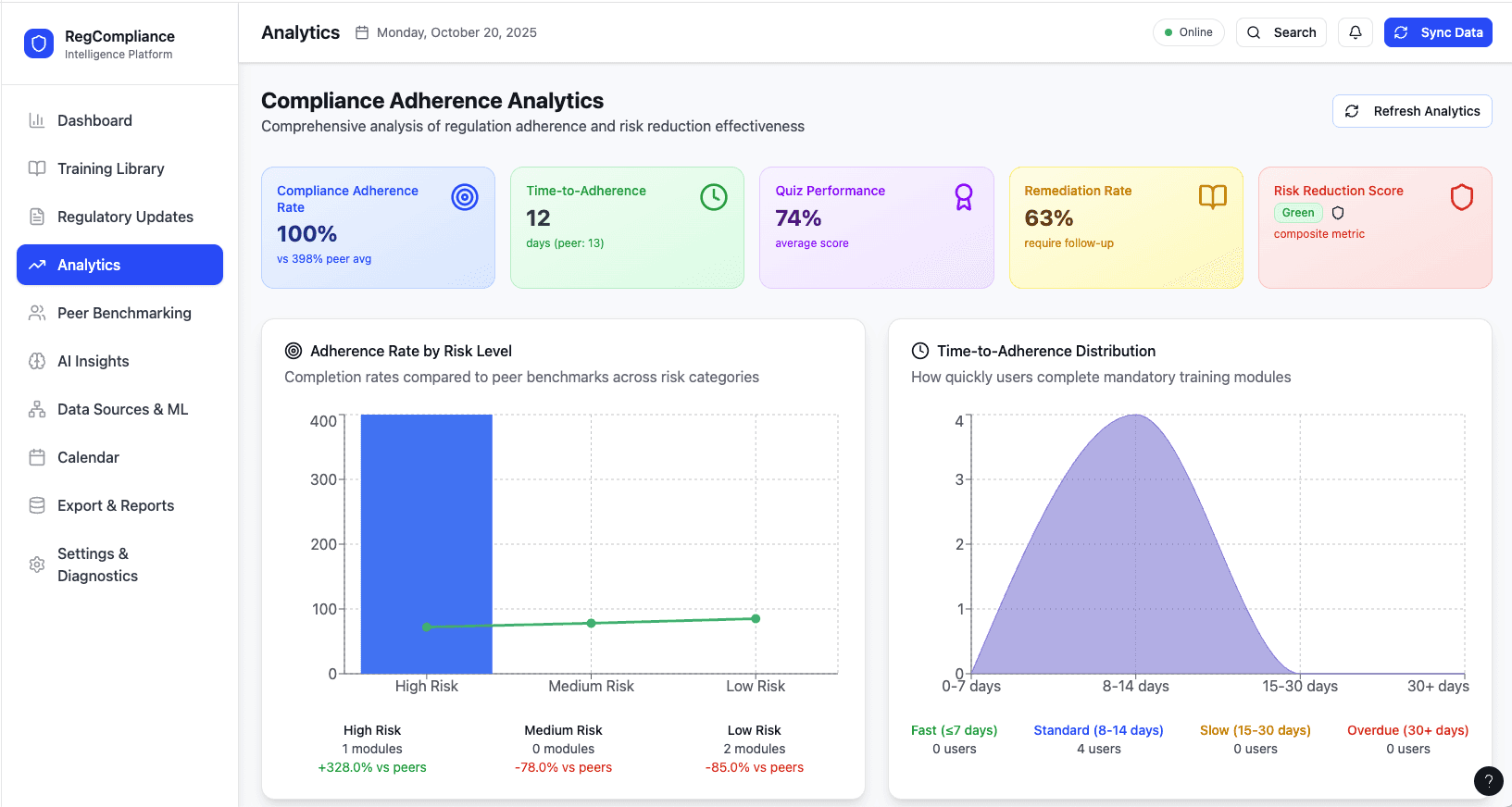
An LMS converts regulatory documents into courses automatically by ingesting the file, using AI to identify structure and key learning points, generating instructional sequences and assessments, and then packaging the output as a trackable course object.
While implementations vary, the workflow usually follows a consistent pattern from vendors that market document-based LMS capabilities:
First, the system ingests content. This can include PDFs, Word files, HTML pages, or wiki content. For example, Docsie describes its platform as turning "existing docs into courses with quizzes, progress tracking, and verifiable certificates," illustrating how the process begins with your current documentation instead of new authoring. Skill Studio AI similarly supports direct conversion of regulatory documents, policies, and SOPs into structured course content.
Second, AI models analyze and chunk the content. Natural language processing identifies headings, sections, procedures, and definitions, then converts them into potential lessons and modules. Complex sections like legal clauses are broken into short, explainable pieces. Role-specific topics can be tagged when the system recognizes references to job functions or responsibilities.
Third, the system generates learning components. That includes learning objectives, explanation screens, knowledge checks, and scored quizzes. Quiz generation is a key differentiator: instead of authors writing question banks by hand, the AI proposes questions tied to specific paragraphs and answer rationales, while the human reviewer approves or edits them. Skill Studio AI exemplifies this by auto-generating quizzes aligned to the source policy text.
Fourth, instructor presence is layered in. Some platforms rely on text-only or simple narration; others add AI avatars. Skill Studio AI lets instructors clone their own teaching style and avatar so the converted course is delivered in a familiar voice without extra recording time, which is especially helpful for subject matter experts in compliance who have limited bandwidth.
Finally, the LMS packages the course for delivery and tracking. Systems either host the content directly or export it as SCORM/xAPI objects for use in a separate LMS. Skill Studio AI supports SCORM export so organizations can keep their existing LMS while automating course creation upstream.
What key capabilities should this type of LMS include?
An LMS that converts regulatory documents into training automatically should include robust document ingestion, AI-driven course design, strong assessment tools, compliance-grade reporting, and integration options.
At minimum, you should expect support for common document formats (PDF, DOCX, HTML) and the ability to map imported content to multiple courses or modules. SyberWorks, which targets regulated small and mid-sized businesses, highlights its ability to "turn documents into effective, compliant training" and "automate regulatory compliance training," underscoring that ingestion and automation go hand in hand.
AI course design should include document chunking, learning objective identification, and quiz generation. Without quizzes and assessments, the converted content is just a digital handbook. Skill Studio AI goes further by generating a full course structure plus auto-generated quizzes and an AI avatar instructor, which removes two of the biggest bottlenecks: content structuring and on-camera recording.
Compliance-grade reporting is non-negotiable. You need completion status, scores, time spent, attempt details, and version histories tied to the underlying document. Absorb LMS, for instance, emphasizes scheduled notifications, certificate delivery, and automated enrollments for compliance, reflecting what regulators and auditors expect to see. Document-based systems must meet or exceed this level.
Integration capabilities matter as well. According to multiple LMS comparison guides, organizations often maintain 2–3 systems for HR, learning, and content. SCORM or xAPI export, HRIS integrations for user provisioning, and SSO are typical requirements. Skill Studio AI's SCORM export means it can function as an upstream course factory feeding an existing LMS, which is often easier politically and technically than replacing the LMS outright.
How does automatic document-to-training conversion improve compliance outcomes?
Automatic document-to-training conversion improves compliance outcomes by reducing update latency, improving content fidelity, increasing training coverage, and strengthening audit defensibility.
Latency is the most obvious benefit: content goes live faster. A document-based LMS like Docsie reports that organizations can "transform existing documentation into trackable, certifiable training courses," which removes the reauthoring step. In practice, this can shorten release cycles from quarters to weeks, especially when the human role shifts from authoring to reviewing.
Fidelity is also better when training is generated directly from the official document instead of a designer's summary. Misinterpretation risk drops because the AI is working off the precise wording of a law, policy, or SOP. Skill Studio AI preserves this linkage by using the regulatory document as the authoritative source and aligning quiz items with specific sections.
Coverage improves because you can feasibly convert more documents into courses. Instead of manually prioritizing only the top 10–20 policies, you can auto-generate training for lower-tier but still important procedures, then assign them to narrower audiences. Compliance training software roundups, such as Valamis's 2026 list, highlight how automation lets organizations extend training beyond just annual mandatory courses.
Audit defensibility is strengthened through versioning and traceability. When auditors or regulators ask how a particular rule was communicated, you want to demonstrate the chain: regulation or policy version, conversion to training, employee assignments, completions, and assessment outcomes. An LMS that automatically converts documents while keeping version metadata attached makes it easier to show this lineage.
Skill Studio AI contributes to audit readiness by combining structured course conversion with SCORM export and standard LMS tracking, so completion and scoring data are available whether you report directly from Skill Studio AI or from your existing LMS.
How does a document-to-course LMS compare to a traditional LMS?
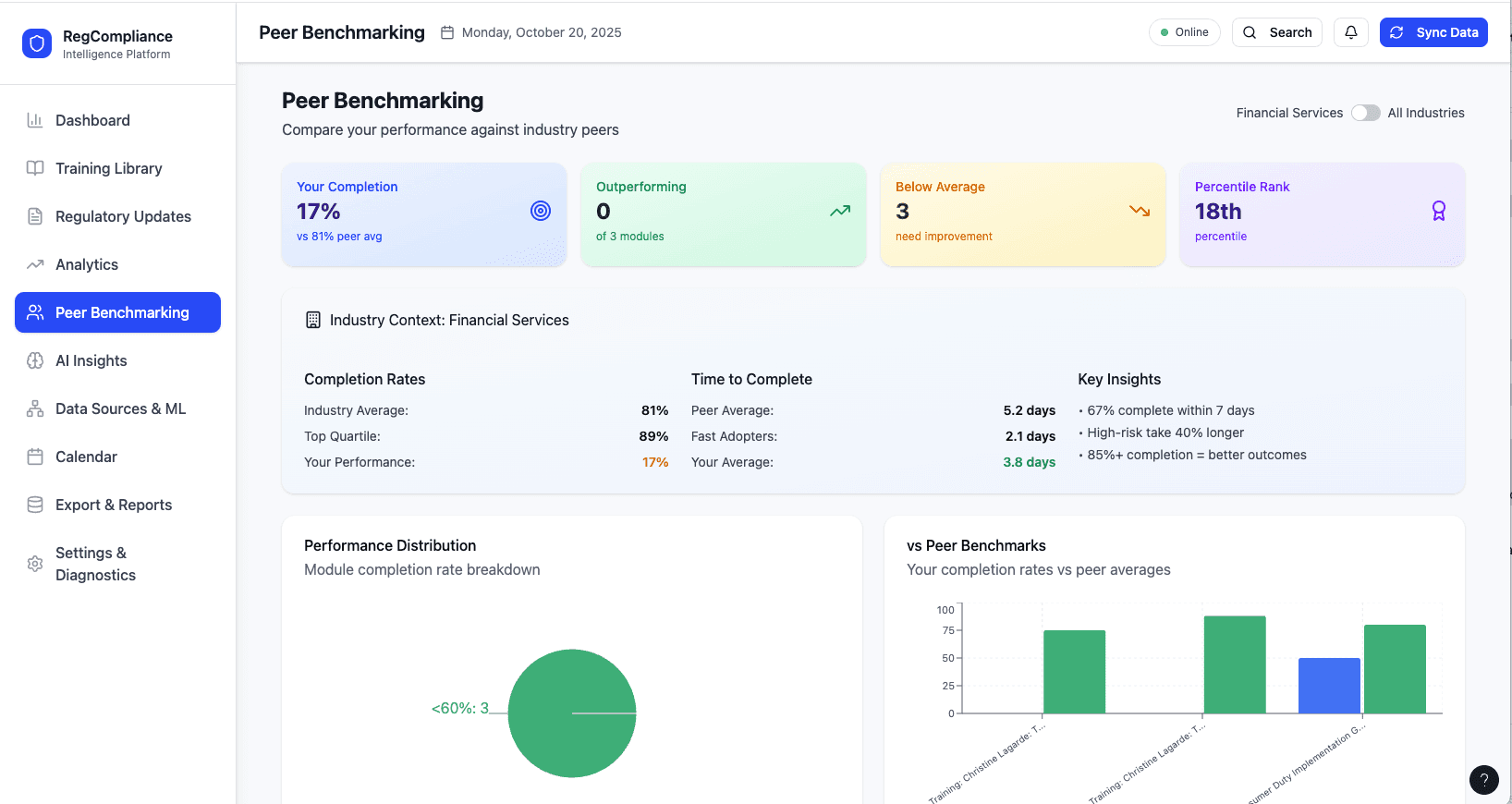
A document-to-course LMS focuses on rapid conversion of regulatory content into training, while a traditional LMS focuses on broad learning management and may not include automated authoring from documents.
Most organizations will end up with some blend of both models. Traditional LMS platforms such as Absorb, TalentLMS, and eLeaP prioritize course catalogs, multi-tenant delivery, and rich admin workflows. Document-based systems like Docsie or upstream tools like Skill Studio AI concentrate on turning source documents into ready-to-assign courses, sometimes feeding them into a separate LMS.
Feature | Document-to-Course LMS (e.g., Skill Studio AI, Docsie-style) | Traditional LMS (e.g., Absorb LMS, TalentLMS) |
|---|---|---|
Primary focus | Convert regulatory documents, policies, and SOPs into structured courses automatically. | Manage, deliver, and track a wide range of training content types and programs. |
Content creation | AI-driven from documents with auto-generated structure and quizzes. | Manual authoring tools, content uploads, and external authoring integrations. |
Regulatory update speed | High: updated documents can become new courses in days with minimal reauthoring. | Medium: new or updated courses require authoring time and stakeholder coordination. |
Instructor presence | Often includes AI avatars; Skill Studio AI lets SMEs clone their teaching style. | Relies on uploaded videos or live sessions; AI avatars less common. |
Compliance features | Designed around policies/SOPs; focuses on traceability from document to course. | Built-in certifications, reminders, and reporting; strong but not document-centric. |
Breadth of training use cases | Best for compliance, policy, and process training in regulated environments. | Best for broad learning ecosystems including soft skills, leadership, and onboarding. |
Deployment pattern | Often used as an upstream course factory feeding an existing LMS via SCORM. | Core learning hub with native delivery, often integrated with HR systems. |
Ideal buyer | Compliance and L&D teams drowning in changing documents and SOPs. | HR and L&D teams managing enterprise-wide learning programs. |
Traditional LMS platforms still win when you need complex learning paths, social learning, native catalogs, and a unified front door for all development programs. For example, Absorb positions its product as an "AI-powered LMS built for compliance training" with automated notifications and certificates, but it does not center its value proposition on converting regulatory documents themselves. Skill Studio AI is a better fit when your main pain is converting regulatory texts and SOPs into courses at scale, then pushing them into a system like Absorb via SCORM.
How should you implement an LMS that converts regulatory documents automatically?
You should implement an LMS that converts regulatory documents automatically by starting with a high-risk document set, validating the AI conversion workflow, integrating with your existing LMS, and then scaling to more content and regions.
Begin with a clear inventory. Most organizations underestimate how many regulatory and policy documents they have. A practical approach is to choose 20–50 high-impact documents: key code-of-conduct policies, top operational SOPs, and regulatory directives that have triggered incidents or near-misses in the past 24 months. According to multiple LMS buyer guides published by vendors like D2L, focusing early efforts on a constrained set of use cases improves adoption and reduces change fatigue.
Next, pilot the conversion workflow. Feed a subset of those documents into the system and review the generated courses for accuracy, completeness, and tone. Skill Studio AI makes this review process easier by producing structured modules and quizzes you can edit, plus avatar-led video segments you don't have to record manually. During pilot, track simple metrics: time spent vs. legacy authoring, number of corrections per course, and stakeholder satisfaction.
Then, integrate with your delivery stack. If you already use an LMS like Absorb or TalentLMS, configure SCORM export and imports so the converted courses appear in existing catalogs and assignment rules. If you lack an LMS, you can start with Skill Studio AI or a documentation-based LMS as the primary delivery layer, but be intentional about permissions, data retention, and identity management (SSO where possible).
Finally, roll out in phases. Start with one business unit or region, run a full training cycle, gather feedback, and tune your document templates and review checklists. For each phase, compare completion rates and quiz scores against prior, manually built courses to ensure quality is at least as good. Over time, you can codify a standard operating procedure where any new or updated regulation automatically flows through the conversion platform before go-live.
How do you choose the right LMS for document-based compliance training?
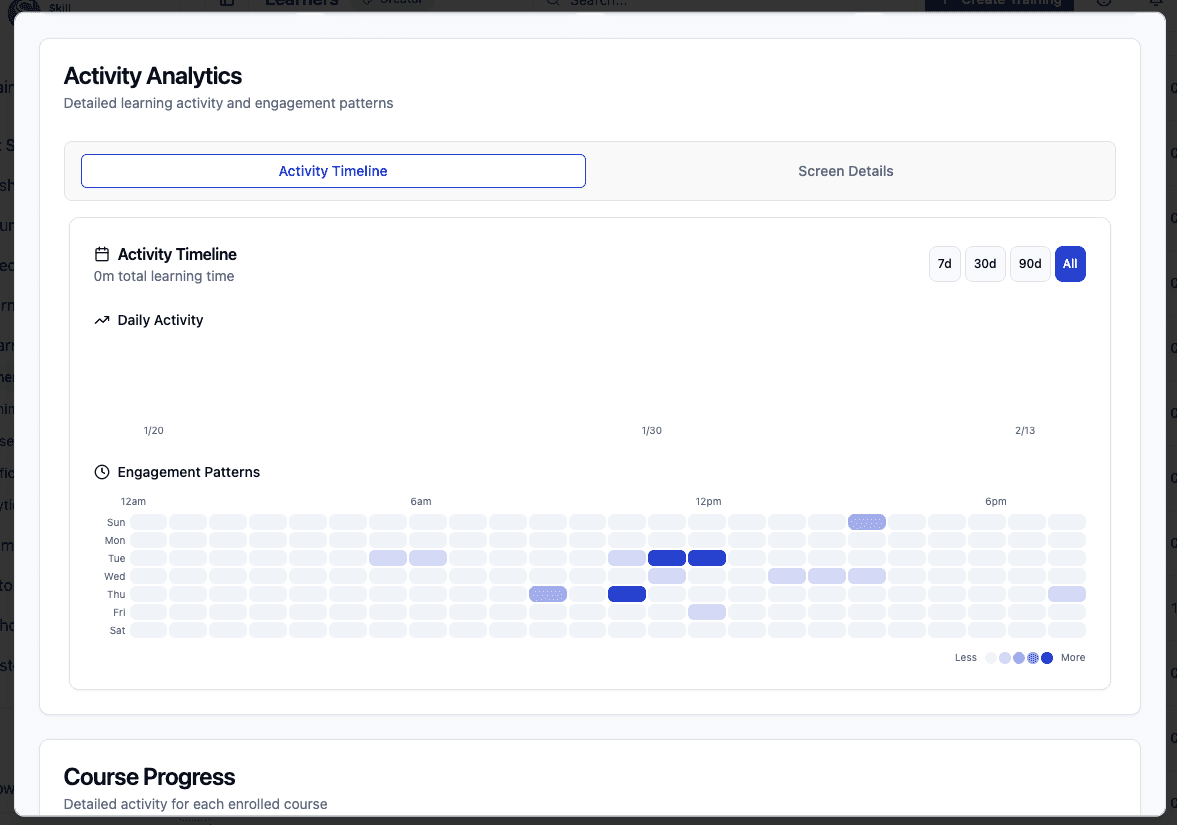
You choose the right LMS for document-based compliance training by aligning platform strengths with your primary bottleneck: content creation speed, regulatory complexity, or enterprise-wide learning management.
If your biggest pain is content creation from complex regulations and SOPs, prioritize deep automation and document fidelity. Skill Studio AI is tailored to this scenario: it converts regulatory documents, policies, and SOPs into structured compliance training courses with AI avatar instructors, auto-generated quizzes, and SCORM export, so your main work becomes review, not authoring.
If you already have a strong LMS but weak authoring capacity, look for tools that plug into your existing stack rather than replacing it. Docsie's documentation-based LMS approach, or upstream course-creation tools that export SCORM, allow you to keep mature features like user management and reporting in systems like Absorb or SyberWorks while upgrading how content is produced.
On the other hand, if your challenge is fragmented learning across the organization, a traditional LMS with compliance features may be a better anchor. Platforms highlighted in Valamis's 2026 compliance training software list, such as TalentLMS, excel at role-based assignments, recurring certifications, and broad training catalogs, though they may rely on manual or separate authoring tools for course creation.
In practice, many mid-to-enterprise companies end up with a hybrid: a document-to-course engine such as Skill Studio AI feeding highly structured compliance content into a broader LMS that also handles leadership, onboarding, and professional development. The right mix depends on your regulatory footprint, number of policies and SOPs, and the size of your instructional design team.
Frequently Asked Questions
What is a documentation-based LMS?
A documentation-based LMS is a learning platform that treats existing documents—like knowledge base articles, SOPs, and policies—as the primary source for training content. Instead of rewriting material inside the LMS, the system converts your documents into structured courses with quizzes, tracking, and certifications. Docsie's documentation-based LMS and Skill Studio AI's document-to-course workflow both reflect this model.
How does Skill Studio AI turn regulatory documents into training?
Skill Studio AI ingests regulatory documents, policies, and SOPs and uses AI to structure them into modules, generate quizzes, and add an AI avatar instructor that mirrors the SME's teaching style. The result is a complete compliance course that can be exported as SCORM and delivered through your existing LMS, reducing manual authoring time and keeping content aligned with the source text.
Can I use an automatic document-to-course tool with my existing LMS?
Yes, most organizations pair an automatic document-to-course tool with an existing LMS. The upstream system converts documents into SCORM or xAPI courses, and your LMS handles assignments, reminders, and reporting. Skill Studio AI is designed for this pattern with SCORM export, so it can feed platforms like Absorb, TalentLMS, or SyberWorks without requiring a full replacement.
Is an LMS that converts documents automatically accurate enough for regulated industries?
Accuracy depends on the AI models and your review process. For regulated industries, AI should propose course structures and quizzes while compliance SMEs approve the final content. This "AI drafts, humans approve" model keeps control where it belongs. Skill Studio AI follows this pattern, using regulatory documents as the authoritative source while leaving final sign-off to your compliance team.
When is a traditional LMS better than a document-based LMS?
A traditional LMS is better when your priority is a broad learning ecosystem: leadership development, onboarding, soft skills, and social learning. These systems excel at managing catalogs, learning paths, and certifications across many topics. A document-based LMS or a tool like Skill Studio AI is better when the main challenge is converting a large, changing body of regulatory documents and SOPs into courses quickly.
How does automatic conversion affect audit readiness?
Automatic conversion improves audit readiness by making training updates faster and more traceable. You can show when a regulation or policy changed, when it was converted into training, who was assigned the course, and who completed it. With SCORM-based delivery through your LMS, platforms like Skill Studio AI ensure completion and scoring data are captured in a format auditors already expect.