Go back
Search all blogs...


AI video tools can turn a script into a polished, translated video, but a video is not compliance training. For a regulated team, the deliverable that survives an audit is the full course — script, assessment, and per-learner completion record — generated from your own policy document and narrated by your own cloned instructor, not a generic stock presenter. Skill Studio AI generates that entire course from your SOP or policy document.
TL;DR
A video ≠ compliance training. Video-only tools (Synthesia, HeyGen, Colossyan) produce a presenter reading a script; an auditor asks for proof that each employee completed and passed — which means an assessment and a completion record, not a clip.
The audit deliverable is the course. What holds up in a regulatory inspection is a course that tracks who took the training and whether they passed, not a video file sitting in a folder.
Generated from your own document. Skill Studio AI builds the course, narration, on-screen text, and assessment straight from your SOP or policy — so updating the source document updates the course.
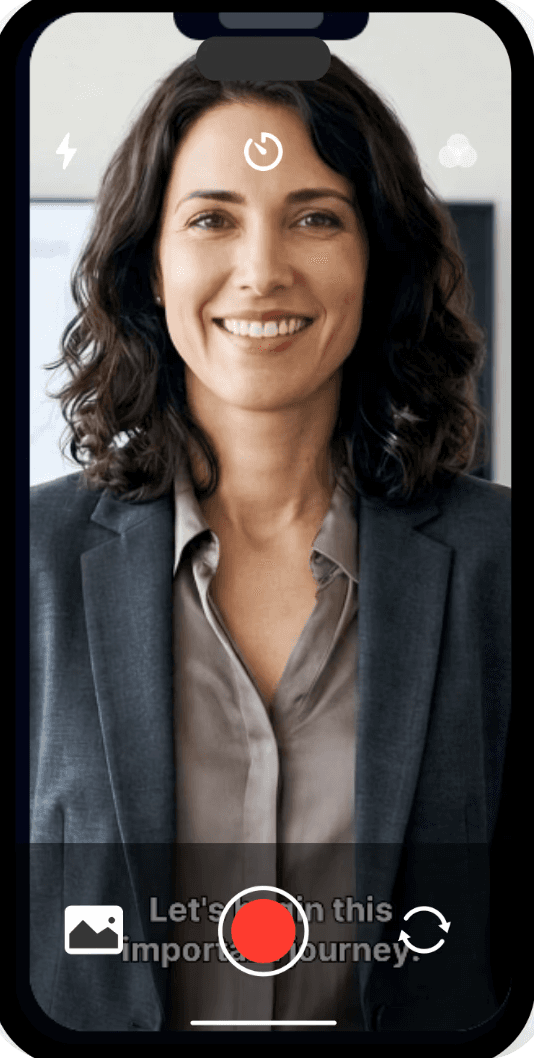
Keep your own instructor, not a stock avatar. A cloned instructor avatar delivers the training with your trainer's actual face and voice, instead of a generic presenter shared across every company using the same tool.
Skill Studio AI builds the course, not just the video — document in, structured course with quizzes out.
Is a generic AI video enough for compliance training?
No. A video proves you produced content; compliance requires proof that each employee completed and understood the training — which needs an assessment and a completion record, not a video file.
This is the gap every general-purpose AI avatar video tool leaves. They are excellent at turning a script into a polished, presenter-led video. But when a regulator asks "show me that your team completed the updated anti-bribery training, and passed," a video file answers none of it. The artifact that does is a tracked course.
What a generic AI avatar video leaves out
Video-only platforms produce the presentation but not the parts an audit actually checks: the assessment, the completion and pass records, and a presenter who is actually your own instructor.
No assessment. A video can't verify understanding. Compliance training needs quizzes that record a pass.
No completion record. You need per-learner evidence of completion for the audit trail.
Generic presenter. Most video tools put the same handful of stock avatars in front of every customer's script — not your actual subject-matter expert.
Built for video, not documents. Video tools start from a script you write; they don't generate the course from your source SOP or policy in the first place.
What regulated teams actually need
A course — narration, on-screen text, and a graded assessment — generated directly from your policy document and delivered by your own cloned instructor, with completion records.
The right way to evaluate an AI training tool for compliance is not "how realistic is the avatar," but "can this generate, from my actual policy document, a course that an auditor will accept, delivered by someone my employees recognize and trust." That reframes the buying criteria toward the platform that generates the whole trackable course, not the one with the most realistic stock face.
What a compliance team needs | Video-only AI (Synthesia / HeyGen / Colossyan) | Skill Studio AI |
|---|---|---|
Generated from your source document | No — you write the script | Yes — upload the SOP or policy |
Graded assessment | Limited / add-on | Yes, generated with the course |
Per-learner completion record | Via host LMS only | Tracked with the course |
Presenter | Generic stock avatar | Your own cloned instructor |
Multilingual narration | Available today | On our roadmap |
How does Skill Studio AI handle this?
Skill Studio AI ingests your policy or SOP, generates a full course narrated by your cloned instructor, and builds a graded assessment alongside it.
Upload the source document; the platform produces the course, the instructor-avatar narration, and a graded assessment. Completion and pass records track per learner, so the audit evidence is generated as a by-product of delivery. When the policy changes, you update the source document and regenerate the course, instead of re-briefing an agency or re-writing a script from scratch.
FAQs
Can't I just use HeyGen, Synthesia, or Colossyan?
Those tools are strong at turning a script into a polished video. For compliance, you still need a graded assessment, a completion record, and a course generated from your actual policy document — which is the course, not the video. Skill Studio AI generates the whole course so the audit evidence comes with it.
Does the video need an assessment to count as compliance training?
For most regulated programs, yes — an auditor wants proof of understanding and completion, which a passive video cannot provide. A quiz with a recorded pass is what holds up.
Does Skill Studio AI support multiple languages?
Not yet. Courses are generated and narrated in English today. Multilingual narration is on our 2026 roadmap.
Can the same instructor appear in every course?
Yes. A cloned instructor avatar delivers every course with the same face and voice, so employees get a consistent, recognizable presenter instead of a generic stock avatar.