Go back
Search all blogs...


Avatar cloning slashes compliance video cost and lead time, but it changes your risk profile, audit trail, and content governance in ways every QA and compliance leader needs to understand.
Last updated: June 2026
Contents
Key Takeaways
What is avatar cloning vs. traditional video production?
How do cost and timelines compare?
What are the regulatory and ethical risks?
How does learning impact compare for compliance training?
What does a practical workflow look like for compliance teams?
How should you choose for Annex 1 and GxP contexts?
Frequently Asked Questions
Key Takeaways
Avatar cloning definition AI avatar cloning creates a digital version of a real trainer that can be reused across unlimited videos without new filming.
Cost and time Avatar-based videos can cut production costs from tens of thousands to the low hundreds per video and compress timelines from weeks to hours.
Regulatory fit AI-generated trainer videos are allowed in regulated industries, but they trigger extra transparency, consent, and documentation obligations under regimes like the EU AI Act.
Risk profile Avatar cloning introduces identity misuse and deepfake risk, while traditional video carries higher operational risk (scheduling, re-shoots) and less agility.
Update agility Script-only updates make avatar videos ideal for fast-moving SOP and Annex 1 changes, where re-filming would be too slow.
Learning effectiveness When done well, AI avatars can match traditional talking-head impact for policy and procedure training, especially when paired with role-based scenarios and assessments.
Audit readiness Compliance teams need version control, consent records, and clear AI labeling for avatar videos to avoid findings during GxP and 21 CFR Part 11 audits.
Hybrid approach The most resilient strategy is usually a mix: human-shot video for critical demonstrations, avatar cloning for scalable, multi-language policy and refresher content.
Compliance teams do not have a video problem; they have a scale and change-control problem. This article breaks down how avatar cloning compares to traditional video production on cost, risk, learning impact, and audit readiness so you can decide where each belongs in your training strategy.
We will walk through concrete numbers, regulatory implications, and practical workflows, using Skill Studio AI as a working example of how regulated manufacturers are already turning dense SOPs into audit-ready avatar-led training in minutes.
What is avatar cloning vs. traditional video production?
Avatar cloning is the process of creating a reusable, AI-driven digital version of a trainer, while traditional video production captures real people on camera through physical shoots and manual editing.
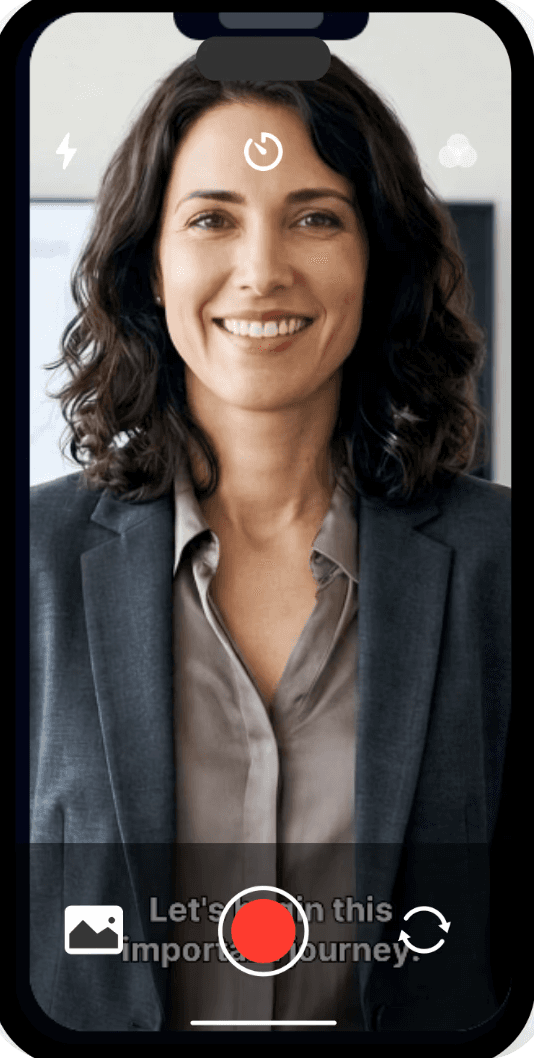
An AI avatar is a digital representation of a person that looks and moves realistically, mapping facial features and expressions from a photo or short video sample and animating them to speak any script you provide.
Tools combine facial landmark analysis with lip-sync and voice cloning so that your “digital twin” can narrate scripts and appear as if you recorded them yourself, often from a single clear portrait photo and a few minutes of audio.
AI avatar video generators typically work by letting you upload a portrait, type or paste a script, select a voice and language, and then rendering a talking-head video in minutes—without cameras, studio time, or on-site crews.
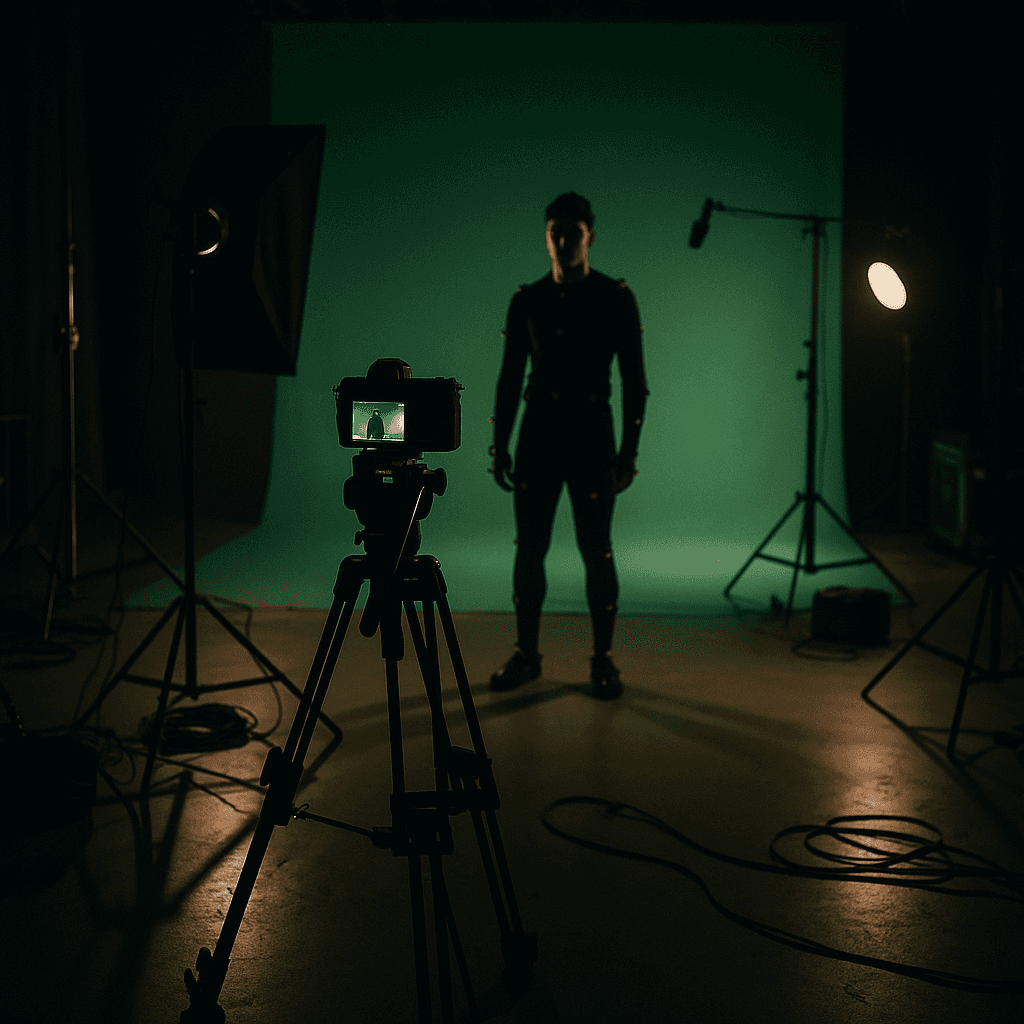
By contrast, traditional video production usually involves scripting, casting or scheduling subject matter experts, booking locations, filming with cameras and lighting, and then editing, color grading, and adding graphics in post-production.
Skill Studio AI applies the avatar-cloning model specifically to regulated training: it turns SOPs and compliance documents into AI-presented, audit-ready video modules delivered by a consistent instructor avatar, without extra recording time from your SMEs.
How do cost and timelines compare?
Avatar cloning and AI video workflows massively reduce cost and lead time compared with traditional video, which is the main reason compliance teams are paying attention.
Traditional corporate video production can easily reach five figures for a single polished piece once you factor in script development, filming days, editing, and internal review cycles.
According to one enterprise case study, a 3–5 minute training video that might cost around $15,000 to produce traditionally can be produced for roughly $50–$500 using AI avatar tools, depending on platform and licensing.
The same source reports that a 50‑video training library that would cost about $750,000 and take 12–18 months to produce via traditional methods can be delivered in 4–8 weeks with AI avatars for roughly $5,000–$10,000 in platform costs, with updates made in minutes by editing scripts and regenerating.
AI avatar workflows also compress timelines by collapsing scripting, filming, and editing into a few steps: you write a script, select an avatar and voice, submit the script, and then review and regenerate as needed, typically completing a 3–5 minute video in 1–4 hours end to end instead of 6–12 weeks.
Skill Studio AI mirrors this acceleration for regulated sites by converting SOPs and CAPA documentation directly into structured scripts and then rendering trainer-avatar videos, with version control so each new SOP issue can be re-published in minutes rather than booking another shoot.
How do the two approaches compare on practical dimensions?
The table below summarises how avatar cloning stacks up against traditional production on the factors compliance leaders usually care about.
Dimension | Avatar Cloning / AI Avatars | Traditional Video Production |
|---|---|---|
Upfront setup | One-off avatar creation from a photo/video and short voice sample. | Each project needs scheduling, crew, equipment, and location. |
Cost per 3–5 min video | Roughly tens to low hundreds of dollars in platform usage. | Often in the $10,000–$20,000 range for polished corporate pieces. |
Timeline per video | 1–4 hours from script to rendered video. | 6–12 weeks including planning, shooting, and approvals. |
Updating for SOP changes | Edit script and regenerate; no re-shoot required. | Re-book filming or patch in new footage; significant lead time. |
Scalability (50+ videos) | Linear in scriptwriting time, minimal incremental production cost. | Costs and coordination scale with every additional video. |
Multi-language support | Script translation and voice selection in multiple languages. | Requires new voiceover or re-shoots with multilingual talent. |
Perceived authenticity | High but synthetic; depends on avatar quality and disclosure. | Highest; learners see real people and environments. |
Change-control & versioning | Easy to track versions by script and render ID. | Versioning can be manual and spread across editors and drives. |
Skill Studio AI leans into these economics by giving regulated organizations a single place to manage avatar-based training versions, track which SOP revision each video maps to, and deliver tailored content to specific roles and lines via its training platform.
What are the regulatory and ethical risks?
Avatar cloning introduces new regulatory and ethical risks around identity, disclosure, and content integrity that compliance teams must manage explicitly.
AI video generation tools can create realistic video of real individuals without their consent, enabling non-consensual likeness use, harassment, and even executive impersonation fraud if controls are weak.
The same technical capabilities used for legitimate training and internal communications are also used to produce deepfakes and synthetic content for disinformation, which is why regulators are increasingly focused on transparency and watermarking requirements.
Under the EU AI Act, synthetic video content that could be mistaken for authentic footage must be clearly disclosed as AI-generated, particularly when used in public-facing or politically relevant communications.
Although internal GMP or banking compliance training is generally not public, the same principles apply for good practice: learners should know when they are watching an avatar rather than a live recording, and documentation should show how that content was produced.
Traditional video production has its own risks—misstatements on camera, uncontrolled background content, and inconsistent messaging—but those are familiar and typically already covered by corporate media and legal review processes.
Skill Studio AI addresses these avatar-specific risks by operating as a controlled environment for SOP-driven training: instructor avatars are created with explicit consent, content is generated from approved documents, and every version of each training asset is logged for audit and CAPA traceability.
How do consent and identity management differ?
With traditional video, consent is usually handled via release forms for each shoot, and the footage represents exactly what the person said and did on camera.
With avatar cloning, the likeness and voice model can be reused to say things the person has never literally recorded, so organizations must treat the avatar model as sensitive biometric and reputational data.
Good practice for compliance teams includes documented consent that covers ongoing use of the avatar, internal policies on what that avatar can and cannot be used for, and technical controls to ensure only authorized teams can generate content with that likeness.
Skill Studio AI’s focus on regulated industries means most deployments map avatar ownership and access rights to the same governance structures used for SOP approvals and training curricula, rather than leaving avatar use to marketing-style experimentation.
How does learning impact compare for compliance training?
When you strip away the production method, both avatar cloning and traditional video are just vehicles for delivering your learning design, and their effectiveness depends more on script quality and instructional structure than on whether a human was physically filmed.
AI avatar videos have matured to the point where digital presenters can mimic human expressions, gestures, and mouth movements closely enough that most learners accept them as a normal talking-head format, especially in short modules.
For compliance training—where content is often dense and policy-heavy—what matters most is clarity, chunking, and relevance to the learner’s role rather than cinematic production value.
Traditional video still has advantages where physical dexterity or equipment use is central, such as aseptic technique demonstrations or physical inspection routines that must show real hands and real environments.
A practical pattern many regulated teams adopt is to reserve traditional filming for complex procedures and use avatar-led video for policy explanations, SOP walk-throughs, deviation case studies, and multi-language refreshers.
Skill Studio AI is built around that pattern: it turns long SOPs and Annex 1 guidelines into short, avatar-presented segments with role-targeted delivery and integrated assessments, so operators, QA, and leadership each see the parts that actually apply to them inside the same overall training package.
Does the “uncanny valley” matter for compliance learners?
Early AI avatars could feel stiff or uncanny, but current-generation systems use more advanced facial landmark and phoneme matching to deliver smoother lip-sync and more natural expressions.
Most corporate users now accept avatar-led explainers as “normal video,” particularly when the avatar is a clone of a familiar internal expert rather than a generic stock character.
From a compliance standpoint, the risk is less about learners rejecting avatars and more about confusion if they are not told it is synthetic, which is why many organizations add a simple opening frame that explains the avatar is an AI-based representation of their SME.
Skill Studio AI reinforces this by letting clients standardize an opening and closing frame template across all avatar videos, clarifying that the content is AI-generated from approved SOPs and that the SME’s avatar is used to keep training consistent and up to date.
What does a practical workflow look like for compliance teams?
A practical workflow for compliance training usually uses avatar cloning where speed and consistency matter most, with traditional video reserved for critical, tactile, or regulator-facing scenarios.
AI avatar production workflows are intentionally simple: you upload a front-facing photo, type or paste your script, choose a voice and language, pick quality level, and generate, with most under‑60‑second videos rendering in about 5–10 minutes.
For regulated training, the script is typically not written from scratch; it is derived from a controlled SOP, work instruction, or policy document and then instructionalized into learner-friendly language with clear “must do” statements.
Because updates are as easy as editing the script and regenerating, avatar workflows align well with CAPA timelines and rolling Annex 1 changes, where guidance shifts and you need to retrain hundreds of operators without booking another shoot.
Skill Studio AI embeds this in an end-to-end process: you ingest SOPs or deviation reports, the platform structures them into scripts and microlearning sequences, your cloned instructor avatar narrates the content, and role-based assignments are tracked in the LMS layer. (Full completion tracking and 21 CFR Part 11-compliant records for this SOP-generated output are on our roadmap; completion tracking is available today for standard-pipeline courses.)
How does this compare with traditional production workflows?
Traditional video workflows place more load on planning and coordination: confirming SME availability, reserving cleanrooms or lines for filming, managing safety and gowning, and ensuring no proprietary or personally identifiable information appears on camera.
Editing cycles can also be long—especially when legal, QA, and operations all want sign-off—because changes after shooting might require re-filming rather than simple script tweaks.
This is why many compliance teams end up with 40‑minute “one and done” video modules: the marginal cost of going back to refine and re-record is so high that they accept suboptimal learner experience in exchange for getting something across the line.
Skill Studio AI is designed to break that pattern by making “re-recording” effectively free: SMEs invest once to create their avatar and voice, then QA or L&D can iterate on scripts as often as needed to match SOP and CAPA changes.
How should you choose for Annex 1 and GxP contexts?
For Annex 1 and broader GxP contexts, the decision is rarely “avatar or traditional” but rather where each method is appropriate within a documented, risk-based training strategy.
AI-generated video is not prohibited in pharma or banking; regulators care about whether learners actually understand their obligations, whether training content matches current procedures, and whether you can prove who did what, when.
The EU AI Act adds specific transparency obligations for synthetic content in some settings, and internal risk frameworks increasingly treat avatar use as a controlled process that requires consent, disclosure, and robust identity safeguards.
Where regulators may look closely is in change control and traceability: can you show that the version of the video assigned to an operator matched the SOP version in force at that time, and can you reproduce the training content if challenged during an inspection?
Skill Studio AI is explicitly tuned for that level of scrutiny: it integrates version control and SOP-to-training mapping, so each avatar-led video is tied back to its document source and revision history. (21 CFR Part 11 compliance and learner completion records for this SOP-generated output are on our roadmap, not yet shipped.)
How should a Head of QA or Site Director decide where to use each?
A simple decision lens is impact and volatility: use traditional video for rare, high-risk, physically complex procedures that rarely change, and use avatar cloning for high-volume, text-heavy, and frequently changing SOPs and policies.
Consider also the audience and languages: when you need to roll out Annex 1 updates to sites in multiple countries, avatar videos with multilingual voice options can be generated far faster than coordinating multi-language film shoots.
For board-level or inspector-facing content, many organizations still prefer to film real executives to avoid any perception issue, while relying on avatars for the day-to-day operator and supervisor training behind the scenes.
Skill Studio AI supports this hybrid model and is often layered alongside systems like ComplianceWire or Veeva Vault Training, where the avatar-led modules are created and versioned in Skill Studio AI, then surfaced into the existing LMS for assignment and tracking.
Frequently Asked Questions
Is avatar cloning acceptable for regulated compliance training?
Yes, avatar cloning can be acceptable in regulated environments when governed properly, because regulators focus on content accuracy, traceability, and learner competence rather than the filming method. You must still maintain document control, an audit trail for versions, and in some jurisdictions clearly disclose that content is AI-generated. Skill Studio AI was built specifically to keep avatar-led training aligned with SOP versions; 21 CFR Part 11 expectations are on our roadmap, not yet shipped.
How much cheaper is avatar-based video than traditional production?
Case studies show that a 3–5 minute corporate video that might cost around $15,000 through traditional production can be created for roughly $50–$500 using AI avatar tools, depending on your platform and usage model. For a 50‑video training library, this can cut spend from the hundreds of thousands of dollars range to the low tens of thousands while compressing delivery from 12–18 months to a few weeks. Skill Studio AI applies similar economics to SOP-led training specifically for regulated industries.
What are the biggest risks of avatar cloning for compliance teams?
The key risks are identity misuse, lack of clear consent for using a person’s likeness and voice, insufficient disclosure that content is synthetic, and weak version control over scripts that drive the avatar. These can be mitigated with strong internal policies, consent forms that explicitly cover avatar use, technical access controls, and clear records of which SOP and script version each training video is based on. Skill Studio AI embeds these controls so avatar use is part of your formal quality system rather than ad hoc experimentation.
Do learners trust AI avatars as much as real trainers on video?
Most learners care more about clarity, brevity, and relevance than whether the trainer is live or synthetic, especially for policy and SOP content. Modern avatars are realistic enough that they feel like a normal talking head, particularly when the avatar is a familiar internal SME. Trust improves when you are transparent that the presenter is an AI-based clone used to keep training current and consistent; Skill Studio AI customers often standardize an opening slide explaining exactly that.
When should we still use traditional video instead of avatar cloning?
Traditional video remains the better choice for physically complex procedures, equipment use, or demonstrations where real hands and environments matter, and for rare, high-visibility messages from senior leaders or inspectors. Avatar cloning excels for scalable, frequently updated SOP briefings, CAPA follow-up training, and multi-language policy rollouts. Many Annex 1–affected sites now use a hybrid approach, with Skill Studio AI handling the avatar-led pieces that change often while occasional live shoots cover the stable, high-risk procedures.
How does avatar cloning fit with our existing LMS like ComplianceWire or Veeva?
Avatar cloning platforms generally output standard video files or SCORM/xAPI packages that can be ingested by your existing LMS. The LMS still handles assignments, due dates, and completion records, while the avatar tool handles creation and updates. Skill Studio AI is often used upstream of systems like ComplianceWire or Veeva Vault Training: it turns SOPs into avatar-led training with built-in version control, and the resulting modules are then distributed through your existing LMS.