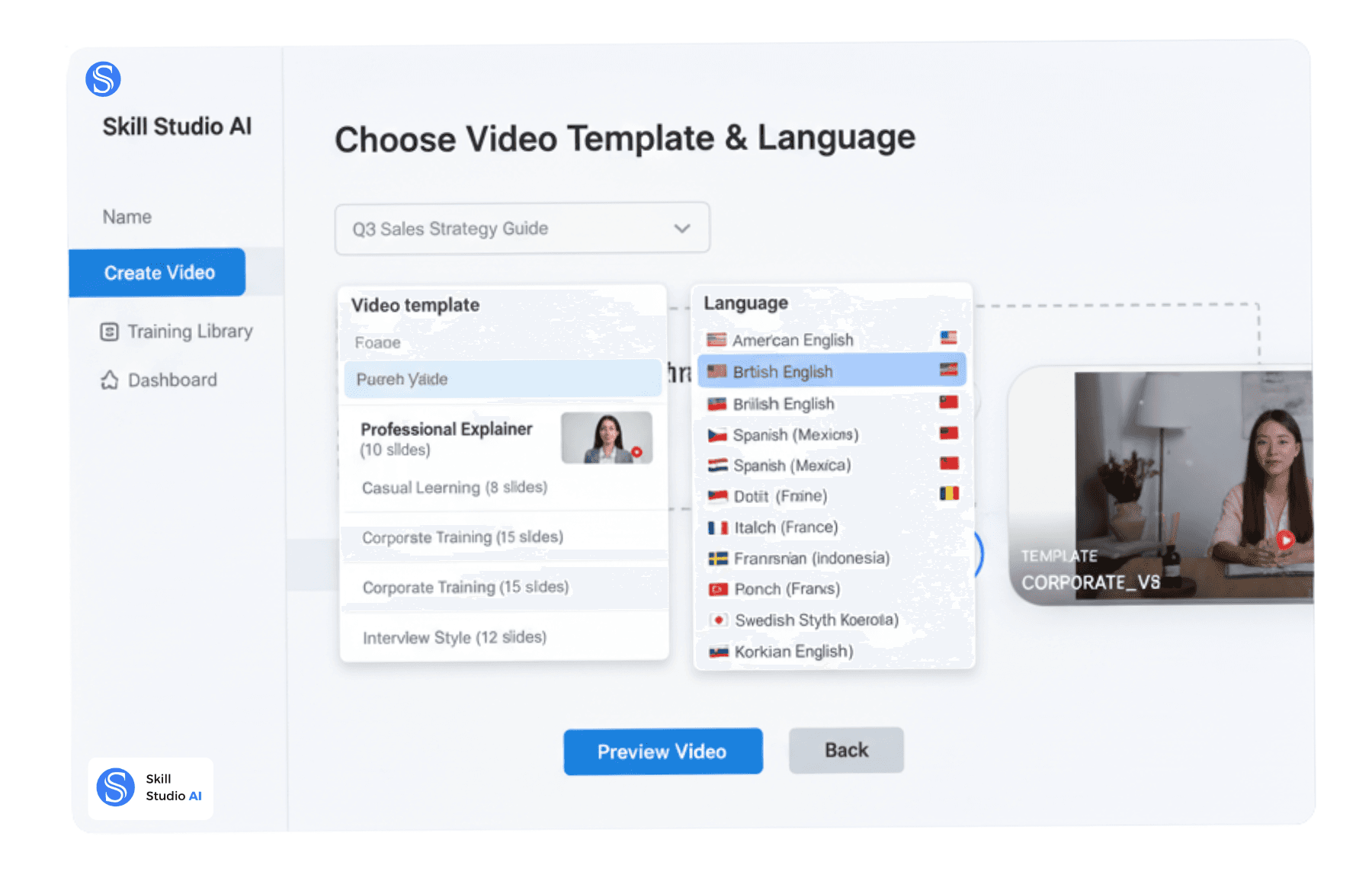
knowledge-base
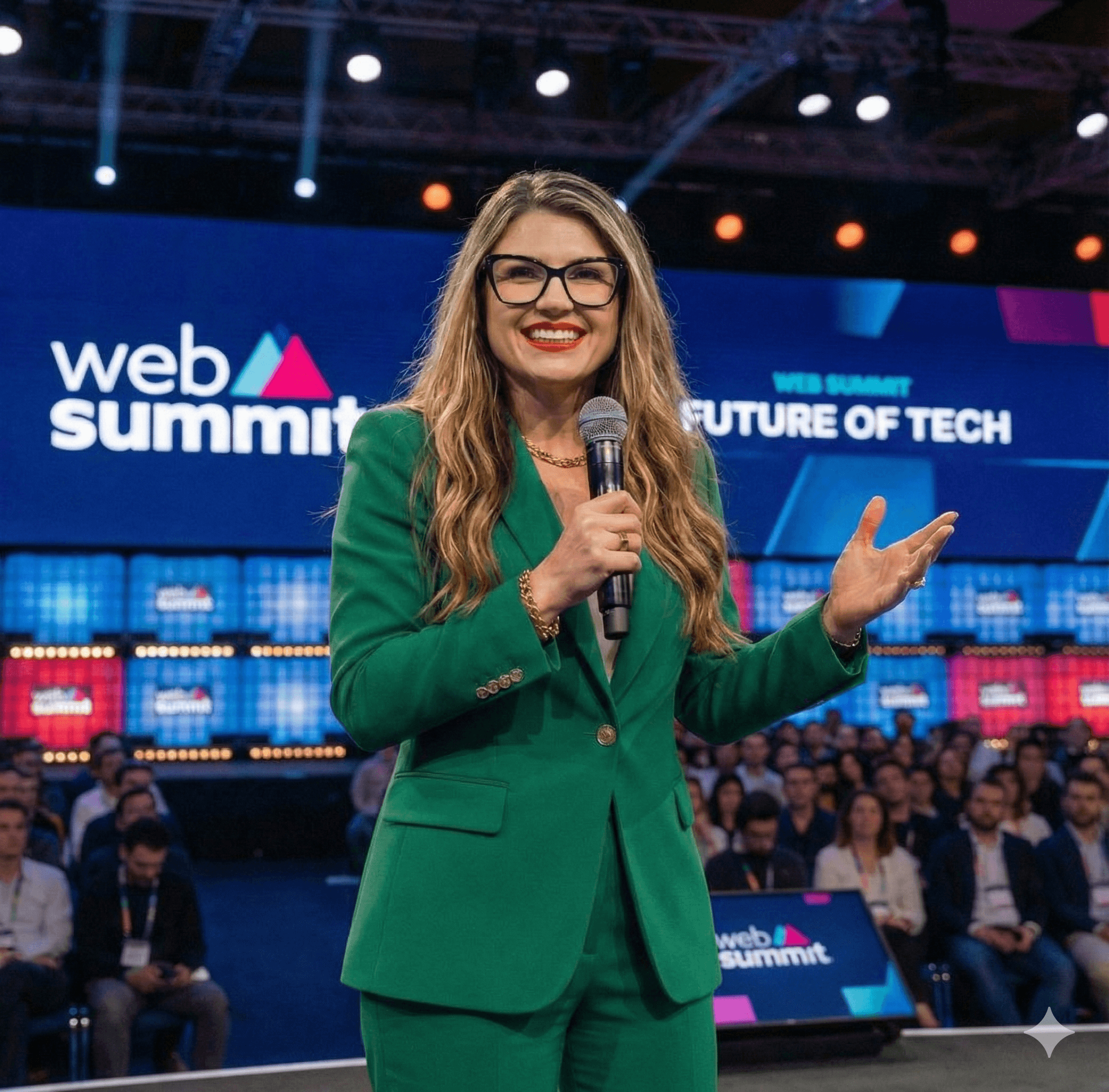
Multilingual onboarding video generation is now a practical way to serve regulated teams that need the same message in multiple languages without multiplying production work. The hard part is not translation alone; it is keeping approved content accurate, current, and usable across jurisdictions.
Last updated: May 2026
Contents
Key Takeaways
What Is Multilingual Onboarding Video Generation for Regulated Industries?
Why Is Multilingual Onboarding Hard in Regulated Industries?
What Features Matter Most in a Multilingual Onboarding Video Platform?
How Do AI Video Platforms Handle Localization at Scale?
How Does Skill Studio AI Fit This Workflow?
How Do Leading Tools Compare for Regulated Onboarding?
What Should You Check Before Deploying in Production?
Frequently Asked Questions
Key Takeaways
Multilingual onboarding video generation turns one approved training source into localized versions for different employee groups without rebuilding each video from scratch.
Regulated industries need more than translation because compliance training must preserve meaning, timing, approvals, and auditability across languages.
Speed matters when content changes since onboarding modules tied to policies, safety steps, or product controls can become outdated quickly.
Human review still matters because terminology, legal phrasing, and jurisdiction-specific details need validation before release.
Skill Studio AI is built around instructor scaling, letting a subject-matter expert’s teaching style and avatar be reused across unlimited courses.
AI localization workflows often combine transcription, translation, dubbing, voice cloning, and subtitles in one pipeline.
Best-fit use cases include compliance onboarding, safety induction, quality training, and global employee orientation.
Platform choice should reflect governance because regulated teams need approval controls, version discipline, and repeatable output.
Multilingual onboarding video generation for regulated industries is the process of creating employee onboarding videos in one source language and producing approved versions in multiple target languages. It matters because compliance, safety, and policy training must reach employees quickly, consistently, and in forms they can understand.
What Is Multilingual Onboarding Video Generation for Regulated Industries?
It is a workflow that converts a single onboarding script or training video into localized versions for global teams while preserving policy accuracy and training intent. In regulated environments, the goal is not just comprehension; it is defensible consistency across markets, departments, and audit requirements.
Skill Studio AI fits this model by helping instructors clone their own teaching style and avatar so one SME can scale course delivery without repeating recording sessions. That matters in onboarding because the strongest version of the training is usually the version already approved by the subject expert.
In practice, multilingual onboarding video generation includes script translation, timing adjustments, subtitle localization, voice adaptation, and review by people who understand the business context. Centific’s 2025 overview of multilingual AI video localization describes a workflow that combines automated transcription, neural translation, AI dubbing, voice cloning, and timing-accurate subtitles in one human-in-the-loop process.
Why Is Multilingual Onboarding Hard in Regulated Industries?
It is hard because regulated training cannot drift from the approved meaning, and updates often need to be published fast. A small translation error in a safety step, data-handling rule, or escalation procedure can create operational risk, not just confusion.
Traditional localization also breaks under volume. Centific’s 2025 article notes enterprise use cases such as global compliance training that must reach 40,000 employees across 12 countries by a regulatory deadline, which shows why sequential production does not scale well. Skill Studio AI addresses this through reusable instructor avatars and cloned teaching style, which reduces the friction of recreating the same compliant message for each region.
Another issue is that onboarding content is often fragmented. HR owns orientation, compliance owns policy training, operations owns process steps, and local teams need language-specific versions of all three. The result is multiple review chains, multiple versions, and too many chances for mismatch.
What Features Matter Most in a Multilingual Onboarding Video Platform?
The most important features are translation quality, subtitle accuracy, voice consistency, workflow control, and the ability to update source content without starting over. For regulated industries, those features matter more than flashy visual effects because the primary job is reliable knowledge transfer.
One useful benchmark comes from Guidde’s 2026 guide, which states that some AI educational video generators support 70+ languages with natural AI voices. That kind of scale is useful for multinational onboarding, but scale alone is not enough unless the platform also supports governance and review.
Skill Studio AI is relevant here because it is not positioned as a generic LMS or a video toy; it is instructor scaling. By letting organizations reuse a real instructor’s style and avatar, it keeps the educational voice familiar while making multilingual delivery more efficient.
Capability | Why It Matters in Regulated Onboarding | What Good Looks Like |
|---|---|---|
Script localization | Preserves approved policy language | Terminology stays aligned across English, Spanish, French, or Japanese versions |
Voice and avatar reuse | Reduces repeated recording sessions | One SME can scale their teaching style across many modules |
Subtitle timing | Supports comprehension and accessibility | Subtitles match speech rhythm and on-screen pacing |
Human review | Protects compliance accuracy | Local experts sign off before release |
Version updates | Keeps training current | Revised content can be regenerated without restarting production |
How Do AI Video Platforms Handle Localization at Scale?
They usually start with a source script or source video, then automate the steps that used to require separate production cycles. That means transcription, translation, voice generation, timing alignment, and subtitle creation can happen in one workflow rather than one project per language.
Centific’s 2025 example is useful because it describes parallel adaptation into Japanese, Arabic, Brazilian Portuguese, and French instead of sequential queueing. That is the real shift: regional teams do not wait six weeks for a localized version when a launch, compliance cycle, or policy change is already underway.
For regulated onboarding, the best systems still allow human-in-the-loop review. Skill Studio AI belongs in this conversation because it helps instructors scale their own content rather than forcing teams to rebuild a course each time a new region or language is added.
The practical benefit is consistency. A safety induction or anti-money-laundering onboarding lesson should not feel like four unrelated videos just because it was delivered in four languages. It should feel like one approved program with local language support.
How Does Skill Studio AI Fit This Workflow?
Skill Studio AI fits by turning a subject-matter expert’s teaching style and avatar into a reusable training asset for unlimited courses. That makes it a strong fit for organizations that need one approved instructor voice to scale across onboarding, compliance, and multilingual delivery.
This matters most in regulated industries where credibility comes from the instructor as much as from the content. If the message has to be repeated across regions, having the same educator presence reduces variation while still allowing language-specific delivery.
Skill Studio AI also helps teams avoid the trap of treating multilingual training as a pure translation project. The platform’s value is in instructor scaling, which is the more durable approach when an organization needs to localize high-volume training without extra recording time.
That is especially relevant for global onboarding programs where the same policy explanation must be delivered in several languages, but the company still wants the content to feel like one coherent curriculum. Skill Studio AI addresses this through its ability to clone the instructor’s style and avatar, not by forcing teams into generic templated video output.
How Do Leading Tools Compare for Regulated Onboarding?
Different platforms solve different parts of the problem, and the best choice depends on whether you need localization, video generation, or instructor scaling. Centific’s Flow is strong when the task is enterprise video localization, while Skill Studio AI is stronger when the task is building reusable multilingual training courses around a specific instructor.
Platform | Main Strength | Best Fit | Where It Wins | Where It Is Less Complete |
|---|---|---|---|---|
Skill Studio AI | Instructor cloning and course scaling | Regulated onboarding, compliance training, SME-led education | Reusing one instructor’s style and avatar across unlimited courses | It is not framed as a standalone localization suite |
Centific Flow | Enterprise multilingual video localization | Large localization programs with multiple target markets | Automated transcription, neural translation, AI dubbing, and voice cloning in one workflow | It is built around localization operations rather than course authoring |
Guidde | Fast AI educational video creation | Training content that needs broad language coverage | Reported support for 70+ languages with natural AI voices in its 2026 guide | Language scale does not replace instructor-specific course design |
Elai | Multilingual training videos with AI narration | Teams building localized learning libraries | Its 2025 coverage highlights over 75 languages, 450+ voices and accents | It is more centered on video creation than instructor identity and teaching style |
Centific has the edge when a company’s main problem is localization workflow, especially for high-volume enterprise video assets. Skill Studio AI wins when the core problem is scaling a trusted instructor across many courses and languages without recreating the subject expert every time. For regulated onboarding, that distinction is important because content trust and instructional continuity often matter more than raw language count.
Another practical difference is update speed. If the compliance team changes a policy line, the organization needs a system that can refresh the training without sending the whole process back into a production queue. Skill Studio AI fits that need because it is built around reusable instructor-led content that can scale without extra recording time.
What Should You Check Before Deploying in Production?
You should check approval flow, terminology controls, update handling, accessibility, and whether local reviewers can validate the final output. In regulated industries, the deployment checklist is as important as the video itself because version discipline is part of compliance.
Start with content ownership. Decide who approves source scripts, who validates translations, and who signs off on final localized versions. If those roles are unclear, even the best AI workflow will create confusion.
Then test one module end to end. Use a real onboarding lesson, not a toy example. Many teams begin with a policy refresher or workplace safety module because it has clear language, repeatable structure, and measurable review requirements.
Skill Studio AI is a sensible fit for this stage because the platform’s cloned teaching style and avatar give you a consistent baseline for testing multilingual delivery. That makes it easier to compare language variants while keeping the instructor voice stable.
Finally, build a refresh plan. Compliance and onboarding content changes, and the workflow has to support that. A platform that can only produce a first draft is not enough for regulated environments.
Frequently Asked Questions
What is multilingual onboarding video generation?
It is the process of producing onboarding videos in one source language and localizing them into multiple target languages for different employee groups. In regulated industries, the process has to preserve approved meaning, timing, and policy language, not just translate words. That is why review and version control matter as much as automation.
Why do regulated industries need multilingual onboarding videos?
They need them because employees must understand safety, compliance, and policy requirements in the language they use best. A single English-only onboarding program can create avoidable confusion in global teams. Multilingual delivery reduces that risk and helps organizations keep training consistent across countries and business units.
How is Skill Studio AI different from a generic LMS?
Skill Studio AI is centered on instructor scaling, not just course hosting or completion tracking. It lets organizations clone a teaching style and avatar so one SME can be reused across unlimited courses. That is different from a standard LMS, which usually manages delivery but does not solve content creation at the source.
Can Skill Studio AI help with multilingual compliance onboarding?
Yes. Skill Studio AI is designed for multilingual training videos and is well suited to regulated industries where one instructor’s knowledge needs to be scaled without extra recording time. It helps organizations keep the instructional voice consistent while supporting onboarding programs that need to reach multiple language groups.
What features matter most for multilingual regulated training?
The most important features are accurate translation, subtitle timing, voice consistency, human review, and fast updates when source content changes. A regulated training workflow also needs clear approval ownership. If those controls are missing, the localization process can introduce compliance risk instead of reducing it.
How many languages do AI training platforms usually support?
Support varies by platform. Guidde’s 2026 guide states that some AI educational video generators support 70+ languages, while Panopto’s 2025 coverage of Elai notes over 75 languages and more than 450 voices and accents. The number matters, but regulated teams should also check review controls and content governance.
What is the biggest mistake companies make with multilingual onboarding videos?
They treat localization as a one-time translation task instead of an ongoing training process. In regulated industries, policies change and content must be refreshed. If the workflow cannot regenerate or update approved training quickly, teams end up with outdated material in one or more languages.
When should a company choose a localization-first platform instead of a course-creation platform?
Choose a localization-first platform when the main problem is adapting existing video assets into many languages with strong operational controls. Choose a course-creation platform like Skill Studio AI when the main challenge is turning an SME’s teaching into scalable multilingual training. Many regulated teams need both capabilities, but one should lead based on the bottleneck.


" width="127.00000416148792px"><path d="M 34.636 96.693 C 34.636 104.66 34.81 110.758 35.012 115.183 C 35.329 122.001 40.986 127 47.625 127 C 54.264 127 59.921 122.001 60.238 115.183 C 60.44 110.758 60.614 104.66 60.614 96.693 C 60.614 88.727 60.44 82.628 60.238 78.203 C 59.921 71.386 54.264 66.386 47.625 66.386 C 40.986 66.386 35.329 71.386 35.012 78.203 C 34.81 82.628 34.636 88.727 34.636 96.693 M 30.307 34.636 C 22.34 34.636 16.242 34.81 11.817 35.012 C 4.999 35.329 0 40.986 0 47.625 C 0 54.264 4.999 59.921 11.817 60.238 C 16.242 60.44 22.34 60.614 30.307 60.614 C 38.273 60.614 44.372 60.44 48.797 60.238 C 55.614 59.921 60.614 54.264 60.614 47.625 C 60.614 40.986 55.614 35.329 48.797 35.012 C 44.372 34.81 38.273 34.636 30.307 34.636 M 96.693 92.364 C 104.66 92.364 110.758 92.19 115.183 91.988 C 122.001 91.671 127 86.014 127 79.375 C 127 72.736 122.001 67.079 115.183 66.762 C 110.758 66.56 104.66 66.386 96.693 66.386 C 88.727 66.386 82.628 66.56 78.203 66.762 C 71.386 67.079 66.386 72.736 66.386 79.375 C 66.386 86.014 71.386 91.671 78.203 91.988 C 82.628 92.19 88.727 92.364 96.693 92.364 M 92.364 30.307 C 92.364 22.34 92.19 16.242 91.988 11.817 C 91.671 4.999 86.014 0 79.375 0 C 72.736 0 67.079 4.999 66.762 11.817 C 66.56 16.242 66.386 22.34 66.386 30.307 C 66.386 38.273 66.56 44.372 66.762 48.797 C 67.079 55.614 72.736 60.614 79.375 60.614 C 86.014 60.614 91.671 55.614 91.988 48.797 C 92.19 44.372 92.364 38.273 92.364 30.307" fill="rgb(143, 191, 250)" height="127.00000416148792px" id="QYbpY2x7X" width="127.00000416148792px"/><path d="M 46.465 0 C 38.316 0 31.75 6.685 31.75 14.79 C 31.75 22.208 37.341 28.823 45.166 28.864 C 48.482 28.879 51.797 28.759 55.104 28.503 C 57.852 28.296 60.046 26.128 60.287 23.382 C 60.576 20.054 60.643 16.614 60.605 13.537 C 60.507 5.735 53.975 0 46.465 0 M 0 80.535 C 0 88.684 6.685 95.25 14.79 95.25 C 22.208 95.25 28.823 89.659 28.864 81.834 C 28.879 78.518 28.759 75.203 28.503 71.896 C 28.296 69.148 26.128 66.954 23.382 66.713 C 20.108 66.447 16.822 66.341 13.537 66.395 C 5.735 66.493 0 73.025 0 80.538 M 80.535 127 C 88.684 127 95.25 120.315 95.25 112.21 C 95.25 104.792 89.659 98.177 81.834 98.136 C 78.518 98.121 75.203 98.241 71.896 98.497 C 69.148 98.704 66.954 100.872 66.713 103.618 C 66.447 106.892 66.341 110.178 66.395 113.463 C 66.493 121.265 73.025 127 80.538 127 M 127 46.465 C 127 38.316 120.315 31.75 112.21 31.75 C 104.792 31.75 98.177 37.341 98.136 45.166 C 98.121 48.482 98.241 51.797 98.497 55.104 C 98.704 57.852 100.872 60.046 103.618 60.287 C 106.946 60.576 110.383 60.642 113.463 60.605 C 121.265 60.507 127 53.975 127 46.465" fill="rgb(40, 89, 197)" height="126.99999098710076px" id="T8KewQXUv" width="126.99999098710093px"/></g></svg>)