Customer Education
Jul 26, 2025

Zavian Noor
Just having a high-quality product isn’t enough. Discover how to move beyond "read receipts" to measurable competence, and how to prove the ROI of your training engine.
The Experience Gap: Why Product Quality is Only Half the Battle
In high-stakes industries, a high-quality product is the baseline, but the Customer Experience is the differentiator. A major part of that experience is Customer Education.
The goal of a customer education program is simple: ensure your clients fully understand the value your product delivers. When they "get it," they engage long-term. When they don't, they become part of the SharePoint Graveyard.
As a business strategy, customer education—or customer enablement—is about more than just teaching fundamentals. Educated customers are happier, more successful, and far less likely to churn. In a market where standing out is difficult, a structured training program gives you a real edge.
Key Takeaways
Onboarding is trust-building: It’s your first chance to demonstrate value and reduce "Time to First Win."
Data is your defense: Measuring the impact of training allows you to prove FTE Reduction and ROI to stakeholders.
Segmentation is mandatory: A one-size-fits-all approach is the fastest way to lose customer attention.
How to Segment Your Customer Base
Your customers have diverse learning styles and specific pain points. To avoid "Administrative Debt," you must tailor your content:
By User Role: Administrators need system configuration training; end-users need daily operational workflows.
By Product Usage: A power user doing advanced data analytics needs a different path than someone doing basic data entry.
By Learning Preference: Use Skill Studio AI to offer a mix of video walkthroughs, interactive quizzes, and text-based "Speed Runs" to cater to visual and kinesthetic learners alike.
Measuring Progress: Learning Metrics vs. Business Metrics
To prove the effectiveness of your "AI Factory," you must track two distinct sets of data:
1. Learning Metrics (The "How")
Course Completion Rates: Monitor who is actually finishing the onboarding.
Quiz Scores: Assess real-world understanding, not just "clicks."
Engagement Levels: Measure time spent in modules and frequency of logins.
2. Business Metrics (The "ROI")
Customer Satisfaction (CSAT) & NPS: Watch these scores climb as customers feel more supported.
Product Adoption Rates: Track how frequently new features are used after training.
Support Ticket Volume: A successful program should lead to a measurable drop in "How-to" support requests, leading to Operational Cost Reduction.
How Customer Education Reduces Support Costs
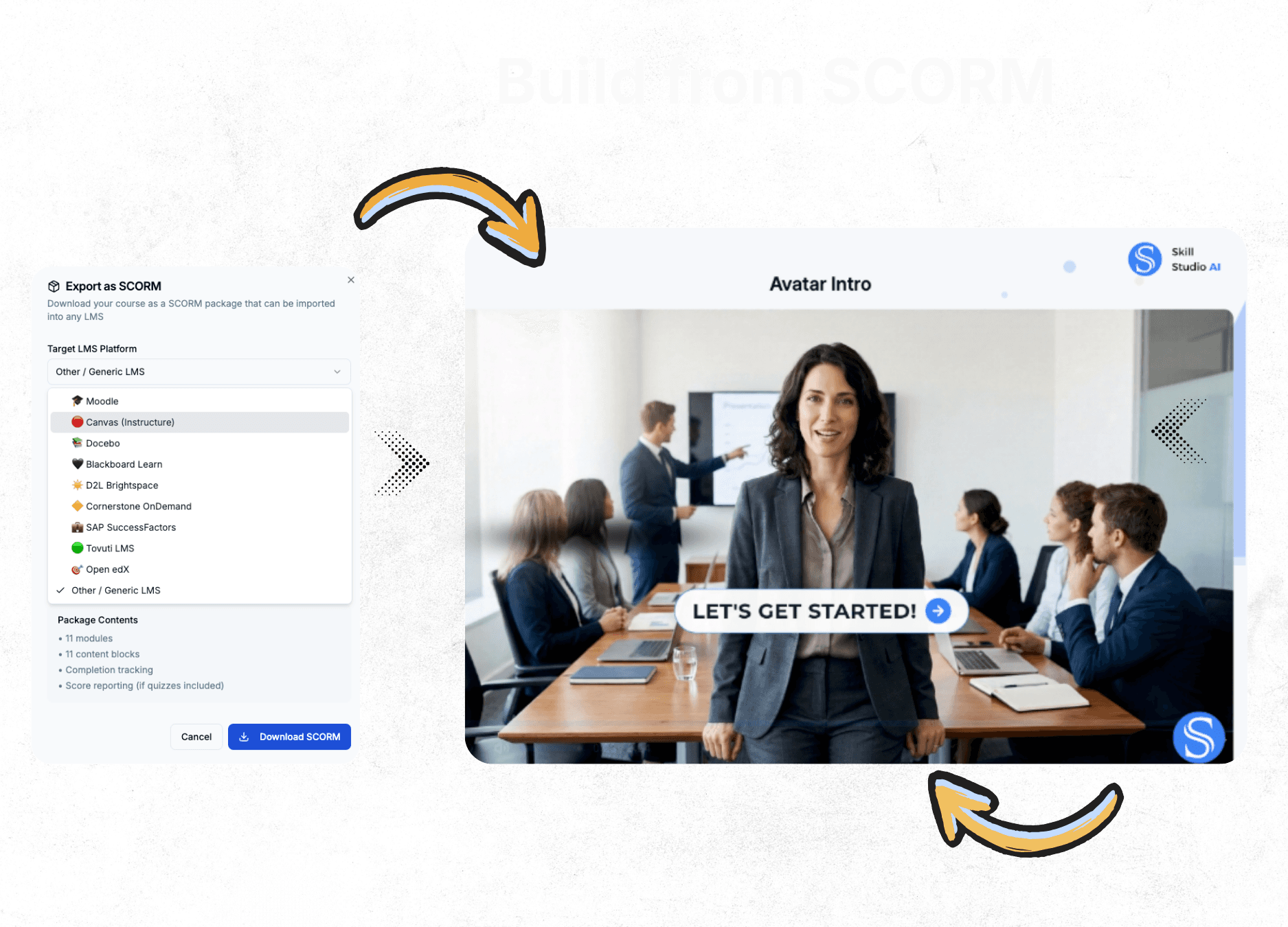
Customer education is a powerful tool for empowering users to troubleshoot independently. By providing Dynamic SCORM modules and interactive FAQs, you proactively answer questions before they become tickets.
The Metrics of Support Savings:
First Contact Resolution (FCR): Knowledgeable customers provide better info, helping your team solve issues faster.
Cost Per Ticket: Fewer, simpler queries result in lower overhead and improved team efficiency.
Improving Retention and Product Adoption
The focus of any mature company eventually shifts from acquisition to Retention.
Preventing Churn: Use training to demonstrate ongoing value. If a customer uses 80% of your features instead of 20%, they are 5x less likely to leave.
Driving Adoption: Use Skill Studio AI to launch "Feature Spotlights"—short, automated modules that introduce new tools as soon as they are released.
Is an LMS the Best Choice for Customer Training?
While many platforms exist, an AI-native LMS is superior for structured, in-depth training. You need a system that offers:
Structured Learning Paths: Guide customers through complex topics sequentially.
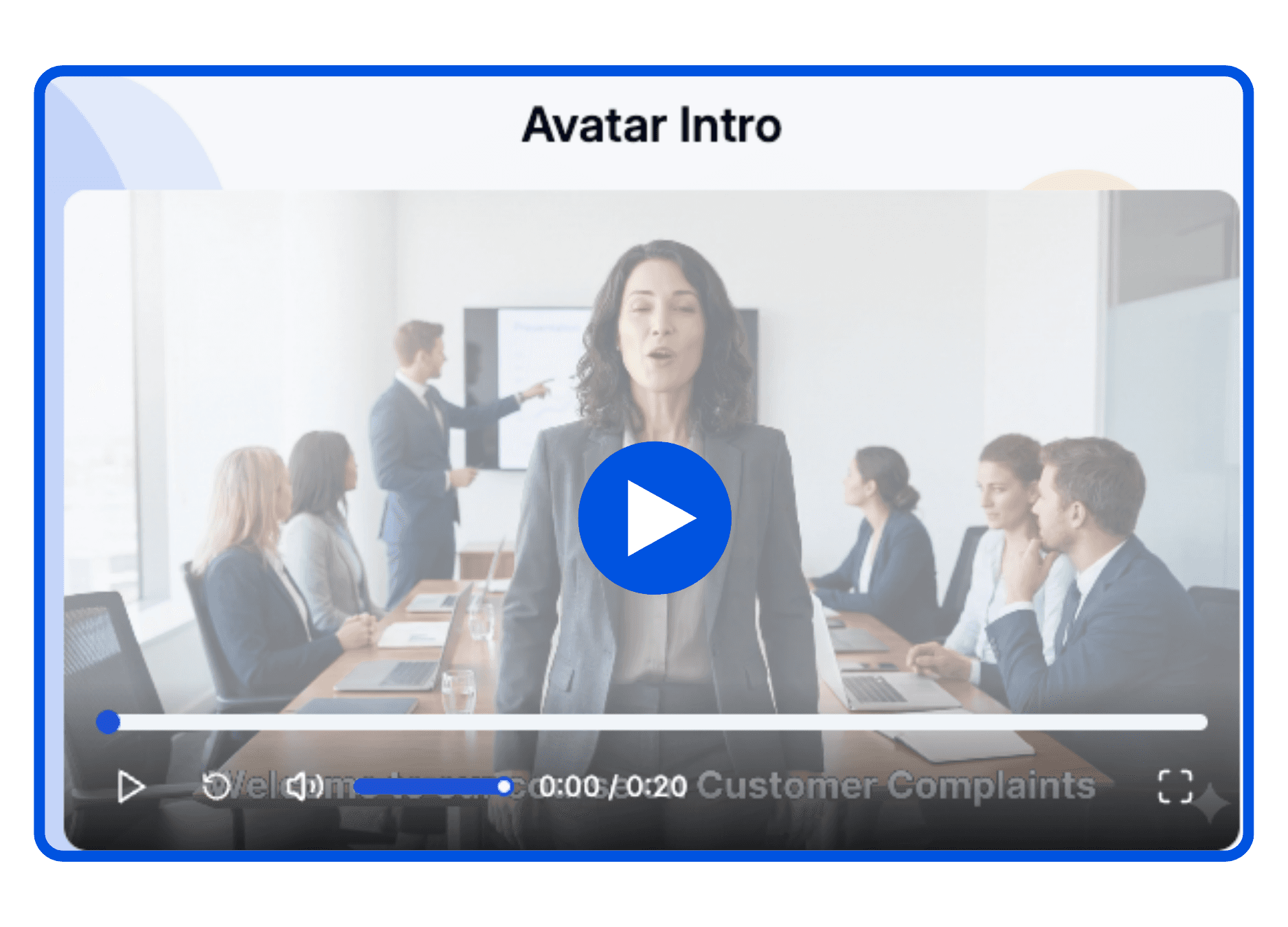
Content Variety: Support for video, AI-avatars, quizzes, and PDFs.
Dynamic Sync: Ensure that when your product changes, your training changes everywhere instantly.
Key Features Your LMS Needs
Multi-tenancy: Cater to different customer groups with unique branded portals.
Administrative Tools: Easily manage users and run reports for regulators or internal stakeholders.
Integrations: Connect your training data to your CRM (HubSpot/Salesforce) to see the link between learning and renewals.
Dynamic SCORM: Update your content once and have it sync across your entire "Extended Enterprise."
Turning Learning into a Tangible Result
At the end of the day, customer education is about Outcomes. Whether it’s internal staff or external clients, the goal is to inspire learning that fuels productivity. By closing the gap between "having a tool" and "knowing how to win with it," you secure your place as a vital partner in your customer's success.
Claim your 10 free credits and start building your high-impact Customer Academy.